Trees
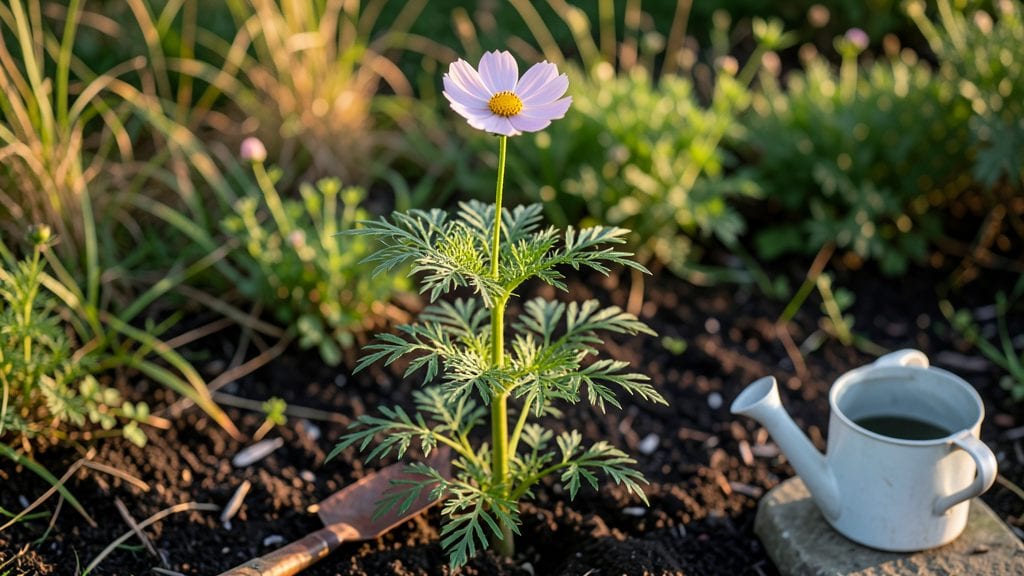
Mastering cosmos seedling identification early keeps you from yanking out your own plants—those fern-like, jagged-edged first true leaves are the giveaway, but I’ve still pulled up "cosmos" that were just weeds.
The key is the leaf shape: young cosmos leaves start lobed and fuzzy, while weeds like lambsquarters stay smooth and arrowhead-shaped.
Light conditions make all the difference here. Cosmos seedlings thrive in full sun but can stretch toward light if crowded. I’ve seen them pop up in garden beds where I swore I’d planted nothing—turns out, last year’s dried flowers self-seeded.
Check for that fuzzy texture on stems and leaves, too; it’s a dead giveaway for cosmos over look-alikes.
By the second set of leaves, you’ll spot the classic fern-like pattern that grows larger as they mature. True cosmos seedlings also develop a slight red tint along the stems when stressed, while weeds stay uniformly green.
Once you’ve got the eye for it, you’ll never confuse them again—just don’t pull anything until you’re sure.
This works for both dwarf and giant cosmos varieties, though timing varies slightly. Early identification means stronger plants and fewer surprises when those signature daisy-like blooms appear. Now let’s get you spotting them like a pro.
Root Causes of Misidentifying Cosmos Seedlings
Correctly identifying cosmos seedlings can be tricky, especially when they’re still young and lack defining traits. Several key factors—ranging from biological quirks to environmental influences—can make seedlings look different from what you expect.
Understanding these causes helps you spot errors early and adjust your approach. Here’s why misidentification happens, broken down by the real culprits.
Not all cosmos seedlings look the same, even from the same parent plant. Genetic diversity within a species (or even between seeds from the same batch) can lead to variations in leaf shape, color, and growth speed. For example:
- Leaf morphology: Some seedlings may have slightly lobed or serrated edges instead of the classic smooth, fern-like leaves. This is normal—cosmos (Cosmos bipinnatus and Cosmos sulphureus) exhibit juvenile traits that shift as they mature.
- Color mutations: While most cosmos seedlings start with deep green leaves, some may appear purplish or bronze due to anthocyanin pigments (natural plant compounds). This is especially common in cooler temperatures.
- Hybrid confusion: If you’re growing mixed cosmos varieties (e.g., ‘Bright Lights’ or ‘Sensation’), seedlings might inherit traits from both parents, making them harder to pinpoint as "true" cosmos.
Actionable tip: Wait until seedlings develop true leaves (the second set after the initial seed leaves) before attempting identification. True leaves are more consistent with the adult plant’s traits.
Seedlings are delicate, and their appearance can change dramatically based on their growing conditions. Stress from temperature, light, or moisture can trigger leaf deformities or color shifts that mimic other plants.
| Stress Factor | How It Affects Seedlings | What It Looks Like |
|---|---|---|
| ❄️ Cold temperatures | Slows metabolism, causing stunted growth and purplish leaves (due to anthocyanin buildup). | Seedlings appear smaller with darker, almost maroon-tinged leaves. |
| ☀️ Excessive heat | Leads to leaf scorch or bleaching, especially in direct sunlight. | Yellowing or white-tipped leaves that resemble drought stress. |
| 💧 Over/under-watering | Overwatering causes root rot and yellowing; underwatering leads to crispy, curled leaves. | Seedlings may look wilted or mushy, mimicking disease or pest damage. |
| 🌑 Low light | Weakens chlorophyll production, resulting in pale, elongated stems (etiolation). | Seedlings stretch upward with sparse, light green leaves. |
Pro tip: Maintain consistent moisture (keep soil damp but not soggy) and provide bright, indirect light for the first 2–3 weeks. Avoid placing trays in direct afternoon sun.
Tiny invaders or hidden diseases can alter a seedling’s appearance before you even notice the problem. Common culprits include:
- Fungal infections (e.g., damping-off): Causes seedlings to collapse at the soil line with a fuzzy mold. Leaves may turn brown and mushy.
- Insect damage (aphids, spider mites): Leaves develop yellow spots, webbing, or sticky residue (honeydew). Severe infestations stunt growth.
- Viral or bacterial spots: Tiny dark lesions or oily sheen on leaves can make seedlings look unhealthy or deformed.
Key clue: If seedlings are wilting without environmental stress, check the soil surface for pests or fungal growth. Isolate affected plants immediately to prevent spread.
If you’re sowing seeds from a blend (e.g., wildflower mixes), cosmos seedlings might be mixed with look-alikes like:
- Zinnias (Zinnia elegans): Similar fern-like leaves but often with a slightly waxy texture and more pronounced veins.
- Baby’s Breath (Gypsophila): Delicate, lacy leaves that resemble young cosmos but lack their bold structure.
- Marigolds (Tagetes): Some varieties have finely divided leaves that can be mistaken for cosmos, especially in early stages.
Solution: Purchase pure cosmos seed packets or pre-sprout seeds in separate containers to avoid mix-ups. Use a seedling identification key (like the one in this article) to compare traits.
Fixing Common Cosmos Seedling Confusions
Identifying cosmos seedlings can be tricky, especially when misidentification or environmental stress throws off their expected traits. Whether you’re dealing with leaf shape confusion, color mismatches, or growth delays, these practical solutions will help you correct the issue and keep your seedlings thriving.
Below, we’ve mapped common problems to their fixes—plus prevention tips to avoid future headaches.
Cause: Young cosmos seedlings can resemble other plants (like marigolds or dandelions) due to similar leaf shapes or early growth stages.
How to Fix It:
- 🔍 Examine the leaf veins: Cosmos seedlings have feather-like veins radiating from the central stem. Compare this to other plants—dandelions, for example, have deeply lobed leaves.
- 🌿 Check the leaf edges: True cosmos leaves are finely serrated (like a saw blade) or slightly wavy, not smooth or jagged like some weeds.
- 🌞 Wait for the "tell": Cosmos seedlings develop pinnate (feathered) compound leaves as they mature. If yours don’t, it might be an imposter.
Prevention Tip: > 💡 Start seeds indoors in small pots (like egg cartons) to isolate them before transplanting. This makes early identification easier and reduces weed competition.
Cause: Pale, yellow, or purple-tinged leaves often signal nutrient deficiencies, light issues, or overwatering.
| Symptom | Likely Cause | Quick Fix |
|---|---|---|
| Yellowing leaves | Overwatering or nitrogen deficiency | Let soil dry slightly between waterings. Add a balanced fertilizer (like 10-10-10). |
| Purple stems/leaves | Phosphorus deficiency | Mix bone meal into the soil or use a phosphorus-rich fertilizer. |
| White or gray patches | Fungal infection (e.g., powdery mildew) | Spray with neem oil or baking soda solution (1 tsp baking soda + 1 quart water). |
Prevention Tip: > 🌡️ Maintain consistent moisture—cosmos seedlings hate soggy roots. Use a moisture meter or stick your finger in the soil to check before watering.
Cause: Seedlings may lag due to poor soil, temperature stress, or crowding.
How to Fix It:
- 🌡️ Adjust temperature: Cosmos seeds germinate best in 65–75°F (18–24°C) soil. If your seedlings are slow, place a seedling heat mat under trays or move them to a warmer spot (like near a sunny window).
- 🌱 Thin or transplant: Overcrowded seedlings compete for nutrients. Snip weaker ones at the base or repot them into individual 2-inch pots with fresh potting mix.
- 💡 Boost light: If seedlings are leggy or pale, they need more light. Move them to a south-facing window or use a grow light 12–14 hours/day.
Prevention Tip: > ✨ Pre-soak seeds for 4–6 hours before planting to speed up germination and reduce slow-starter issues.
Cause: Aphids, spider mites, or fungal spores can derail healthy growth if left unchecked.
How to Fix It:
- 🐜 For soft-bodied pests (aphids, mealybugs):
- Spray with a soapy water solution (1 tsp mild dish soap + 1 quart water).
- Introduce ladybugs or lacewings as natural predators.
- 🕷️ For spider mites (tiny webs on leaves):
- Wipe leaves with a damp cloth to remove webs.
- Use neem oil or insecticidal soap every 3–4 days.
- 🍄 For fungal issues (powdery mildew, damping-off):
- Improve airflow by spacing seedlings 2–3 inches apart.
- Apply a copper fungicide or homemade spray (1 tsp baking soda + 1 quart water + a drop of soap).
Prevention Tip: > 🎯 Rotate seedlings weekly to ensure even light exposure, which strengthens stems and deters pests.
If your seedlings are beyond saving (e.g., severely diseased or dead), don’t panic—cosmos seeds germinate quickly and are easy to replant: 1. 🗑️ Remove affected seedlings and dispose of them (don’t compost if diseased).
- 🌱 Sow fresh seeds in sterilized soil (mix 1 part hydrogen peroxide (3%) to 10 parts water to kill pathogens).
- 🌿 Use a faster-growing variety like ‘Bright Lights’ or ‘Sensation Mix’ for quicker results.
With these targeted fixes, your cosmos seedlings should start looking (and growing!) like the vibrant, easy-to-identify plants they’re meant to be. Pro tip: Keep a small notebook nearby to jot down leaf shapes, colors, and growth stages—it’ll make future identification a breeze! 📝✨
Frequently asked questions
What’s the quickest way to tell cosmos seedlings apart from weeds?
Look for the classic feather-like (pinnate) leaves with fine serrations—cosmos seedlings have jagged edges like a saw blade, while weeds like lambsquarters have smooth, arrowhead-shaped leaves. The fuzzy texture on young cosmos stems is another dead giveaway.
Why do my cosmos seedlings look purple instead of green?
Purple-tinged leaves usually mean cold stress or a phosphorus deficiency. Keep seedlings in 65–75°F (18–24°C) soil and add a phosphorus-rich fertilizer (like bone meal) if needed. This is normal and harmless—just not ideal for vigorous growth.
How long until I can reliably identify cosmos seedlings?
Wait for the second set of true leaves (after the initial seed leaves) to appear—this usually takes 2–3 weeks under ideal conditions. True leaves will show the classic fern-like pattern that’s unmistakable once mature. Early identification is easier if you start seeds indoors in separate pots.
Can I transplant cosmos seedlings too early?
Yes, but avoid it until seedlings have 3–4 true leaves and sturdy stems. Transplanting too early stresses them—wait until nighttime temps stay above 50°F (10°C) to prevent shock. Harden off seedlings for 5–7 days before moving them outside.
What if my cosmos seedlings look like zinnias instead?
Zinnias have slightly waxier leaves with more pronounced veins, while cosmos leaves are softer and more delicate. Check for compound (feathered) leaves—cosmos develop these early, whereas zinnias keep simpler leaf structures longer. If unsure, wait for flowers: cosmos bloom in classic daisy shapes.