Transplanting
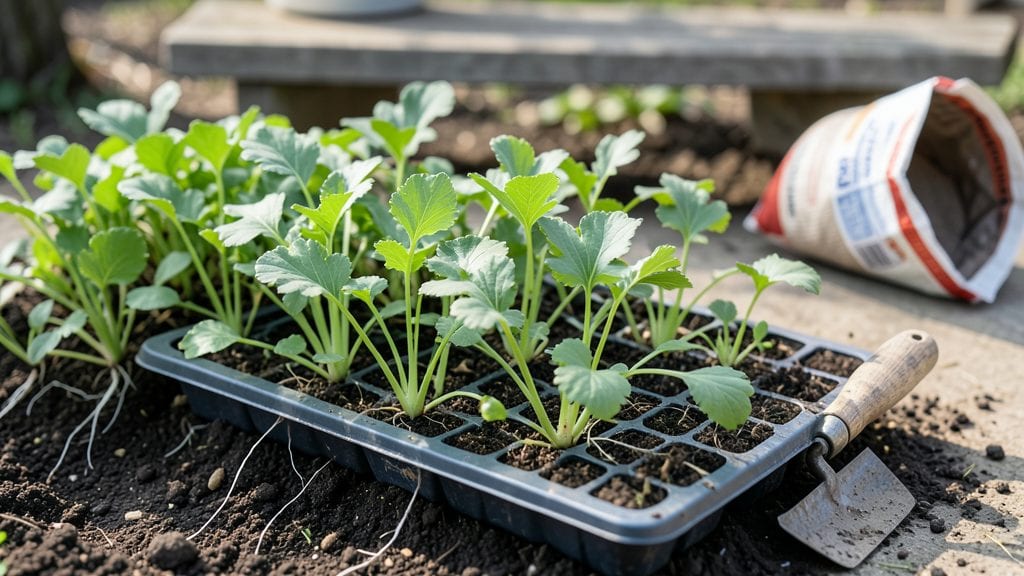
Cold-resistant daikon radish seedlings deliver shockingly crisp harvests in just 30 days—the fastest way to grow radishes from seed. I learned the hard way that these roots demand loose soil and precise spacing, or they’ll fork into gnarled shapes instead of straight, milky-white beauties.
The secret isn’t just patience; it’s giving them the right start in cool weather before the heat sets in.
You’ll need a shallow tray, seed-starting mix, and a sunny windowsill or grow light—no fancy equipment. Plant seeds just ½ inch deep, 1 inch apart, and keep the soil damp but never soggy.
Daikon thrives in temperatures between 50°F and 70°F, making them perfect for early spring or fall starts. Overcrowding is their worst enemy, so thin seedlings early or they’ll compete for space and nutrients.
Within two weeks, you’ll see those first true leaves emerge, and by week four, you’ll be harvesting radishes that out-crust store-bought varieties. The texture stays firm and sweet when pulled at the right size, and the greens are edible too.
This is where fast gardening gets exciting—no waiting months for rewards.
Works just as well in containers as in garden beds, and the same techniques apply whether you’re growing in zone 3 or 10. Let’s get those seeds sprouting right the first time—no forks, no bitterness, just perfect daikon every harvest.
📚 In This Guide
- What you need
- Instructions
- Tips and common mistakes
- Wrapping up and next steps
What you need
- ● Daikon radish seeds: Choose a cold-hardy variety like Sakurajima or White Icicle. You’ll need about 10–20 seeds per pot or 1 lb (0.45 kg) for a full garden bed.
- ● Seed-starting mix or potting soil: A lightweight, well-draining mix (e.g., 50% peat moss, 30% perlite, 20% compost) works best. Use 1–2 gallons (3.8–7.6 L) per seedling tray or 10–15 lbs (4.5–6.8 kg) for a garden bed.
- ● Containers or seed trays: For indoor starts: 2–3" deep biodegradable pots or a seedling tray with cell inserts (hold 50–100 cells).
- ● For direct sowing: A well-prepared garden bed (6–12" deep) with loose, fertile soil.
- ● Grow lights or sunny windowsill: If starting indoors, provide 12–16 hours of light daily (LED grow lights work great).
- ● Watering can or spray bottle: Keep soil consistently moist but not soggy.
- ● Seedling heat mat (for indoor starts in cool climates): Keeps soil at 65–75°F (18–24°C).
- ● Fertilizer: A balanced, water-soluble fertilizer (e.g., 10-10-10) at half-strength for transplanting.
- ● Row covers or frost cloth: Protects seedlings if temperatures dip below 40°F (4°C).
- ● Plant labels: Mark varieties and planting dates to avoid confusion!
Step-by-step instructions for growing daikon radish seedlings
Here’s how to get cold-hardy, vigorous daikon seedlings ready for quick harvests—no fuss, no waiting.
Prepare Containers and Soil for Germination
Fill your 4-inch deep cell trays with the 2 gallons of seed-starting mix, pressing it down lightly to remove air pockets. Daikon seeds need firm but not compacted soil to avoid leggy sprouts. Moisten the mix until it’s damp like a wrung-out sponge—too wet and seeds rot, too dry and they won’t sprout.
I like to sprinkle a pinch of organic fertilizer over the surface before planting. This gives seedlings a gentle nutrient boost right from the start. Use a flat tool or your fingers to create ¼-inch deep furrows—daikon seeds are tiny, so shallow planting prevents them from getting buried too deep.
Sow Seeds and Maintain Moisture
Drop 2-3 seeds per cell into each furrow, spacing them ½ inch apart. Cover lightly with a thin layer of soil—just enough to hide the seeds, no more. Press gently to ensure good seed-to-soil contact, which helps with even germination. Label your trays since daikon seedlings look similar to other greens at first.
Mist the surface with water using a spray bottle until the soil is evenly moist. Place the trays in a warm spot (65–75°F)—a sunny windowsill or under a heat mat works best. Keep the soil consistently moist but never soggy; daikon seeds germinate fastest when the top inch stays damp. You’ll see sprouts in 5–7 days if conditions are right.
Provide Light and Thin Seedlings
Once seedlings emerge, move them to a bright location with 12–14 hours of light daily. A south-facing window or grow light works, but avoid direct midday sun until seedlings are stronger—it can scorch tender leaves. If using a grow light, keep it 2–3 inches above the plants and raise it as they grow.
When seedlings reach 1 inch tall, thin to the strongest one per cell by snipping the others at the base with scissors. This prevents overcrowding, which leads to weak, forked radishes later. After thinning, water lightly to settle the soil around the remaining seedling.
Harden Off and Transplant
About 2 weeks before your last frost date, start hardening off seedlings by placing them outside in a sheltered spot for 1–2 hours the first day. Gradually increase exposure over 7–10 days, ending with full sun. Daikon tolerates cool weather, but this step ensures they adapt smoothly to outdoor conditions.
Transplant seedlings 3–4 inches apart in well-drained soil when they’re 3–4 inches tall. Space rows 12 inches apart to allow roots to grow freely. Water deeply after planting to help roots establish. You’ll have harvest-ready daikon in as little as 30–40 days—fast enough to squeeze in multiple plantings!
Tips & tricks for perfect daikon radish seedlings
Fast, cold-resistant daikon seedlings are all about timing and technique—here's how to avoid common pitfalls and get the best start every time.
Soil Preparation: The 2 gallons of seed-starting mix should be pressed down just enough to eliminate air pockets, but don't compact it too tightly. Daikon seeds need good soil contact for even germination, so use your fingers to create those ¼-inch deep furrows gently. I've found that adding a pinch of organic fertilizer at this stage gives seedlings a head start without overwhelming them.
Germination Environment: Maintaining that warm spot between 65-75°F is crucial—daikon seeds germinate fastest when the top inch of soil stays consistently damp. I've had the best success using a heat mat under the trays, especially in cooler homes. Remember, those 5-7 days to sprouting can stretch if conditions aren't ideal, so keep an eye on moisture levels.
Light Management: Once seedlings emerge, they need that 12-14 hours of light daily, but don't rush them into direct midday sun. I've learned the hard way that tender seedlings can get scorched—start with indirect light and gradually increase exposure. The 2-3 inches above the plants for grow lights is a good rule of thumb, but adjust as they grow to prevent legginess.
Thinning Technique: When your seedlings reach that 1-inch mark, thinning becomes essential. Use clean scissors to snip the weaker seedlings at the base rather than pulling them out, which can disturb the roots of your remaining plants. This simple step prevents overcrowding that leads to weak, forked radishes later in the growing process.
Pro Tips for Daikon Radish Seedlings
- Fast, cold-resistant daikon seedlings are all about timing and technique—here's how to avoid common pitfalls and get the best start every time.
- Soil Preparation: The 2 gallons of seed-starting mix should be pressed down just enough to eliminate air pockets, but don't compact it too tightly.
- Germination Environment: Maintaining that warm spot between 65-75°F is crucial—daikon seeds germinate fastest when the top inch of soil stays consistently damp.
Frequently asked questions
Got questions about growing daikon radish seedlings?
You’re not alone—this fast-growing, cold-hardy crop has some unique quirks. Here are the answers to the most common queries to help you get started with confidence!
When is the best time to plant daikon radish seedlings?
Daikon thrives in cool weather, so plant seedlings 2–4 weeks before your last frost date in spring or 6–8 weeks before your first frost in fall. Avoid planting in scorching heat—they’ll bolt (go to seed) or turn woody. For year-round harvests, use shade cloth in summer or extend the season with row covers.
How cold can daikon radish seedlings tolerate?
These seedlings are freeze-tolerant down to 20–25°F (-6 to -4°C), but they grow best in 50–70°F (10–21°C). Light frosts won’t harm them, but heavy freezes may kill the plants. Use row covers or mulch for extra protection in early spring or late fall.
What if my daikon seedlings look leggy or weak?
Leggy seedlings usually mean too much light or not enough nutrients. If they’re stretching toward the sun, thin them to 2–3 inches apart and transplant deeper into soil to stabilize stems. For nutrient issues, amend the soil with compost or use a balanced fertilizer (like 10-10-10) at half strength.
Can I grow daikon radishes from seed instead of seedlings?
While seedlings speed up harvests, direct-sowing seeds works too—just plant them ½ inch deep and 1 inch apart, thinning to 2–3 inches when they’re 2 inches tall. Seeds germinate in 5–10 days in warm soil (60–70°F) but may take longer in cool conditions. For faster results, start seeds indoors 4–6 weeks before transplanting.
Why are my daikon seedlings turning yellow or wilting?
Yellowing leaves often signal overwatering, poor drainage, or disease. Check for soggy soil (daikon hates wet feet!) and ensure containers or beds have drainage holes. If wilting persists, it could be clubroot disease—remove affected plants and disinfect tools. Rotate crops next season to prevent recurrence.
Wrapping up and next steps
Growing daikon radish seedlings is a rewarding journey that yields fast, cold-hardy, and delicious harvests—perfect for gardeners eager to beat the heat or extend their growing season! 🌱 With the right soil, spacing, and care, you’ll enjoy crisp, flavorful radishes in just a few weeks.
Whether you’re a beginner or a seasoned pro, these resilient seedlings prove that even the chillest starts can lead to big rewards.
Ready to take the next step? Plant your seedlings now and watch your garden thrive—or share your progress with fellow gardeners for tips and inspiration! 🌟