Trees
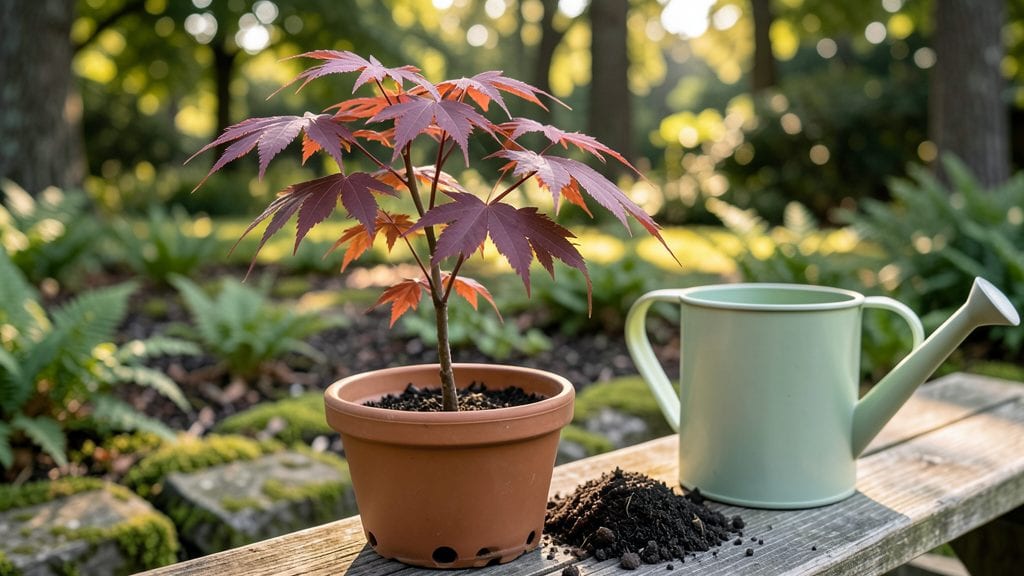
Caring for Japanese maple seedlings starts with the right balance of patience and precision—because these delicate trees reward long-term attention with stunning foliage that turns neighborhoods green with envy. 🌿 I’ve nurtured mine through scorching summers and icy winters, and the secret isn’t complicated: it’s about mimicking their natural forest-floor conditions at every stage.
The first year is critical, where soil moisture, shade, and gentle pruning set the foundation for a tree that could live—and thrive—for decades.
You’ll need well-draining soil mixed with organic matter (think 60% potting mix, 30% compost, and 10% perlite), a spot with dappled sunlight (morning sun and afternoon shade), and a watering routine that keeps roots consistently moist but never soggy.
A 5-gallon container works for seedlings, and pruning is all about removing dead or crossing branches—never more than 20% of the foliage in one session. The biggest mistake? Overwatering or letting them dry out, both of which stress the roots and stunt growth.
By summer, your seedling should be putting on 3-5 inches of new growth, with vibrant leaves that stay lush even in heatwaves. Mulch helps retain moisture and protects roots, while occasional foliar feeding in early spring gives them a boost.
The key to year-round thriving? Adjusting care with the seasons—more shade in summer, less water in winter, and always watching for signs of stress like yellowing leaves or curled edges.
This approach works for both container-grown seedlings and those planted in the ground, though young trees benefit from a few extra years in pots before transplanting.
Once established, Japanese maples become low-maintenance divas—just give them space to grow and the right conditions, and they’ll repay you with jewel-toned foliage that outshines anything from a nursery. Let’s get those seedlings off to the right start!
📚 In This Guide
- What you need
- Instructions
- Tips and common mistakes
- Wrapping up and next steps
What you need
- ● Japanese maple seedling: A healthy, disease-free 1-3 year old seedling (dwarf varieties like Acer palmatum are ideal for small spaces).
- ● Well-draining potting mix: A blend of 50% peat moss or coco coir, 30% perlite/pumice, and 20% compost (or a pre-mixed acidic tree/shrub mix). 1-2 gallons for small pots, 5+ gallons for outdoor planting.
- ● Container or planting site: Indoors: A 10-15 inch diameter pot with drainage holes (terracotta or fabric grow bags work best).
- ● Outdoors: A sunken planting hole twice as wide as the root ball, in partial shade (4-6 hours of morning sun).
- ● Organic mulch: 2-3 inches of pine bark fines or shredded leaves to retain moisture and acidify soil.
- ● Slow-release fertilizer: A balanced, acidic formula (e.g., 10-10-10 or 8-3-9) with micronutrients like iron and manganese.
- ● Watering can or hose with a gentle spray nozzle: Avoid blasting roots—aim for deep, infrequent watering.
- ● pH testing kit: Japanese maples thrive in acidic soil (pH 5.0–6.5)—adjust with elemental sulfur if needed.
- ● Pruning shears: Bypass pruners (sterilized with rubbing alcohol) for shaping or removing dead branches.
- ● Garden gloves: Protect your hands from thorns (especially on variegated varieties).
- ● Shade cloth (30-50% coverage): For seedlings in hot climates or full-sun windows.
- ● Humidity tray: A shallow tray with pebbles and water to boost moisture for indoor seedlings.
- ● A location with consistent moisture (Japanese maples hate drought!).
- ● Patience: Seedlings grow slowly—expect 6-12 inches of growth per year.
- ● Knowledge of your climate: Cold-hardy varieties (e.g., Bloodgood) need winter protection in Zone 5 or below.
Step-by-Step instructions for Japanese maple seedling care
Here's how I nurture delicate seedlings into stunning, long-lived trees with minimal fuss.
🌱 Step 1: Select the Right Location and Prepare the Soil
Japanese maples thrive in partial shade—think 4-6 hours of dappled sunlight daily. A spot under a canopy tree or along an east-facing wall works perfectly. Avoid harsh afternoon sun, which scorches tender leaves. I always test the soil first: dig a 6-inch hole and check for good drainage. If water pools after 15 minutes, amend with 2-3 inches of compost or sand to loosen the mix.
These seedlings hate soggy roots, so I never plant in low-lying areas. The ideal spot has slightly acidic soil (pH 5.0-6.5). If your soil tests higher, mix in 1 pound of sulfur per 100 square feet and wait 2-3 months before planting. I also add a 3-inch layer of mulch (but keep it 3 inches away from the trunk to prevent rot).
💧 Step 2: Water Deeply and Establish a Routine
Water your seedling immediately after planting—soak the root ball until water runs out the drainage holes. Then, let it dry slightly before watering again. Japanese maples are drought-sensitive but hate waterlogged roots. I check moisture by sticking my finger 2 inches deep into the soil: if it feels dry, it's time to water. In summer, that’s every 3-4 days; in winter, once a week is plenty.
Here's the thing—overwatering is the #1 killer. You'll know you're doing it right when the top 1-2 inches of soil feel dry to the touch. If leaves yellow or curl, you're either underwatering or overwatering. I always water in the early morning to let foliage dry before evening, which prevents fungal diseases like powdery mildew.
☀️ Step 3: Protect and Prune for Healthy Growth
Young seedlings need shelter from strong winds and late frosts. I wrap the trunk with tree guard (but only for the first year) to prevent sunscald. Prune only in late winter—remove dead, crossing, or weak branches at a 45-degree angle just above a bud. Never prune in summer; new growth won’t harden off before fall, and it’ll die back.
Watch for aphids or spider mites on the undersides of leaves. A neem oil spray (mixed weekly) keeps pests at bay without harming the tree. I also fertilize once a year in early spring with a balanced 10-10-10 fertilizer—just ½ teaspoon per inch of trunk diameter. Too much nitrogen makes leaves grow fast but weak, and they’ll snap in storms.
⏰ Step 4: Winterize for Long-Term Survival
Japanese maples are cold-hardy, but young seedlings need extra care in winter. Once temperatures drop below 20°F, I mulch heavily—4-6 inches deep—with straw or shredded bark. This insulates roots while allowing airflow to prevent rot. Avoid plastic mulch; it traps moisture and invites disease.
If you live in a Zone 5 or colder, protect the trunk with burlap or tree wrap to shield against winter sun and windburn. I also water occasionally in winter (about once a month) if the ground isn’t frozen—just enough to keep roots from drying out completely. By spring, your seedling will reward you with vibrant new growth and that signature lace-like foliage.
Tips & tricks for perfect Japanese maple seedling care
Here's what nobody tells you about transforming fragile seedlings into resilient, award-winning trees with minimal effort.
Soil Test Timing: The 15-minute drainage test in Step 1 is non-negotiable. If water disappears within 5 minutes, your soil drains too fast—add 1 inch of compost to retain moisture. If it still pools after 20 minutes, you need 1-2 inches of coarse sand mixed into the top 6 inches. I've seen seedlings drown in "well-draining" soil that was actually compacted clay—always dig deeper than you think you need to.
Watering Rhythm: That 2-inch deep moisture check in Step 2 is your golden rule. In summer heat, I water every 2-3 days but always in the morning—never at dusk. The 1-2 inch dry topsoil rule prevents both underwatering (which causes wilting) and overwatering (which causes root rot). Pro tip: Use a moisture meter for precision, especially in clay soils where visual checks can be misleading.
Winter Mulch Strategy: When temperatures drop below 20°F in Step 4, I double-check mulch depth with a ruler—4-6 inches is critical. Straw mulch breaks down faster than bark, so I top up with 2 extra inches in Zone 5 winters. The key is airflow: pile mulch away from the trunk in a cone shape to prevent moisture buildup that invites fungal diseases. I've lost seedlings to mulch rot when people just dump it in a heap.
Pruning Precision: That 45-degree angle in Step 3 isn't just aesthetic—it's about water runoff. Cut too straight and water pools at the branch collar, causing rot. Use sharp pruners and make cuts just above a bud facing outward. For young seedlings, I limit pruning to 10% of foliage max—any more stresses the tree when it's establishing roots. I've seen beginners prune 30% off by accident, which stunts growth for years.
Pro Tips for Japanese Maple Seedling Care
- Here's what nobody tells you about transforming fragile seedlings into resilient, award-winning trees with minimal effort.
- Soil Test Timing: The 15-minute drainage test in Step 1 is non-negotiable.
- Watering Rhythm: That 2-inch deep moisture check in Step 2 is your golden rule.
Frequently asked questions
Got questions about nurturing your Japanese maple seedling? You’re not alone—these delicate beauties need a little extra TLC to thrive! Below, we’ve rounded up the most common queries from gardeners just like you, so you can care for your seedling with confidence.
How often should I water my Japanese maple seedling?
Keep the soil consistently moist but never soggy—water when the top inch feels dry (usually every 2–3 days in warm weather, less in cooler months). Overwatering is the #1 killer, so use well-draining soil and a pot with drainage holes. Pro tip: Mulch around the base to retain moisture without smothering roots!
When is the best time to transplant a Japanese maple seedling?
Transplant in early spring or fall when temperatures are mild (50–70°F). Avoid extreme heat or frost—roots are delicate! Dig a hole twice as wide as the root ball, amend the soil with compost, and water thoroughly afterward. Wait until it’s at least 2–3 years old before moving it permanently.
Why are the leaves turning yellow or brown?
Yellow leaves often signal overwatering or poor drainage, while brown edges can mean underwatering or sunburn. Check the soil moisture and ensure your seedling gets dappled shade (morning sun is ideal). If pests like spider mites are present, hose them off gently or use neem oil.
Can I grow a Japanese maple from seed, or should I buy a seedling?
While it’s possible to grow from seed, it’s far slower and less reliable—seed-grown trees may not retain the parent’s stunning colors or growth habits. Start with a 1–2 year old nursery seedling for predictable results. Plus, they’re already hardened off and easier to acclimate!
How do I protect my seedling from winter frost?
Wrap the pot in burlap or frost cloth and move it to a sheltered spot (like against a wall) if temperatures drop below 20°F. For container-grown seedlings, add a thick layer of mulch and avoid watering when the ground is frozen. Hardy varieties (like ‘Bloodgood’) handle cold better than delicate types.
What’s the fastest way to encourage bushier growth?
Prune in late winter or early spring to shape the seedling and remove dead branches. Pinch back new growth by 1/3 to promote branching. Use balanced fertilizer (like 10-10-10) in spring, but avoid heavy nitrogen—it can weaken the tree. Patience is key!
Wrapping up and next steps
Caring for a Japanese maple seedling is a rewarding journey that blends patience with simple, consistent efforts. With the right soil, sunlight, and seasonal adjustments, your tiny tree will grow into a stunning centerpiece—proof that even minimal daily care yields breathtaking results. 🌿✨
Now that you’re armed with expert tips, take the next step: plant your seedling this weekend and watch it flourish! Share your progress with fellow gardeners or join online communities for ongoing inspiration—your green thumb is about to shine.