Planting
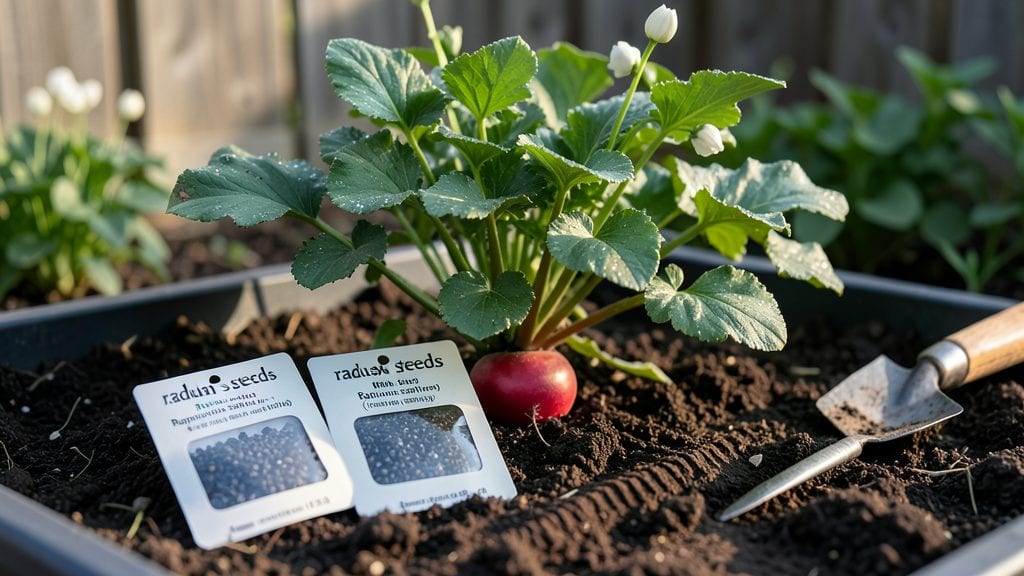
Planting radish seeds is the fastest way to turn a patch of soil into a crisp, peppery harvest in just 4-7 days—I’ve watched tiny green sprouts push through the dirt within a week, and it’s always a thrill.
The secret lies in timing, soil warmth, and a little patience, especially if you’ve ever waited weeks for other seeds to cooperate. Radishes are the ultimate beginner-friendly crop because they’re forgiving, productive, and won’t tolerate neglect like some finicky vegetables.
You’ll need a sunny spot with at least 4-6 hours of direct light, loose soil that drains well (amend with compost if yours is heavy), and seeds from quick varieties like ‘Cherry Belle’ or ‘French Breakfast’—they mature in 25-30 days.
Scatter seeds ½ inch deep, spaced 1 inch apart, and keep the soil consistently moist but not soggy. Most gardeners overlook the importance of thin seedlings later, but skipping this step leads to stunted roots and bitter radishes.
Within a week, you’ll see those first tiny green hooks breaking through the soil, and by week 3, you’ll be harvesting bright red globes straight from the ground. The key to success is consistency—watering deeply twice a week and pulling weeds early.
If germination takes longer than 10 days, check your soil temperature (it should be at least 50°F) and ensure seeds aren’t buried too deep.
This method works for spring or fall plantings in most climates, though hot summers can make radishes bolt quickly. For faster results, try a shade cloth in peak afternoon sun or opt for heat-tolerant varieties like ‘White Icicle’.
Once you master radishes, you’ll never buy them at the store again—they’re shockingly sweet and crisp when homegrown.
📚 In This Guide
- What you need
- Instructions
- Tips and common mistakes
- Wrapping up and next steps
What you need
- ● Radish seeds: Choose fast-maturing varieties like Cherry Belle or French Breakfast (1–2 grams per planting, ~20–50 seeds).
- ● Growing container or garden bed: For containers: 6-inch deep pots (2–3 seeds per pot) or a shallow tray (seeds spaced 1 inch apart).
- ● For in-ground: Loose, well-draining soil in a sunny spot (6+ hours of sunlight daily).
- ● Potting mix or garden soil: Lightweight, fertile mix (avoid heavy clay). Add compost for nutrients!
- ● Watering can or spray bottle: Gentle watering is key to avoid disturbing seeds.
- ○ Plant labels (optional): Mark varieties if growing multiple types.
- ○ Gloves (optional): Protect your hands from soil and sharp seed shells.
- ○ Seedling heat mat (optional): Speeds germination in cooler climates (70–75°F ideal).
- ○ Row cover or cloche (optional): Shields seedlings from pests and frost.
- ○ Fertilizer (optional): Balanced 10-10-10 or compost tea for a nutrient boost.
Instructions for planting radish seeds with rapid germination
Here’s how to get those quick-sprouting radishes popping up in record time.
Prepare the Planting Site for Optimal Germination
Radishes thrive in loose, well-draining soil with a pH between 6.0 and 7.0. Work in a 2-inch layer of compost into the top 6 inches of soil to improve fertility and drainage—radishes hate soggy roots. If your soil is heavy clay, mix in 1 part sand to 3 parts soil to prevent compaction. Smooth the surface with a rake until it’s level and free of clumps.
Radishes grow best in full sun to partial shade, so choose a spot that gets at least 4-6 hours of direct sunlight daily. If planting in spring, wait until the soil warms to at least 50°F—cold soil slows germination and can lead to uneven sprouting. A soil thermometer helps track this, but pressing your hand into the ground is a quick check: if it feels cool but not icy, it’s ready.
Sow Seeds at the Correct Depth and Spacing
Radish seeds are tiny but pack a punch, so handle them carefully. Plant seeds ½ inch deep and 1 inch apart in rows spaced 12 inches apart for easy thinning later. I like to use a seedling flat or shallow tray to organize the seeds before transplanting into the garden bed—this keeps them neat and prevents overcrowding.
Press each seed gently into the soil with your fingertip, then cover lightly with a thin layer of soil. Avoid burying them too deep, or they’ll struggle to reach the surface. Water the rows gently with a fine-mist spray nozzle until the soil is moist but not saturated. Overwatering at this stage can cause seeds to rot before they sprout.
Maintain Moisture and Monitor for Sprouts
Keep the soil consistently moist but never soggy—radishes germinate fastest when the top ½ inch of soil stays damp. Water lightly every 1-2 days, adjusting for rainfall. If the soil dries out completely, germination slows dramatically, and seedlings may emerge weak. A drip irrigation system or soaker hose keeps moisture even without disturbing the seeds.
You’ll see tiny green shoots in as little as 4 days, but most varieties pop up in 5-7 days. Once sprouts appear, thin them to 2 inches apart to prevent competition. Use scissors to snip unwanted seedlings at soil level—pulling risks disturbing the roots of nearby plants. This step is critical for larger radishes like Daikon or Black Spanish.
Thin and Fertilize for Strong Growth
After 2-3 weeks, when seedlings have 2-3 true leaves, thin again to 3-4 inches apart for medium varieties or 6 inches apart for larger types. This spacing ensures radishes develop properly without becoming woody or misshapen. Remove thinned seedlings immediately—they’ll bolt (go to seed) quickly if left in the ground.
Side-dress with a balanced organic fertilizer (like 5-5-5) at half strength when seedlings are 3 inches tall. Radishes are fast growers and don’t need heavy feeding, but a little boost encourages crisp, flavorful roots. Water deeply after fertilizing to help nutrients soak into the soil. Avoid over-fertilizing—too much nitrogen leads to leafy tops at the expense of the root.
Harvest at Peak Ripeness for Best Flavor
Radishes mature quickly, so check the bed daily once they near harvest size. Most varieties are ready in 3-4 weeks, but heat-loving types like Cherry Belle may take 25-30 days. Gently loosen the soil around the radish with your fingers, then grasp the greens and pull upward—twisting can damage nearby plants.
Harvest when radishes reach their full size but before they develop a tough, pithy texture. Overripe radishes turn woody and bitter, so don’t wait too long. For continuous harvests, succession plant every 2 weeks—this keeps your kitchen stocked with fresh, crisp radishes all season.
Tips & tricks for planting radish seeds with rapid germination
Speeding up germination is all about precision—these tricks ensure your radishes pop up in record time without the common pitfalls that slow down growth.
Soil Temperature is Non-Negotiable: That 50°F minimum isn't just a suggestion—it's the magic threshold where radish seeds finally decide to sprout. I've planted in soil that felt "ready" but was actually 45°F, and germination took twice as long. Use a soil thermometer for accuracy, especially in spring. If your soil runs cooler, consider using black plastic mulch to warm it faster—it can raise soil temperature by 5-10°F within days.
Seed Depth Makes All the Difference: The ½-inch depth specified isn't arbitrary—it's the Goldilocks zone where seeds get just enough light to sprout but stay protected from drying out. I once planted seeds too shallow (just covering with my fingertip) and lost half to desiccation. For container growing, use a seedling flat where you can press seeds gently into the soil surface without worrying about depth consistency.
Moisture Management is Critical: Maintaining that top ½ inch of damp soil requires vigilance. I've found that watering in the morning gives seeds consistent moisture without the risk of fungal issues that come from evening watering. For container gardens, use a spray bottle to mist seeds after planting—it gives you more control than a watering can. And here's a pro tip: if your soil feels dry just below the surface after watering, you're overwatering.
Succession Planting Strategy: The 2-week succession planting window is your secret weapon for continuous harvests. I plant my first batch in early spring, then every two weeks until late summer. This ensures I always have fresh radishes while avoiding the bolting that happens when plants mature too slowly. For fall crops, start your last planting 6 weeks before your first frost date—radishes can handle light frosts and may even sweeten after a freeze.
Pro Tips for Plant Radish Seeds
- Speeding up germination is all about precision—these tricks ensure your radishes pop up in record time without the common pitfalls that slow down growth.
- Soil Temperature is Non-Negotiable: That 50°F minimum isn't just a suggestion—it's the magic threshold where radish seeds finally decide to sprout.
- Seed Depth Makes All the Difference: The ½-inch depth specified isn't arbitrary—it's the Goldilocks zone where seeds get just enough light to sprout but stay protected from drying out.
Frequently asked questions
Got questions about planting radish seeds? You’re not alone—these speedy growers spark curiosity! Here are answers to the most common queries to help you succeed.
When is the best time to plant radish seeds?
Radishes thrive in cool weather, so aim for early spring (as soon as soil reaches 40°F) or late summer/fall (6-8 weeks before your first frost). Avoid planting in hot summer months—they’ll bolt (go to seed) faster. For year-round growing, try succession planting every 2-3 weeks!
How deep should I plant radish seeds?
Keep it shallow! Plant seeds ½ inch deep in well-drained soil. Press them lightly into the soil and space them 1-2 inches apart (or 4 inches apart for larger varieties). Overcrowding leads to stunted roots, so thin seedlings if needed. Pro tip: Use a small hand trowel or even your finger for precision!
Can I plant radish seeds indoors?
Yes, but radishes prefer direct sowing for best results. If you must start indoors, use biodegradable pots and transplant seedlings outdoors when they’re 2-3 weeks old. Harden them off first (acclimate to outdoor temps for 3-5 days) to avoid shock. For faster germination, try a sunny windowsill or a grow light!
What should I do if my radish seeds don’t germinate?
Radishes germinate quickly (4-7 days), but if they’re slow or fail, check these fixes:
- Soil temp: Too cold (<40°F) or too hot (>85°F) stalls germination. Use a seedling heat mat if needed.
- Moisture: Keep soil consistently moist (not soggy). Water gently to avoid washing seeds away.
- Seed viability: Test a few seeds in a damp paper towel—if none sprout in 3-4 days, they may be old.
- Depth: Planting too deep (over ½ inch) can suffocate seeds.
Are there any radish varieties that don’t need thinning?
Most radishes benefit from thinning to prevent overcrowding, but ‘Cherry Belle’ and ‘French Breakfast’ are compact varieties that can handle slight crowding. For true no-thin varieties, try ‘Easter Egg’ or ‘Rainbow’ mixes—their smaller size reduces competition. Always check seed packets for spacing guidelines!
Bonus Tip:
Struggling with pests? Radishes attract flea beetles and cabbage worms. Protect seedlings with row covers or companion plant with bush beans or carrots to deter pests naturally. Happy growing!
Wrapping up and next steps
Growing radish seeds is a rewarding and fast way to enjoy fresh, crunchy veggies in no time! 🌱 With just a little patience and the right conditions, you’ll be harvesting vibrant radishes in under a week.
Whether you’re a beginner or a seasoned gardener, this quick-growing crop is perfect for adding flavor and fun to your garden.
Now that you’re armed with tips and tricks, roll up your sleeves and give it a try! Start small—plant a few seeds in a pot or your garden bed—and watch your green thumb grow. Happy planting! 🌱✨