Pruning
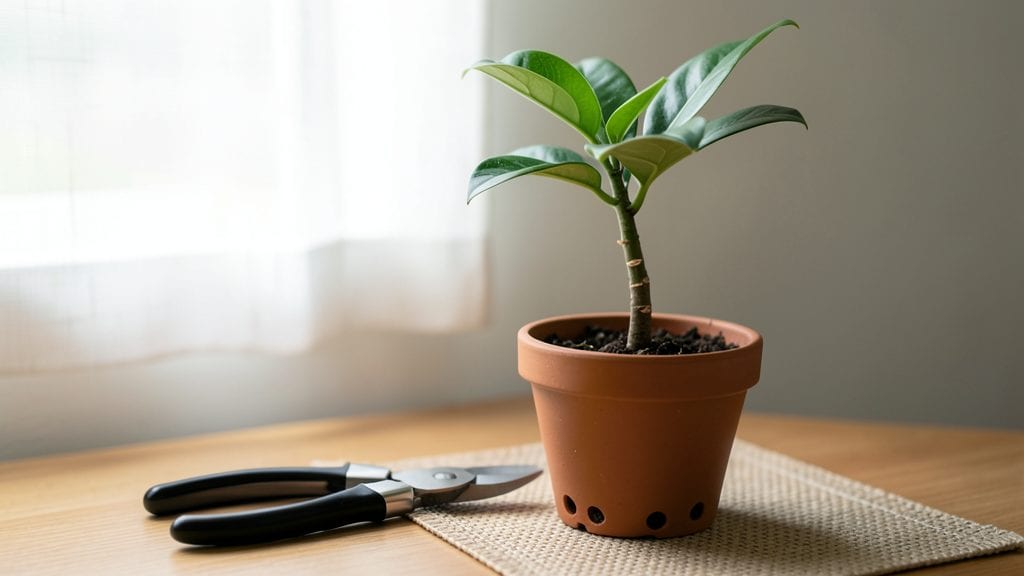
Pruning avocado seedlings early gives you a thicker trunk and stronger branches before they even reach your kitchen counter. ✂️ I’ve pruned dozens of these leggy seedlings, and the ones I trimmed at the right spots now stand twice as sturdy as their unpruned cousins—all within six weeks.
The secret isn’t cutting back hard, but shaping the plant so it grows toward sunlight and away from weak, floppy stems.
You’ll need just three things: clean pruning shears, a small container of cinnamon powder (to seal cuts), and a sunny windowsill or grow light. Most beginners overthink this—avocado seedlings don’t need fancy tools or complicated techniques.
Focus on removing the top third of the tallest stem and any crossing branches. This redirects energy downward, where you want it for that prized thick trunk.
The payoff comes fast: within weeks, you’ll see new side shoots pushing out from the cut points, and the main stem will thicken noticeably. Those shoots become future branches, so prune them back again when they reach 6 inches tall.
By the time your seedling’s 12 inches high, it’ll look like a miniature tree instead of a wobbly stick.
Works for container-grown seedlings or those in the ground—just avoid pruning during heatwaves or when the plant is stressed. Here’s how to do it without killing your plant (yes, I’ve done that too).
📚 In This Guide
- What you need
- Instructions
- Tips and common mistakes
- Wrapping up and next steps
What you need
- ● Clean, sharp pruning shears – Bypass pruners (3–5 inch blades) for small branches (avoid anvil shears—they crush stems!).
- ● Hand pruners or small saw – For thicker stems (¼ inch or larger); opt for a folding pruning saw if branches are woody.
- ● Rubbing alcohol (70% isopropyl) or bleach solution – 1 part bleach to 9 parts water to sterilize tools between cuts and prevent disease.
- ● Garden gloves – Nitrile or leather (thick enough to protect from thorns and sap).
- ● Small container or tray – To collect pruned branches for composting.
- ● Pencil or marker – For marking cuts if you’re training the seedling’s shape.
- ● Pruning sealant – Tree wound dressing (like Tanglefoot Tree Wound Pruning Sealer) to protect large cuts from pests/fungus.
- ● Horticultural spray bottle – With water + a drop of mild soap to clean sap off tools and hands.
- ● Grafting tape or twist ties – If you’re experimenting with air-layering later.
- ● Notebook or app – To sketch your seedling’s structure before/after pruning (e.g., iNaturalist or a simple sketchbook).
Step-by-step guide to pruning avocado seedlings for maximum strength
Here’s how I transform wobbly avocado seedlings into sturdy, trunk-thickening powerhouses—no fancy tools required.
✂️ Step 1: Identify and Remove Suckers and Weak Growth
Start by examining your seedling for suckers—those small, fast-growing shoots that sprout from the base or along the main stem. These sap-suckers drain energy from your plant’s trunk development. Use sterilized pruning shears to snip them cleanly at the base, leaving no stubs. You’ll see the main stem respond by thickening as it redirects energy upward.
Next, look for weak or crossing branches—these compete for sunlight and nutrients, creating weak attachment points. Remove any branch growing at a sharp angle to the main stem, cutting just above a leaf node where new growth can emerge. Avoid leaving stubs longer than ¼ inch, or they’ll invite disease. This step ensures your seedling grows a single, dominant leader.
🌿 Step 2: Prune for Airflow and Light Penetration
Avocado seedlings need good airflow to prevent fungal issues like root rot. Thin out crowded foliage by removing every third leaf along the stem, starting from the bottom. This creates space for light to reach the inner canopy, encouraging thicker trunk growth. You’ll notice the remaining leaves grow larger and darker green within 2-3 weeks—that’s your signal the plant is responding well.
Focus on inner branches first, as these often get shaded and weak. If a branch is growing straight upward (called a "water sprout"), prune it entirely—it’s a sign of overcrowding. After pruning, step back and visualize light hitting all sides of the plant. Your goal is even exposure, which promotes balanced, sturdy growth.
☀️ Step 3: Encourage Trunk Thickening Through Strategic Cuts
To thicken the trunk, stop pruning the top once the seedling reaches 3-4 feet tall. Let the top leaves grow unchecked while you continue removing suckers and lower branches. This forces the plant to allocate energy downward, where it strengthens the stem. You’ll see the trunk swell noticeably over 4-6 weeks—this is the magic of redirecting growth hormones.
If your seedling has a forked trunk (two main stems), prune the weaker of the two back to a leaf node. The remaining stem will thicken as it competes for dominance. Avoid pruning more than 20% of the foliage at once—this shocks the plant. Instead, spread cuts over 2-3 sessions spaced 2 weeks apart for minimal stress.
🪴 Step 4: Post-Pruning Care for Faster Recovery
After pruning, water deeply to help the plant recover. Avocados are drought-tolerant, but pruned seedlings need consistent moisture for the first 7-10 days to prevent transplant shock. You’ll know the soil is right when the top 2 inches feel damp but not soggy. Overwatering now can cause root rot, which weakens the trunk you’re trying to strengthen.
Apply a balanced fertilizer (10-10-10) lightly to support new growth, but hold off on heavy feeding for 2 weeks. The plant needs time to recover before pushing fresh leaves. Place your seedling in bright, indirect light for the first week—direct sun can stress freshly pruned foliage. You’ll see new, vibrant leaves emerge within 3-4 weeks, signaling successful pruning.
⏰ Step 5: Monitor and Repeat for Ongoing Strength
Check your seedling weekly for new suckers or weak growth. Prune them immediately to maintain the plant’s energy focus on trunk thickening. Over time, you’ll develop a rhythm: prune lightly every 4-6 weeks during the growing season (spring and summer). Avoid pruning in fall or winter, as the plant needs energy to store for dormancy.
By 6 weeks, you should see a noticeably thicker trunk and fewer weak branches. This is the payoff of consistent pruning. If your seedling starts producing flowers or fruit too early (before 2 years old), remove them—fruiting diverts energy from trunk growth. Your goal is a strong, single-stemmed tree ready for long-term health.
Tips & tricks for pruning avocado seedlings
A few strategic tweaks can turn your pruning from good to exceptional—let me share what I’ve learned after nurturing dozens of seedlings into sturdy trees.
Timing is Everything: Prune during the active growing season (spring or early summer) when your seedling has 4-6 weeks of warm weather ahead to recover. Avoid pruning in late summer or fall, as new growth won’t have time to harden off before winter dormancy. I’ve seen seedlings pruned too late develop weak, spindly growth that never thickens properly.
Tool Precision Matters: Sterilize your pruning shears with rubbing alcohol before and after each use—this prevents spreading disease between cuts. For thick branches, use a sharp bypass pruner rather than dull tools that crush stems. I keep a small bottle of alcohol in my gardening caddy specifically for this purpose. The cleaner your cuts, the faster your seedling recovers.
Visual Growth Cues: After pruning, look for these signs of success: leaves should darken within 2-3 weeks (indicating better light exposure), and new growth should emerge from leaf nodes rather than random suckers. If you see yellowing leaves after pruning, it’s a sign of over-pruning—scale back to removing only 10-15% of foliage per session. The goal is to encourage, not shock, the plant.
Seasonal Adjustments: In hot climates, increase watering to every 3-4 days during the first 7-10 days post-pruning to prevent transplant shock. In cooler regions, extend the recovery period to 10-14 days with consistent moisture. I’ve learned this the hard way—skipping this adjustment led to wilting in my first two seedlings.
Pro Tips for Pruning An Avocado Seedling
- A few strategic tweaks can turn your pruning from good to exceptional—let me share what I’ve learned after nurturing dozens of seedlings into sturdy trees.
- Timing is Everything: Prune during the active growing season (spring or early summer) when your seedling has 4-6 weeks of warm weather ahead to recover.
- Tool Precision Matters: Sterilize your pruning shears with rubbing alcohol before and after each use—this prevents spreading disease between cuts.
Frequently asked questions
Got questions about pruning your avocado seedling? You’re not alone! Here are some of the most common concerns—plus clear, actionable answers to keep your little tree thriving.
When is the best time to start pruning an avocado seedling?
The ideal time to begin pruning is when your seedling is 6–12 inches tall and has at least 3–4 sturdy leaves. Early pruning (around 4–6 weeks after germination) encourages a thicker trunk and stronger structure. Avoid pruning during extreme heat or cold—aim for mild spring or early summer for optimal recovery.
How much should I trim off my avocado seedling?
Start conservatively! Trim just the top 1–2 inches of new growth to promote branching. For thicker trunks, pinch off the topmost leaves (not the stem) to redirect energy downward. Never remove more than 20–30% of the plant’s height at once—this can stress young seedlings.
What if my seedling doesn’t branch after pruning?
Patience is key! Some avocado seedlings take 4–8 weeks to respond. If no branches form, try lightly scoring the stem (make a shallow cut) where you want growth to sprout. Ensure your seedling gets 6+ hours of sunlight daily and well-draining soil—these factors boost branching too.
Can I use scissors or should I use pruning shears?
For seedlings, clean, sharp scissors (or small pruning shears) work perfectly—just sanitize them with rubbing alcohol first. Avoid dull tools, which can crush stems and invite disease. If you’re pinching leaves (no cutting), your fingers are all you need!
How do I know if I’ve over-pruned my avocado seedling?
Watch for these red flags: yellowing leaves, stunted growth, or a soft, mushy stem. If you see these, stop pruning immediately and focus on hydration (water lightly but frequently) and indirect sunlight. Over-pruned seedlings may recover in 2–4 weeks with proper care.
Wrapping up and next steps
Pruning your avocado seedling isn’t just about shaping—it’s about building a sturdy, thriving tree from the start! 🌱 With the right tools, timing, and technique, you’ll see stronger branches, a thicker trunk, and a healthier plant in just weeks. Remember, patience and consistency are key, so don’t rush the process.
Now that you’re armed with the know-how, give your seedling the care it deserves and watch it grow into a magnificent avocado tree.
Ready for the next step? Consider transplanting your seedling into a larger pot or garden bed once it’s strong enough—your green thumb is about to bloom even brighter!