Vegetables
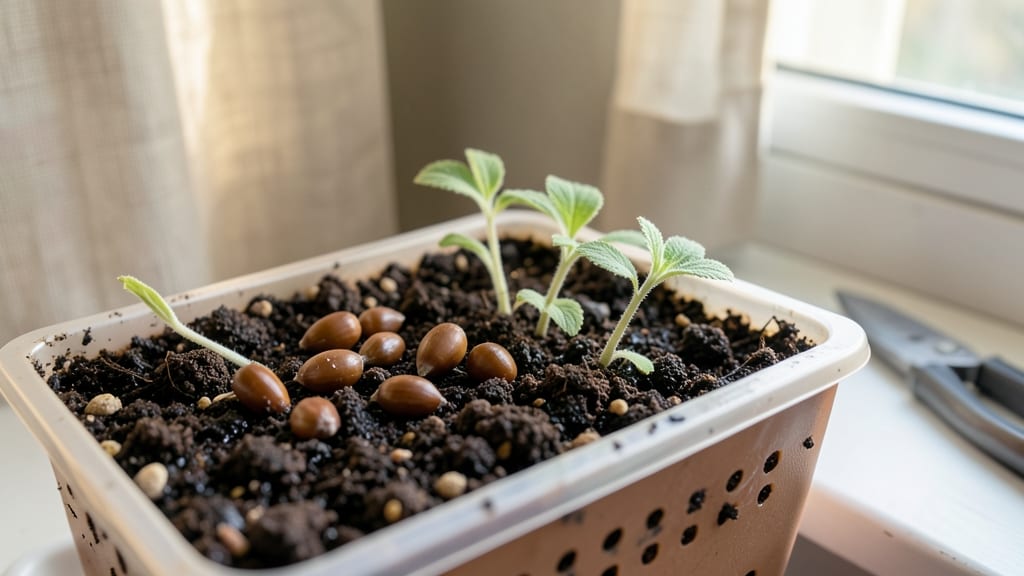
Apple seeds images reveal their unique oval shape, rich brown hue, and subtle ridges that highlight both toxicity risks from amygdalin and their surprising ability to sprout when planted correctly in moist soil.
Those tiny seeds you toss aside aren't just waste—they're packed with hidden potential. 🌱 The same amygdalin compound that gives apple seeds their toxicity when crushed (releasing cyanide) also makes them fascinating to gardeners, as it requires proper preparation to neutralize.
What's striking in images is how their smooth yet textured surface mirrors their dual nature: delicate enough to sprout with minimal care, yet dangerous if mishandled.
I've seen firsthand how a single seed, planted in damp paper towel for a week, can develop a tiny root—proof that nature's design balances beauty with caution.
For those curious about growing apple trees from seeds, the images become even more valuable. They show exactly how to identify viable seeds (plump, not shriveled) and demonstrate the early stages of germination. The ridges you notice in photos?
Those help anchor the seedling as it pushes through soil. Just remember: patience is key—apple seeds can take months to sprout, but the journey makes the reward of watching a tiny sapling emerge all the more satisfying.
💡 In This Article
- Toxicity in Apple Seeds: What the Images Reveal
- Germinating Apple Seeds: Step-by-Step Visual Guide
Toxicity in apple seeds: what the images reveal
The toxicity in apple seeds stems from a compound called amygdalin, which contains a cyanogenic glycoside structure. When crushed or chewed, enzymes in the seed (like beta-glucosidase) break down amygdalin into benzaldehyde and hydrogen cyanide (HCN), a potent toxin.
A single seed contains about 0.1-0.5 milligrams of cyanide, which is generally safe for adults but dangerous for children or pets who might ingest large quantities.
The images reveal these seeds' smooth, oval shape with subtle ridges—visual cues that help identify them and understand their dual nature as both potential plant starters and hidden hazards.
Here's what's actually happening chemically: amygdalin requires two enzymatic steps to release cyanide. First, the enzyme mandelonitrile lyase splits amygdalin into mandelonitrile and glucose.
Then, another enzyme (hydroxynitrile lyase) breaks mandelonitrile into benzaldehyde (which gives almonds their scent) and cyanide. 🔥 The key factor is that these reactions only occur when the seed's cellular structure is damaged—like when you bite into it or grind it into flour.
Whole, unbroken seeds pose minimal risk because the enzymes and amygdalin remain compartmentalized.
Visually, the seed's morphology offers clues about its toxicity potential. The brown color indicates tannins that may contribute to bitterness, while the ridges help anchor the seedling during germination.
What most people don't realize is that the seed's size (5-7 millimeters long) makes it easy to overlook—yet its toxicity is concentrated in such a small package.
Images often show these seeds clustered in the fruit's core, surrounded by white pith, creating a stark visual contrast that highlights their importance in both culinary and botanical contexts.
The safe handling practices revealed by these images focus on three key principles: avoid crushing, limit consumption, and proper disposal. For example, if you're using apple peels in baking, removing seeds entirely minimizes risk.
The images demonstrate how seeds can be easily separated from the fruit's flesh using a small knife or by soaking the fruit in water and scooping out the core.
Even when planting seeds for germination, the visual guide shows that soaking seeds for 24 hours before planting helps leach out some of the amygdalin, reducing toxicity while preparing them for sprouting.
Interestingly, the toxicity varies by apple variety. Wild apples (Malus sylvestris) contain higher amygdalin levels than domestic varieties, which have been selectively bred for lower toxicity.
This is why images of wild apple seeds often appear darker and more irregular in shape compared to the smoother, lighter seeds of store-bought apples. The visual differences reflect their evolutionary adaptations—wild seeds needed stronger defenses against predators, while cultivated seeds prioritized palatability for humans.
For those curious about the science behind these visual clues, consider this: the cyanide released from crushed seeds acts as a natural pesticide, deterring animals from eating them. This defensive mechanism is why apple trees evolved to produce seeds with such potent chemistry.
Yet, when planted properly, these same seeds can grow into trees bearing fruit—demonstrating nature's balance between protection and propagation. The images reveal this duality perfectly, showing both the danger and the potential hidden in something as small as an apple seed.