
Watering
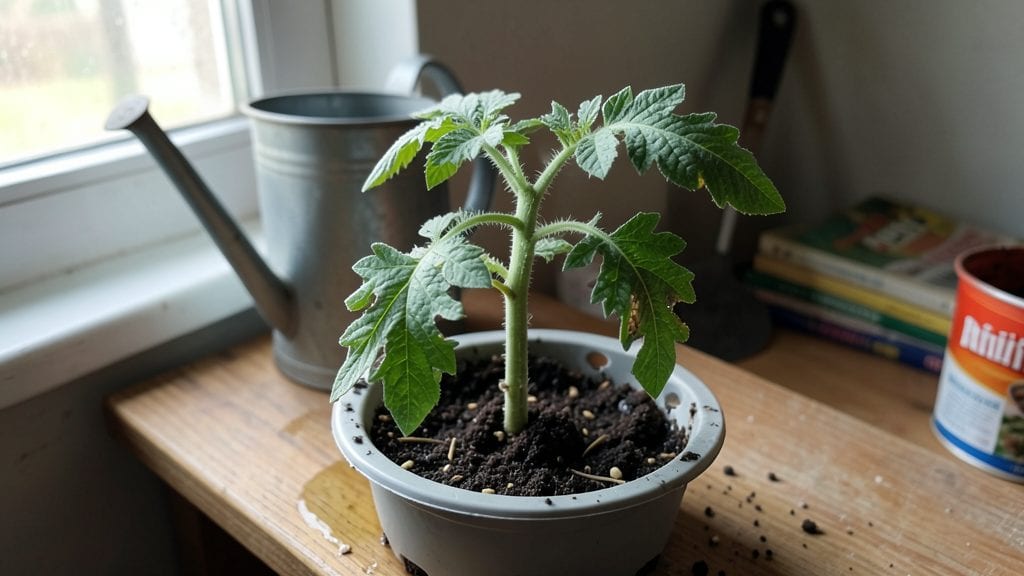
You can over water seeds, and doing so often kills them by triggering rot, mold, and root suffocation before they even sprout. Maintain damp—not soggy—soil with good drainage to avoid waterlogging.
Seed germination depends on balanced moisture—too little halts growth, but too much drowns them. 💧 Excess water cuts off oxygen, creating anaerobic conditions where harmful bacteria thrive, while saturated soil prevents roots from developing properly.
I’ve seen entire seed trays fail overnight from what seemed like "just a little extra water." The key is checking soil moisture daily: it should feel like a damp sponge, not a dripping rag.
For new gardeners, the confusion often comes from conflicting advice—some say "keep it wet," while others warn of overwatering. The difference lies in consistency and drainage. Using trays with drainage holes or bottom-watering methods (placing trays in shallow water) gives you better control.
If your soil stays clumpy or water pools, you’re likely overdoing it.
💡 In This Article
- How Overwatering Damages Seed Germination
- Proper Watering Techniques for Seed Starting
How overwatering damages seed germination
When seeds sit in overly wet soil, they suffocate because water displaces the oxygen roots need to breathe. Seeds require aerobic conditions (oxygen-rich environments) to activate enzymes that break down stored nutrients for growth.
Without oxygen, these enzymes stall, and the seed enters a state of dormancy—or worse, begins to rot. Think of it like trying to breathe through a wet sponge: the physical blockage prevents the critical gas exchange that sustains life.
The real damage happens at the cellular level. Excess moisture triggers anaerobic respiration, a backup process that produces toxic byproducts like ethanol and lactic acid. These compounds accumulate in root tissues, disrupting cellular function and eventually killing the seed.
Fungal pathogens like Pythium and Phytophthora thrive in waterlogged soil, infecting seeds within 24-48 hours. These fungi release enzymes that break down cell walls, turning healthy seeds into mushy, grayish sludge.
What most people don't realize is how quickly this process escalates. A seedling that appears healthy one morning can collapse by evening if the soil stays saturated. The hypocotyl (the stem connecting the seed to the root) is particularly vulnerable—it rots first, cutting off the seed's last lifeline.
Even if the seedling manages to sprout, weak roots from water stress make it prone to toppling or disease later. 🌱 This is why professional growers use seed trays with 10-20% perlite or vermiculite—these amendments create air pockets that prevent suffocation.
Temperature also plays a hidden role. Warm, saturated soil heats up faster, accelerating microbial activity. At 75°F or above, fungal spores germinate within hours, while cooler, damp conditions (60-65°F) slow but don't stop the damage.
This explains why overwatering is more catastrophic in greenhouses than in cool basements. The combination of heat and moisture creates a perfect storm for seed loss.
Here's what's actually happening chemically: Excess water dilutes the soil's oxygen concentration to less than 5% (healthy soil maintains 15-20% oxygen). At this level, seeds can't perform glycolysis—the metabolic pathway that releases energy for growth.
Without energy, the seed's radicle (embryonic root) fails to emerge, leaving it trapped in a cycle of decay. 💫 The irony? Many gardeners drown seeds trying to "help" them germinate faster—when the opposite is true.
Even if a seedling survives the initial waterlogging, chronic overwatering weakens its cuticle layer (the plant's protective skin). This makes seedlings more susceptible to damping-off disease, where the stem rots at soil level and the seedling topples over.
I've seen entire seedling flats collapse this way, turning a promising batch into compost in days. The lesson? Precision matters more than volume when watering seeds.