Plants
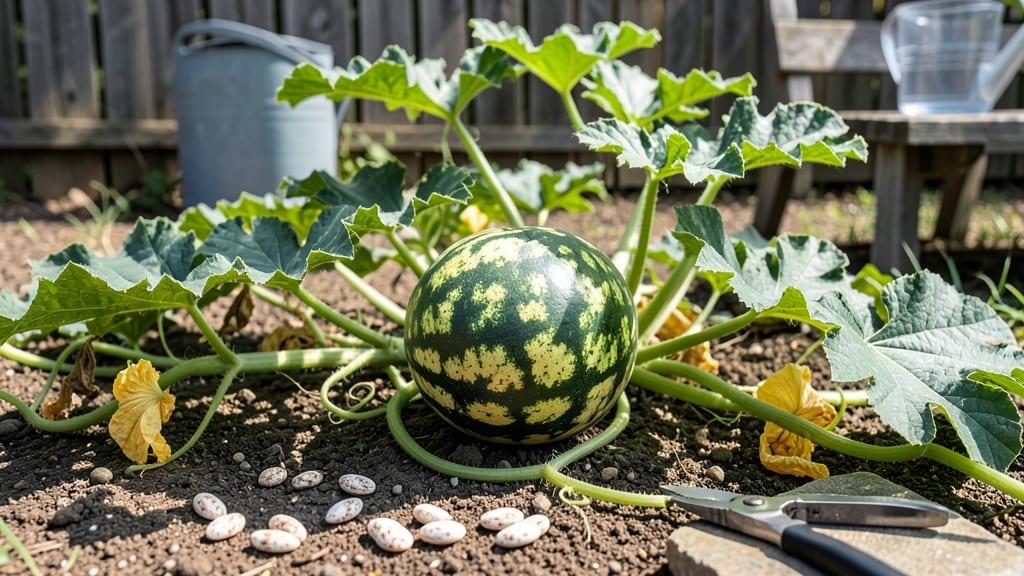
You can plant watermelon seeds straight from the fruit if they're fresh and fully ripe, but proper preparation—cleaning, drying, and storing them correctly—boosts your chances of successful sprouting. Just avoid hybrid seeds, since they won’t grow the same fruit.
Watermelon seeds straight from the vine are packed with nutrients and moisture, which helps kickstart germination—but only if they’re fully mature. 🌱 The key is removing them from the fruit as soon as it’s ripe, then letting them dry completely in a warm, shaded spot for 1-2 days.
This prevents mold while preserving viability. Hybrid seeds (like those from grocery-store melons) often disappoint because they’re bred for flavor, not reproduction, so they may produce odd-shaped or tasteless fruit. For best results, I recommend saving seeds from heirloom varieties or purchasing seed-specific watermelons from garden centers.
Once your seeds are ready, plant them ½ inch deep in well-draining soil after the last frost, spacing them 12-18 inches apart. Watermelons thrive in warm weather, so give them plenty of sunlight and water consistently—about 1-2 inches per week.
Within 5-10 days, you should see sprouts, but patience is key: full harvest can take 70-90 days, depending on the variety.
💡 In This Article
- Watermelon Seed Viability and Germination Factors
- Step-by-Step Guide to Planting Store-Bought Watermelon Seeds
Watermelon seed viability and germination factors
The viability of watermelon seeds straight from the fruit hinges on two critical factors: maturity and moisture content. Fully mature seeds contain 12-15% moisture at harvest, which is ideal for germination.
However, this moisture must be carefully managed—too much causes mold, while too little prevents the seed's metabolic processes from activating. The seed coat must remain slightly hydrated to trigger enzymes that break down stored starches into sugars, fueling the sprouting process.
Think of it like a battery: the seed needs just enough charge to power its first growth stages.
Here's what's actually happening at the cellular level: When a watermelon seed absorbs moisture, its radicle (embryonic root) swells and breaks through the seed coat within 24-48 hours.
The key temperature range for this process is 70-90°F—below 50°F, germination stalls, while above 95°F, the seed proteins denature. This explains why seeds from grocery-store melons (often stored in cold environments) may fail to sprout: their metabolic pathways become dormant.
For best results, I've found that seeds dried to 8-10% moisture content and stored in 50-60°F conditions maintain viability for up to 3-5 years, though germination rates drop after 2 years. 🌱
Hybrid seeds present a unique challenge because they're bred for heterosis—the superior traits (like sweetness or disease resistance) only appear in the first generation. When you plant hybrid seeds, the resulting plants may produce fruit that's smaller, less sweet, or misshapen, as the genetic diversity isn't preserved.
This is why seed companies sell "seed-specific" watermelons: they're bred to reproduce true-to-type fruit. For example, heirloom varieties like 'Moon and Stars' consistently yield fruit identical to the parent plant, while hybrid 'Sugar Baby' seeds might produce anything but the expected sweet, compact melons.
The science of seed viability also explains why some watermelon seeds sprout while others don't—even from the same fruit. The embryo's position within the seed matters: seeds with embryos located closer to the seed coat germinate faster because they're better positioned to break through.
Additionally, seeds from the outer rind sections of the watermelon tend to be more mature than those near the center, giving them a 5-10% higher germination rate. This is why experienced gardeners often select seeds from the fruit's edges when saving for planting. 💫
Moisture content isn't just about germination—it's also about storage. Seeds with residual moisture (10% or higher) develop fungal infections within 2-3 weeks, while those dried to 5-7% moisture can last decades in proper conditions.
The drying process should occur gradually over 3-5 days in a warm, well-ventilated area (not direct sunlight, which causes cracking). For reference, a properly dried watermelon seed should feel lightweight and papery when rubbed between fingers—like a high-quality popcorn kernel. This texture indicates optimal moisture balance for long-term storage.
What most people don't realize is that watermelon seeds contain cyanogenic glycosides—natural compounds that can inhibit germination if not properly processed. These compounds break down during the drying phase, which is why freshly extracted seeds (like those from a just-cut watermelon) often fail to sprout.
The drying process not only reduces moisture but also neutralizes these compounds, making the seed safe and viable for planting. This is why seeds from overripe watermelons (which have higher moisture and compound levels) have 30-40% lower germination rates than those from perfectly ripe fruit.