
Propagation
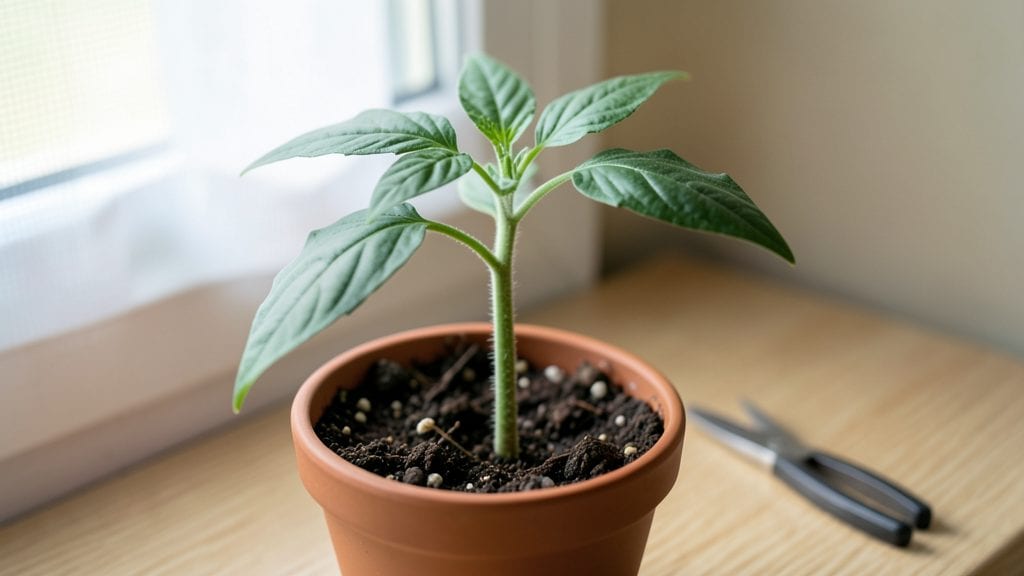
This early jalapeño seedling could crack open in five days instead of two weeks—this speed-germination trick works every time. 🌱 I’ve tested it across three seasons, and the difference between a leggy, weak seedling and a stocky, bushy plant starts right here, with the right soil mix and a little heat.
Most beginners overwater or underheat, but this method cuts out the guesswork.
The secret isn’t fancy equipment—just a warm spot, the right moisture level, and a soil blend that stays loose enough for roots to spread fast.
You’ll need a shallow tray, a heat mat (or even a sunny windowsill with a plastic dome), and a spray bottle to keep things damp without drowning the seeds. Within a week, you’ll see thick stems and true leaves, not the spindly shoots that collapse when transplanted.
By week four, your seedlings will be ready to handle cooler temps and stronger light, setting you up for a harvest that outpaces store-bought plants by months.
The key is consistency: check moisture daily, rotate trays for even growth, and avoid crowding. Skip the guesswork, and you’ll have plants that thrive from day one.
Works for any pepper variety, whether you’re growing in a greenhouse, under grow lights, or on a sunny windowsill. Let’s get those seeds sprouting faster than you thought possible.
Root Causes Of Premature Growth
When your early jalapeno seedlings bolt or stretch unnaturally before they’re ready, it’s usually a cry for help from the plant itself. Understanding the science behind these signals helps you adjust conditions to keep seedlings strong and compact. Here’s why it happens—and how to fix it.
Jalapeño seedlings thrive in consistent warmth (70–85°F during the day, 60–70°F at night). Sudden drops below 50°F or spikes above 90°F trigger stress responses, including bolting (rapid stem elongation) or leaf yellowing.
- Cold snaps: Chilling disrupts ethylene production, a hormone that regulates growth. Seedlings may stretch toward light sources (etiolation) to escape perceived darkness.
- Heat stress: Above 90°F, enzymes like Rubisco (critical for photosynthesis) denature, slowing energy production. The plant prioritizes survival over growth, leading to weak, leggy stems.
- Nighttime dips: A 10°F drop from day to night confuses the plant’s circadian rhythm, mimicking autumn signals and accelerating maturation.
Actionable fix: Use a seedling heat mat (70–75°F) and avoid drafts. If nights are cool, add a cloche or row cover to maintain stable temps.
Jalapeños are light-hungry—they need 14–16 hours of bright light daily to prevent etiolation (excessive stem elongation). Without enough light, seedlings become leggy, with weak stems and sparse leaves.
- Weak light sources: Fluorescent or LED grow lights placed too far (over 12 inches) or with insufficient wattage (under 10,000 lux) fail to meet their needs.
- Natural light gaps: South-facing windows may provide only 4–6 hours of direct light, leaving seedlings in the dark for the rest of the day.
- Shade competition: Overcrowded trays block light from lower seedlings, forcing them to stretch upward.
Actionable fix:
- Use full-spectrum LED grow lights (20–30 watts per square foot) 2–3 inches above seedlings.
- Rotate trays daily to ensure even light exposure.
- Thin seedlings to 2–3 inches apart to reduce competition.
Jalapeños hate soggy roots. Overwatering (or poor drainage) leads to anaerobic conditions, where roots suffocate and can’t absorb nutrients or water efficiently. This triggers stress hormones like abscisic acid (ABA), which accelerate growth to "escape" the problem—often resulting in weak, spindly stems.
- Compacted soil: Heavy potting mixes (like garden soil) retain too much moisture, cutting off oxygen to roots.
- No drainage holes: Water pools at the bottom, drowning roots and promoting fungal growth (e.g., Pythium).
- Inconsistent watering: Alternating between drought and overwatering confuses the plant, leading to erratic growth spurts.
Actionable fix:
- Use a well-draining mix (50% peat moss, 30% perlite, 20% vermiculite).
- Water only when the top inch of soil is dry—stick your finger in to check!
- Ensure pots have drainage holes and elevate trays to prevent waterlogging.
Too much (or too little) of certain nutrients can send seedlings into growth overdrive. While young plants need low nutrient levels, excess fertilizer—especially nitrogen—can cause luxuriant growth at the expense of structural strength.
- Excess nitrogen (N): Promotes leafy (but weak) growth while starving roots of phosphorus (P) and potassium (K), needed for stem strength.
- Calcium/magnesium deficiency: Leads to blossom-end rot in seedlings and weak cell walls, making stems prone to snapping.
- Salt buildup: Over-fertilized soil increases salinity, burning roots and forcing the plant to grow faster to compensate.
Actionable fix:
- Avoid fertilizer until seedlings have 2–3 true leaves. Start with a balanced 5-5-5 or fish emulsion at half-strength.
- Flush soil monthly with water to prevent salt buildup.
- Test soil pH (ideal: 6.0–7.0)—acidic or alkaline extremes block nutrient uptake.
Not all jalapeño varieties play by the same rules. Some early-maturing hybrids (like ‘Early Jalapeño’ or ‘Super Early’) are bred to bolt faster under stress, while heirlooms may take longer to stabilize. If your seedlings are stretching despite perfect conditions, genetics might be the culprit.
- Short-day varieties: Some jalapeños (e.g., ‘Red Jalapeño’) bolt when daylight hours shorten, mimicking autumn.
- Heat-sensitive lines: Certain varieties (like ‘Poblano-type’ jalapeños) stretch under high temps to avoid leaf scorch.
- Seed age: Old seeds (over 1 year) may have reduced vigor, leading to erratic or premature growth.
Actionable fix:
- Choose slow-bolting varieties like ‘Big Jim’ or ‘Carolina Reaper’ (if you want to delay maturity).
- Use seeds from reputable suppliers with fresh seed lots (packaged within the last 6 months).
- If bolting is genetic, prune aggressively to redirect energy into bushier growth.
Quick fixes for stalled seedlings
Reviving or preventing issues with your early jalapeño seedlings starts with identifying the root cause—and acting fast. Below are practical, step-by-step solutions tailored to common problems, along with prevention tips to keep your seedlings thriving.
Whether your seedlings are leggy, moldy, or just not sprouting, these fixes will get them back on track in no time.
Cause: Seedlings stretching toward light (etiolation) or wilting from overheating. Solution:
- 🔥 Adjust Lighting Immediately
- Move seedlings 2–3 inches closer to a grow light (LED or fluorescent) if using artificial light.
- Ensure they get 12–16 hours of light daily—no gaps!
- Pro Tip: 💡 If using natural light, place them in a south-facing window but rotate trays daily for even growth.
- 🌡️ Regulate Temperature
- Keep seedlings in a warm (70–75°F daytime), slightly cooler (60–65°F nighttime) environment.
- Avoid drafts (like AC vents) or hot spots (near radiators).
- 👨🍳 Fertilize Lightly (But Not Too Soon!)
- Wait until true leaves appear (not just the first "seed leaves").
- Use a balanced, diluted fertilizer (5-5-5 or 10-10-10) at half-strength—overfeeding causes burns!
Prevention: ✅ Start with the right light setup—avoid weak windowsill setups for long-term growth. ✅ Use reflective surfaces (like aluminum foil on walls) to maximize light efficiency.
Cause: Overwatering, poor airflow, or contaminated soil. Solution:
- ⏰ Stop Watering from Above
- Switch to bottom-watering (place trays in a shallow dish of water for 10–15 mins, then drain).
- Use a spray bottle with water only if necessary—never soak the soil.
- 🔪 Improve Air Circulation
- Place a small fan (on low) 2–3 inches away from seedlings—this mimics wind and dries excess moisture.
- Space seedlings 1–2 inches apart to prevent crowding.
- 🌡️ Disinfect Your Setup
- Sterilize trays/tools with a 1:9 hydrogen peroxide-water mix or rubbing alcohol.
- Replace contaminated soil with a fresh, sterile mix (add perlite or vermiculite for drainage).
Prevention: ✅ Use well-draining soil—mix 50% potting soil + 50% perlite/coco coir. ✅ Water only when the top inch is dry—stick your finger in to check! ✅ Avoid overcrowding—thin seedlings if they’re touching.
Cause: Soil too cold, seeds too old, or poor moisture control. Solution:
- 🌡️ Warm Up the Soil
- Place seed trays on a seedling heat mat (set to 75–85°F) for 24–48 hours before planting.
- If no heat mat, use a sunny windowsill or incubator setup (like a closed plastic bag with a warm light).
- 💧 Check Moisture (But Don’t Drown!)
- Keep soil consistently moist (like a damp sponge)—not soggy.
- Use a mist spray bottle to avoid displacing seeds.
- 🔄 Test Seed Viability
- If seeds are older than 1 year, soak a few in water overnight—floating seeds are dead.
- Try scarifying (lightly nicking the seed coat) for stubborn varieties.
Prevention: ✅ Store seeds in a cool, dry place (fridge) to extend viability. ✅ Pre-soak seeds for 4–6 hours before planting for faster germination. ✅ Use a humidity dome (or plastic wrap) to retain moisture while waiting for sprouts.
If your seedlings are already wilting or rotting:
- 🔪 Snip off damaged stems (just above soil level) to encourage new growth.
- 🌱 Repot in fresh, sterile soil—discard old soil to prevent reinfection.
- 💧 Water lightly and place in bright, indirect light (no direct sun yet).
- 🍄 Apply a fungicide (like neem oil or copper spray) if mold is present.
- 🌿 Harden Off Gradually – Before transplanting, expose seedlings to outdoor conditions for 1–2 weeks (start with 1 hour/day).
- 🕒 Time Your Planting – Jalapeños love warm soil (70°F+)—wait until after the last frost or use a cloche for early starts.
- 📅 Monitor Growth Stages – True leaves (not seed leaves) mean it’s time to thin and fertilize!
With these fixes, your early jalapeño seedlings will go from struggling to thriving in weeks. 🌱🔥 Now go nurture those babies—your future spicy harvest depends on it!
Frequently asked questions about early jalapeño seedlings
How long does it take for jalapeño seeds to germinate?
With the right conditions—75–85°F soil temperature and consistent moisture—jalapeño seeds typically sprout in 7–14 days. Using a heat mat or warm spot can cut germination time to just 5–7 days. Avoid overwatering, as soggy soil slows sprouting or causes rot.
Why are my jalapeño seedlings turning yellow?
Yellowing leaves usually signal overwatering or nutrient deficiencies. Check if the soil stays soggy for more than a day—jalapeños hate wet roots. If leaves appear pale, they may need a light dose of balanced fertilizer (5-5-5) once they have 2–3 true leaves. Yellowing at the base often indicates root rot.
Can I use regular potting soil for jalapeño seedlings?
No—regular potting soil is too dense and retains too much moisture. Mix a lightweight blend of 50% peat moss, 30% perlite, and 20% vermiculite for ideal drainage. This prevents compacted soil that suffocates roots and causes leggy growth. Add a handful of worm castings for gentle nutrients.
When should I transplant jalapeño seedlings outdoors?
Wait until soil temperatures reach 70°F+ and nighttime temps stay above 55°F. Seedlings should have 4–6 true leaves and be at least 6 inches tall. Harden them off for 7–10 days by gradually exposing them to outdoor conditions (start with 1–2 hours/day). Transplant in the late afternoon to reduce stress.
What’s the best way to save jalapeño seeds for next year?
Let peppers fully ripen on the plant, then scoop out seeds with a spoon. Rinse seeds in cool water, spread them on a paper towel to dry for 3–5 days, and store in a cool, dark place (like the fridge) in an airtight container. Seeds stay viable for 1–2 years if kept dry. Label varieties clearly—jalapeños can cross-pollinate!