
Blooming
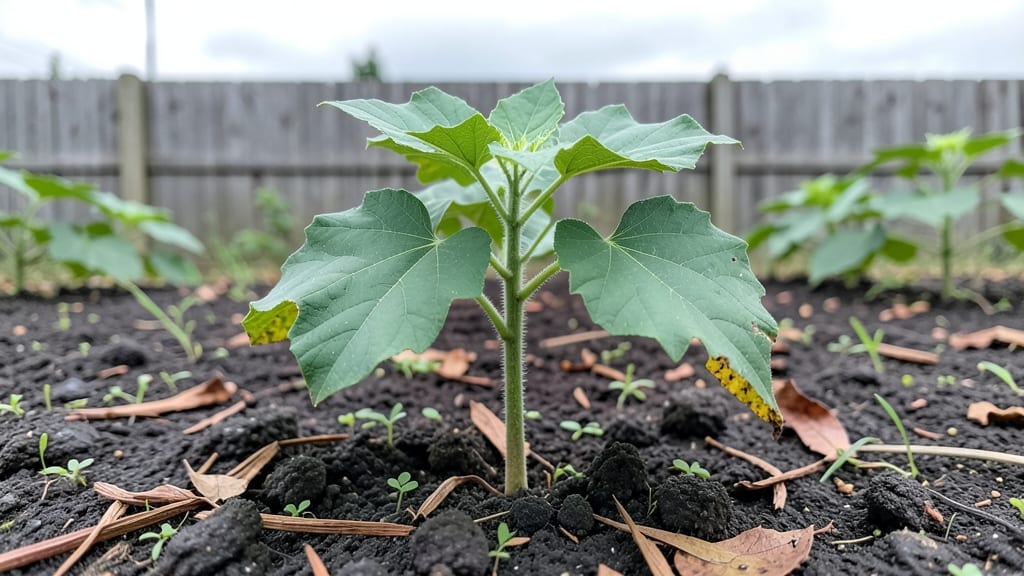
Okra seeds usually sprout within 5 to 14 days, but most gardeners see seedlings appear in about 7 to 10 days when soil stays above 70°F (21°C). Keeping the soil consistently moist and well-draining helps them emerge faster.
Germination timing depends heavily on environmental factors like warmth and moisture, but even the right conditions can vary slightly between seed batches. 🌱 Fresh seeds from reputable suppliers tend to sprout quicker than older ones, while deeper planting (beyond 1/2 inch) can delay emergence.
I’ve noticed that pre-soaking seeds for 6-8 hours in warm water often cuts down the wait time by 1-2 days, though it’s not always necessary.
What’s interesting is how okra’s tropical origins influence its growth—it thrives in heat but struggles when soil dips below 60°F (15°C). If your climate is cooler, consider starting seeds indoors under grow lights until the soil warms up naturally.
This small adjustment can make the difference between a 10-day sprout and a 3-week wait.
💡 In This Article
- Factors Affecting Okra Seed Germination Speed
- Step-by-Step Okra Germination Guide for Fast Sprouts
Factors affecting okra seed germination speed
Okra seeds contain enzymes that activate when exposed to warmth and moisture, breaking down stored nutrients to fuel the sprouting process. The optimal temperature range for these enzymes to work efficiently is between 75-90°F (24-32°C), which is why germination slows dramatically below 60°F (15°C).
At cooler temperatures, the enzymes function sluggishly, extending the time needed for radicles (the first root) to emerge by up to 5-7 days compared to ideal conditions.
The seed coat's permeability plays a crucial role too—younger okra seeds have thinner, more porous coats that absorb water faster, allowing enzymes to activate quicker.
Older seeds develop thicker coats that resist moisture penetration, which is why fresh seeds (less than a year old) typically sprout 2-3 days faster than stored ones. For example, a 2023 seed packet might germinate in 7 days, while a 2021 packet could take 10-12 days under identical conditions.
Moisture levels create another critical balance—okra seeds need consistent dampness but can suffocate if waterlogged. The ideal soil moisture maintains 60-70% humidity around the seed, which prevents oxygen deprivation while keeping enzymes active.
Too little moisture halts enzyme activity, while excess water triggers anaerobic conditions that produce harmful ethanol, slowing germination. I've found that using a moisture meter set to 40-50% soil moisture (not saturation) yields the fastest results.
Depth also matters because okra seeds require light to trigger germination after the radicle emerges. Planting deeper than 1/2 inch forces the seedling to push through more soil, which can delay emergence by 3-5 days.
The seed's energy reserves are finite—each extra inch of soil requires additional metabolic energy that could otherwise fuel faster growth. For best results, I recommend a 1/4 to 1/2 inch planting depth where the seed remains in darkness until the radicle forms, then receives light to stimulate shoot development.
Another fascinating factor is okra's natural dormancy mechanisms. Some varieties contain slight chemical inhibitors in their seed coats that require a brief warm-moisture cycle to break down.
This explains why pre-soaking seeds in warm water (80°F/27°C) for 6-8 hours can reduce germination time by 1-2 days—the soaking mimics natural rainfall triggers that would occur in okra's native tropical climates. Without this pre-treatment, some seeds may take 3-5 days longer to break dormancy.
Finally, soil composition affects germination speed through its impact on oxygen availability and microbial activity. Well-draining soil with 50-60% sand content allows optimal oxygen flow while preventing waterlogging, whereas clay-heavy soil can extend germination by 4-6 days due to poor aeration.
Adding perlite or vermiculite to heavy soils improves conditions by creating air pockets that support enzyme activity.