Trees
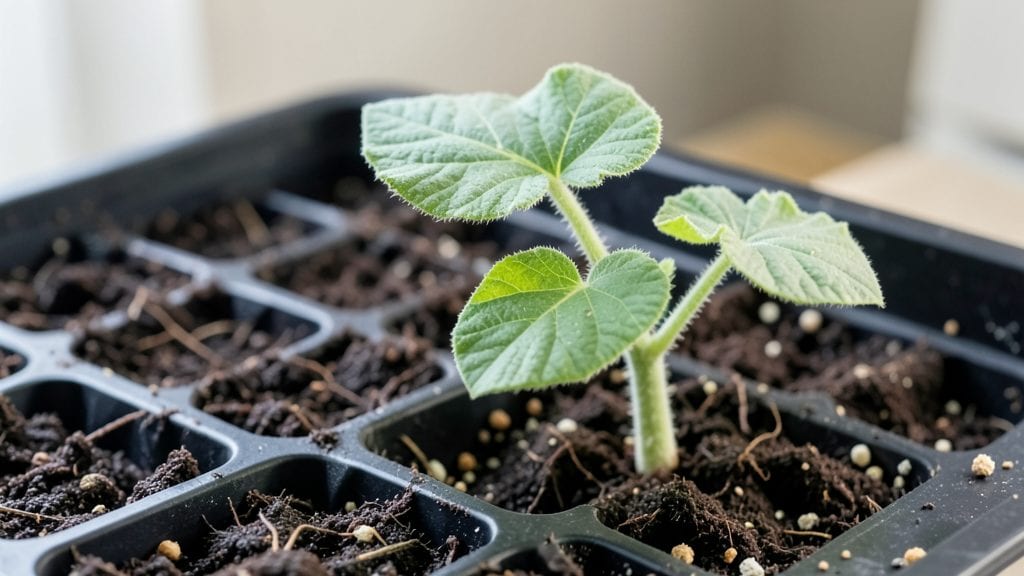
Mastering melon seedling identification begins with spotting those first true leaves—those are the real deal, not the baby cotyledons that look like tiny, round leaves. 🌱 I’ve pulled up seedlings thinking they were thriving, only to realize they were still in their "first-leaf" phase, which means they’re not ready to transplant yet.
The true leaves are what tell you the plant’s actually growing, and they’ll have jagged edges or serrated patterns depending on the melon variety.
Here’s the trick: watermelon seedlings have deeply lobed true leaves that look like miniature watermelon slices, while cantaloupe leaves are more feathery and divided. If you’re unsure, check the stem—healthy seedlings have a sturdy, green stem with no soft, mushy spots (that’s damping-off, and it’s a silent killer).
Also, count the leaves: true leaves appear in sets of three or more, while cotyledons are just the first two leaves that pop up right after germination.
Once you’ve confirmed those true leaves, you’ll notice the plant’s energy shifts—roots grow faster, and the stem thickens. This is when you start seeing variety-specific traits, like the fuzzy stems of muskmelons or the rougher texture of honeydew seedlings.
If the leaves start yellowing or wilting at this stage, it’s usually overwatering or pests, not a seedling issue. Keep an eye on the soil moisture and watch for tiny holes in the leaves—those are signs of trouble.
This visual guide works for any melon variety, from cantaloupe to honeydew, and it’s your best defense against transplanting weak seedlings. Mastering this skill means fewer failed starts and more robust plants ready for the garden. Let’s break it down step by step so you never second-guess a seedling again.
Root Causes of Misidentifying Seedlings
Understanding why melon seedlings can be confusing to identify starts with recognizing the natural growth stages of plants—and the environmental factors that can distort them. Here’s a breakdown of the key reasons why even experienced gardeners might struggle to distinguish true leaves from cotyledons:
Melon seedlings (like all cucurbits) follow a predictable growth pattern, but their early stages can trick the eye. Cotyledons—those first two "seed leaves"—are fundamentally different from true leaves in both function and structure.
- Cotyledons vs. True Leaves: - Cotyledons are not true leaves; they’re temporary storage organs that emerge first to absorb nutrients from the seed.
They’re usually thicker, broader, and lack the vein structure of real leaves. - True leaves appear after the cotyledons fall off (or sometimes while they’re still present) and have a lobed, jagged, or serrated edge (depending on the melon variety).
They’re also thinner and more delicate. - Pro Tip: 💡 Cotyledons often have a smooth or slightly waxy surface, while true leaves may appear slightly hairy or textured.
- Why the Mix-Up Happens:
- Overcrowding: If seedlings are planted too close, cotyledons may stay attached longer, masking the emergence of true leaves.
- Slow Germination: In cooler soils, seedlings take longer to develop, making it harder to spot the transition from cotyledons to true leaves.
- Light Conditions: Low light can cause seedlings to grow etiolated (stretched and pale), making true leaves look more like oversized cotyledons.
Extreme or inconsistent growing conditions can alter seedling appearance, making identification even more challenging. Here’s how temperature, moisture, and light play a role:
| Factor | Effect on Seedlings | How It Confuses Identification |
|---|---|---|
| Temperature | < 50°F (10°C) slows growth; > 90°F (32°C) causes wilting or stunted development. | True leaves may look smaller or deformed, mimicking cotyledons. |
| Moisture | Overwatering leads to yellowing cotyledons; underwatering causes crispy edges. | Stressed cotyledons may resemble true leaves due to discoloration or curling. |
| Light | Insufficient light = long, weak stems (etiolation); too much direct sun = scorched leaves. | Etiolated seedlings have pale, underdeveloped true leaves that blend in with cotyledons. |
| Soil Quality | Compacted or poor-draining soil stunts root growth. | Weak seedlings produce smaller true leaves, making them harder to distinguish from cotyledons. |
Pro Tip: ✨ Use a magnifying glass to inspect leaf edges—true leaves often have visible veins radiating from the stem, while cotyledons are usually smooth with no prominent veins.
Not all melons look the same in their seedling stage! Some varieties have broader cotyledons or delayed true leaf emergence, which can throw off identification.
- Common Culprits:
- Watermelon (Citrullus lanatus): Cotyledons are rounder and thicker, sometimes staying attached longer.
- Cantaloupe (Cucumis melo): True leaves may appear deeply lobed early, but in some varieties, they start off smooth-edged, resembling cotyledons.
- Honeydew (Cucumis melo var. inodorus): Seedlings can have narrower cotyledons, making them look more like true leaves prematurely.
- How to Tell Them Apart: - Count the Leaves: Cotyledons always come in pairs (2 total).
True leaves grow one at a time from the stem. - Check the Stem: True leaves attach to the main stem, while cotyledons are directly connected to the seedling’s base.
Pests and pathogens can alter seedling appearance, making true leaves look abnormal—or even causing cotyledons to mimic true leaves due to damage.
- Common Offenders:
- Aphids or Spider Mites: Feed on sap, causing yellowing, curling, or stunted growth—true leaves may look crinkled or deformed.
- Fungal Infections (e.g., damping-off): Rot or mold on cotyledons can make them darken or drop prematurely, delaying true leaf emergence.
- Cutworms: Chew seedlings at the base, causing stunted or missing true leaves, leaving only cotyledons visible.
- What to Watch For:
- Sticky residue (aphids) or fine webbing (spider mites) on leaves.
- Blackened or mushy stems (damping-off).
- Irregular holes or bite marks (cutworms).
Pro Tip: 🔥 Isolate affected seedlings and treat with neem oil or fungicide (for damping-off) to prevent spread while monitoring new growth.
Even the best gardeners can contribute to seedling confusion through improper techniques.
- Overcrowding: Planting seeds too close forces seedlings to compete for light/nutrients, delaying true leaf development.
- Incorrect Depth: Burying seeds too deep (below 1 inch) can cause weak, slow-growing seedlings with delayed true leaves.
- Transplant Shock: Moving seedlings too early can stress them, causing cotyledons to drop off before true leaves fully form.
- Fix It:
- Thin seedlings to 12–18 inches apart once true leaves appear.
- Plant at the right depth: Most melon seeds need ½ to 1 inch of soil for optimal germination.
- Hardening off seedlings gradually before transplanting reduces shock.
Some melon seedlings go through a deceptive phase where true leaves emerge under cotyledons, making them hard to spot.
- What Happens:
- Cotyledons may partially open while true leaves grow hidden beneath them.
- In low light, true leaves can appear pale and underdeveloped, blending in with cotyledons.
- How to Spot It:
- Gently lift cotyledons (don’t tear them!) to check for new growth underneath.
- Look for a third leaf: True leaves grow sequentially—if you see a third leaf budding, it’s definitely a true leaf.
Pro Tip: 🌡️ Use a small flashlight to inspect seedlings from below—true leaves often have a lighter green or reddish tint compared to cotyledons.
Fixing Seedling Confusion Fast
Now that you understand why melon seedlings can look so similar—and why proper identification matters—let’s tackle the practical fixes to avoid missteps in your garden.
Whether you’re dealing with leggy sprouts, slow growth, or just plain uncertainty, these solutions will help you correct, prevent, and optimize your melon seedlings like a pro.
If your cotyledons (those first two "leaves") and true leaves are blending together, stop guessing and start measuring. Here’s how to nail the ID every time:
- 🔍 Count the Leaves
- Cotyledons: Always 2 (thick, rounded, and often glossy).
- True leaves: 3+ (thinner, jagged edges, and more detailed veins).
- Pro tip: 💡 Snap a photo of the first 3 leaves—this becomes your "cheat sheet" for future seedlings!
- 🌡️ Check the Temperature Trick
- Place seedlings near a warm surface (like a heat mat or sunny windowsill).
- True leaves grow faster in warmth—if new leaves appear in 3–5 days, they’re true leaves.
- 📏 Measure the Stem
- Cotyledons sit directly on the stem with no gaps.
- True leaves have a visible stem gap (node) between them.
- Fix: Use a ruler to spot the node—if it’s there, you’ve got true leaves!
If your seedlings are stretching toward light (etiolation) or looking pale and weak, act fast with these 3-step fixes:
| Problem | Quick Fix | Prevention Tip |
|---|---|---|
| Too much shade | Move to bright, indirect light (south-facing window or grow light 6–8" away). | 🌞 Use reflective surfaces (foil on walls) to bounce light. |
| Overcrowded trays | Thin seedlings to 2" apart; give roots room to breathe. | 🌱 Start in individual pots if space is tight. |
| Underwatering | Water bottom-up (place tray in ½" water for 10 mins). | 💧 Check soil daily—top inch should stay damp. |
| Overwatering | Let soil dry 1 inch deep between waterings; ensure pots have drainage. | ✨ Use a moisture meter to avoid guesswork. |
🔥 Hot Fix: Pinch the tips of leggy seedlings to encourage bushier growth. This redirects energy to the roots!
If your melon seedlings are taking forever to develop true leaves, they might be nutrient-deficient or stressed. Try these high-impact solutions:
- 🍽️ Feed Them Right
- First 2 weeks: Use a diluted fish emulsion (½ tsp per gallon of water) for a gentle nitrogen boost.
- After true leaves appear: Switch to a balanced 10-10-10 fertilizer (every 7–10 days).
- Avoid: Over-fertilizing—this burns tender roots!
- 🌡️ Optimize Temperature
- Daytime: 70–80°F (ideal for germination and growth).
- Nighttime: 60–65°F (prevents shock).
- Fix: Use a seedling heat mat if your home runs cold.
- 🌱 Transplant Early (But Smartly)
- Once true leaves appear and seedlings are 2–3" tall, transplant to 3–4" pots with fresh potting mix.
- Pro tip: 🌱 Hardening off (acclimating to outdoor temps) should start 1 week before planting out.
An ounce of prevention saves a pound of frustration. Bookmark these for your next melon-growing session:
- Label everything 📝: Use toothpicks + masking tape to mark trays by date and variety.
- Grow lights > windowsills 💡: Natural light varies—LED grow lights give consistent spectra for true leaf development.
- Rotate trays weekly 🌀: Ensures even light exposure and prevents "leggy" sides.
- Keep a seedling journal ✍️: Note when cotyledons appear, true leaves emerge, and fertilizer changes.
- Test your soil 🧪: pH 6.0–6.8 is ideal for melons—adjust with lime or sulfur if needed.
Final Thought: 🎯 Mistakes are just lessons in disguise—even veteran gardeners mix up cotyledons and true leaves. But now you’ve got the tools, tricks, and troubleshooting to turn those tiny sprouts into thriving melon plants with confidence. Happy growing!
Frequently asked questions
How do I tell the difference between cotyledons and true leaves on melon seedlings?
Cotyledons are the first two leaves that appear and look thick, round, and smooth with no visible veins. True leaves are thinner, have jagged or serrated edges, and develop after the cotyledons. Count the leaves—cotyledons always come in pairs, while true leaves grow sequentially (3+ total).
Why do my melon seedlings look weak even after true leaves appear?
Weak seedlings with true leaves often suffer from poor light, overcrowding, or nutrient deficiencies. Move them to bright, indirect light (or use a grow light) and thin them to 2 inches apart. For nutrients, use a diluted fish emulsion in the first 2 weeks, then switch to a balanced 10-10-10 fertilizer.
Can I transplant melon seedlings before true leaves appear?
No—wait until you see 2-3 true leaves and the seedlings are 2-3 inches tall. Transplanting too early stresses the plants, delays growth, and increases the risk of damping-off disease. Harden off seedlings for 1 week before moving them outdoors.
What’s the best way to identify watermelon vs. cantaloupe seedlings?
Watermelon seedlings have deeply lobed true leaves resembling tiny watermelon slices, while cantaloupe leaves are more feathery and divided. Check the stem too—watermelon seedlings often have rougher, hairier stems than cantaloupe. For confirmation, compare with a reference photo of both varieties.