
Lawn
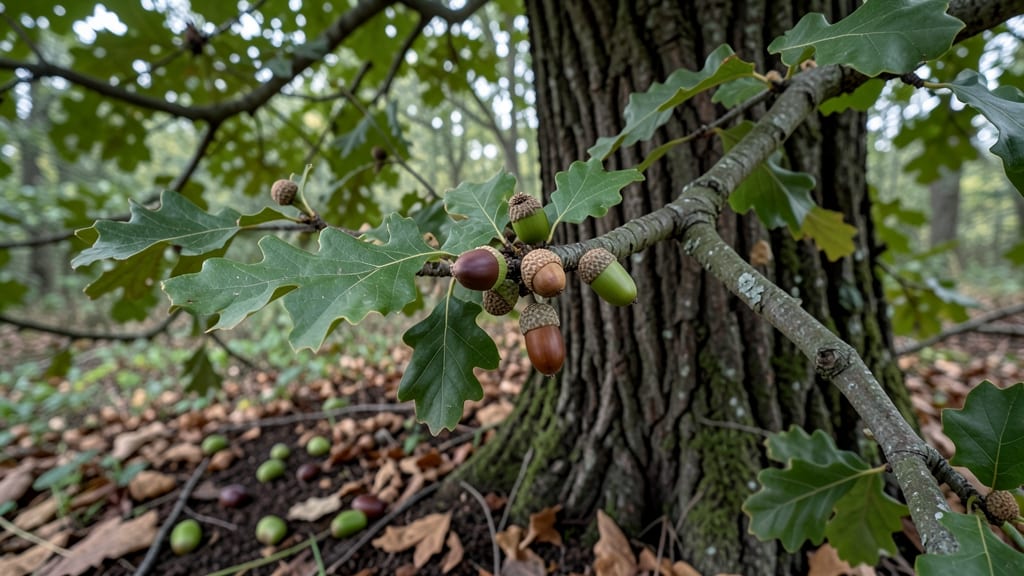
Identifying oak seed pods means spotting the acorn-filled husks with their distinctive spiny or lobed shells that develop on oak trees. Harvest them in late fall when the husks turn brown and begin to crack open naturally, then gather the mature acorns for planting or landscaping projects.
Oak seed pods aren't just the iconic acorns you see under trees—they're nature's way of packaging future oak trees. 🌳 The husks, whether spiny like white oak pods or smoother with pointed lobes like red oak pods, protect the acorns until they're ready to drop.
Timing is everything: harvest when the husks start splitting open, usually between October and November, as this ensures the acorns inside are fully mature and viable for planting.
I always check for a slight gap in the husk before collecting, as this signals the acorn is ready for its next stage.
Once harvested, proper storage is key to maintaining their quality. Spread the acorns in a single layer to dry for a few days in a well-ventilated area, then store them in a cool, dry place like a mesh bag or paper bag.
This prevents mold and pests from ruining your supply. For long-term storage, refrigerate them in sealed containers with a bit of sand or peat moss to absorb any moisture. This method keeps them fresh until planting season rolls around.
💡 In This Article
- Identifying Oak Seed Pods by Species and Growth Stages
- Best Practices for Harvesting and Storing Oak Acorns
Identifying oak seed pods by species and growth stages
White oak seed pods stand out with their smooth, rounded lobes that form a cup-like shape around the acorn. The husks typically measure 1-2 inches long and remain closed longer than red oak pods, often until late fall or winter.
Red oak pods, on the other hand, have pointed, spiny lobes that spread outward like a star, creating a more open structure. This difference isn't just cosmetic—it reflects how each species handles moisture and seed dispersal. 🌳
The color progression of oak seed pods provides clear harvest cues. Green husks in summer gradually darken to brown or tan by late fall, signaling maturity. White oak husks develop a matte finish with subtle ridges, while red oak husks become slightly glossy.
The key moment arrives when the husks begin to split open naturally, revealing the acorn inside—this usually occurs between October and November, depending on your climate zone.
Texture plays a crucial role in identification. Run your fingers over a white oak pod—you'll feel a smooth, almost leathery surface with minimal prickles. Red oak pods, however, have sharp, needle-like projections that can easily puncture gloves.
This physical difference helps wildlife (like squirrels) handle them differently—white oak acorns are often cached for winter, while red oak pods release seeds more quickly. The acorns themselves also vary: white oak acorns have a rounded cap, while red oak acorns feature a pointed tip.
Growth stages reveal the pods' purpose. In spring, the pods appear as tiny green buds that swell into 1-inch capsules by summer. By late summer, they begin hardening as the acorns inside mature.
The final stage is when the husks crack open along their seams, a process triggered by temperature shifts and internal pressure. This natural release mechanism ensures seeds drop when soil conditions are optimal for germination.
Here's what to watch for when timing your harvest: the husks should be dry and brittle but not rotting, and the acorns should have a firm, unbroken shell. Avoid collecting pods that have mold or insect damage, as these compromise viability.
In wet climates, pods may stay green longer—wait until they're fully brown before harvesting. This patience ensures you're collecting the most vigorous acorns for planting. 🌱
Pro tip: Collect pods from mature trees (50+ years old), as younger trees produce smaller, less viable acorns. The larger the acorn, the better its chances of establishing a strong root system.
This size difference is why white oak acorns (typically 0.75-1.25 inches) often outperform red oak acorns (0.5-1 inch) in harsh climates.