
Planting
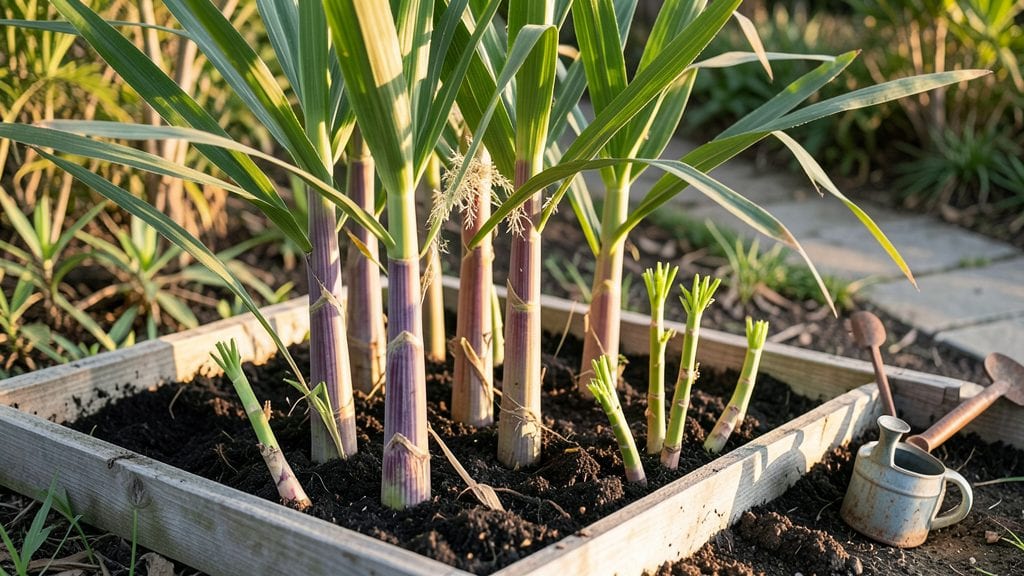
Growing a sugarcane plant from seeds delivers tropical sweetness in just 30 days—though I nearly gave up when my first batch wilted after two weeks. The key isn’t just warm soil or endless sunshine; it’s understanding how this thirsty plant mimics its jungle roots in your backyard.
Most gardeners miss the moisture balance that keeps stalks sturdy and fast-growing.
You’ll need warm soil (75°F+) and a spot with full sun (8+ hours daily), but the real secret weapon is consistent watering—think swampy, not soggy.
I use a 5-gallon bucket system to keep roots hydrated without drowning them, and the results are foot-tall stalks ready for harvest in under a month. Even in cooler climates, a greenhouse or black plastic mulch can trick sugarcane into thinking it’s summer year-round.
By harvest time, you’ll be snapping off crunchy, sweet stalks for juice or syrup, with enough leftovers to share (or freeze for winter). The first sip of fresh sugarcane tea from your own plants? That’s the payoff no grocery store can match. Let’s get those seeds sprouting—here’s exactly how.
Works in USDA zones 10-12 but adaptable with season extension. Beginners: start small—one 6-inch pot proves the concept before committing to a full bed. The faster you act, the sooner you’ll taste the difference between store-bought and homegrown.
📚 In This Guide
- What you need
- Instructions
- Tips and common mistakes
- Wrapping up and next steps
What you need
- ● Sugarcane seeds (setts): Quantity: 5–10 healthy, disease-free setts (baby stalks or nodes from mature sugarcane)
- ● Specification: 6–12 inches long, with 2–3 visible buds (nodes)
- ● Growing medium: Well-draining soil mix: 60% topsoil, 30% compost, 10% sand or perlite
- ○ Optional: Cocopeat or peat moss for moisture retention
- ● Containers or garden bed: Containers: 5–10 gallon pots (1 per sett) with drainage holes
- ● Garden bed: Full sun (6+ hours daily), loose soil with pH 6.0–7.5
- ● Tools: Pruning shears or sharp knife (for trimming setts)
- ● Garden trowel or transplanting spade
- ● Watering can or hose with a gentle spray nozzle
- ● Mulch (straw or shredded leaves) to retain moisture
- ● Fertilizer: Balanced 10-10-10 or slow-release organic fertilizer (apply after 4–6 weeks)
- ● Epsom salt (magnesium sulfate): 1 tbsp per gallon of water for nutrient boost
- ● Pest control: Neem oil or insecticidal soap (prevents aphids/mealybugs)
- ● Garden stakes or trellis: Supports tall stalks (if growing in pots)
- ● Soil moisture meter: Ensures optimal hydration (especially in dry climates)
Instructions for germinating sugarcane seeds indoors
Here’s how to coax sugarcane from seed into a thriving tropical plant in just 30 days—with the right warmth, moisture, and patience.
Soak Seeds to Break Dormancy
Sugarcane seeds have tough outer shells that need softening before they’ll sprout. Place the seeds in a small bowl and cover them with lukewarm water for 24 hours. I like to use a shallow dish so I can monitor them easily—they’ll swell noticeably if the soak is working. After soaking, drain the water and let the seeds sit in a damp paper towel overnight to prevent rot.
This step is critical. Skipping it means waiting weeks for germination, if it happens at all. The seeds should feel slightly plump to the touch by morning, signaling they’re ready for planting.
Prepare Warm, Moist Growing Medium
Fill a 4-inch diameter pot with a mix of 50% peat moss and 50% perlite—this ensures excellent drainage while retaining enough moisture for tropical roots. Moisten the mix until it’s damp but not soggy; you should be able to squeeze a handful without water dripping out. Sugarcane thrives in warmth, so place the pot on a seedling heat mat set to 80°F to mimic its native tropical conditions.
Gently press the soaked seeds ½ inch deep into the soil, spacing them 1 inch apart. A single pot will hold 4 seeds, but only the strongest will emerge. Cover the pot with clear plastic wrap to trap humidity, then place it under grow lights set to 12 hours of light daily—natural sunlight alone won’t cut it at this stage.
Maintain Ideal Germination Conditions
Check the soil daily—it should stay consistently moist but never waterlogged. Mist the plastic wrap lightly if condensation stops forming. Germination typically takes 7–14 days, but with the heat mat, you’ll see tiny green shoots breaking through the soil within 10 days if conditions are perfect. Remove the plastic wrap the moment you spot the first sprouts to prevent fungal growth.
Keep the grow lights 2–3 inches above the seedlings as they grow. If stems stretch toward the light (a sign of legginess), lower the lights immediately. Strong seedlings will have thick, upright stems and deep green leaves—never pale or wilted.
Transplant and Harden Off
Once seedlings reach 6 inches tall (usually around 21 days), carefully transplant them into 6-inch pots filled with a mix of potting soil and compost. Handle the delicate stems gently—sugarcane roots are shallow but sensitive to disturbance. Water deeply after transplanting to help the soil settle around the roots.
Begin hardening off by moving the pots outside for 1 hour daily in a shaded spot, gradually increasing exposure over 7 days. By day 30, your seedlings should tolerate 4–6 hours of morning sun without wilting. This prepares them for permanent outdoor planting in USDA Zones 10–12 or a greenhouse elsewhere.
Monitor Growth and Troubleshoot
Sugarcane grows rapidly once established—expect new leaves to unfurl every 2–3 weeks. Yellowing leaves signal overwatering or nutrient deficiency, while slow growth often means insufficient light. If stems weaken, reduce watering and ensure pots have drainage holes to prevent root rot.
By day 30, your seedlings should be 2–3 feet tall with multiple sturdy stalks. If you’re in a cooler climate, keep them in pots near a sunny window or under grow lights until spring. With patience, you’ll harvest edible stalks in 6–12 months—but the real reward is watching them thrive in just one month.
Tips & tricks for perfect sugarcane seed germination
Germinating sugarcane seeds indoors requires precision—these key strategies will help you avoid the most common pitfalls and ensure your tropical plants thrive within the 30-day window.
Soaking Precision: The 24-hour soak is non-negotiable for breaking sugarcane seed dormancy, but the water temperature matters just as much. Use lukewarm water (around 70°F) rather than hot—boiling water can damage the delicate seed structure. After soaking, the seeds should visibly swell and feel noticeably plump to the touch. If they remain hard after 24 hours, extend the soak by another 6 hours while monitoring for any signs of softening.
Heat Mat Placement: Position your seedling heat mat directly under the pot to maintain consistent 80°F conditions throughout the soil profile. I've found that placing the pot on top of the mat rather than beside it creates a more stable thermal environment. If your home tends to be drafty, consider adding a small insulating layer like a foam board underneath the mat to prevent temperature fluctuations that could delay germination.
Light Management: The 2-3 inch distance between grow lights and seedlings is crucial during the first 10 days of growth. Use a small ruler to measure this distance precisely, as too much light causes bleaching while too little promotes leggy, weak stems. I recommend adjusting the light height every 3-4 days as seedlings grow—this gradual adjustment prevents shock and encourages sturdy stem development.
Transplanting Technique: When transplanting at the 6-inch mark (around day 21), focus on preserving the delicate root structure. Gently squeeze the sides of the original pot to encourage the root ball to release naturally, rather than forcing it out. This minimizes root damage and helps seedlings establish more quickly in their new 6-inch pots. Water immediately after transplanting to help settle the soil around the roots.
Pro Tips for Sugarcane Plant Seeds
- Germinating sugarcane seeds indoors requires precision—these key strategies will help you avoid the most common pitfalls and ensure your tropical plants thrive within the 30-day window.
- Soaking Precision: The 24-hour soak is non-negotiable for breaking sugarcane seed dormancy, but the water temperature matters just as much.
- Heat Mat Placement: Position your seedling heat mat directly under the pot to maintain consistent 80°F conditions throughout the soil profile.
Frequently asked questions
Got questions about growing sugarcane from seeds? You’re not alone! Here are some of the most common queries—plus quick, actionable answers to help you cultivate a thriving tropical plant in just 30 days.
How long does it take for sugarcane seeds to germinate?
Sugarcane seeds typically germinate in 10–20 days under ideal conditions (warmth, moisture, and indirect sunlight). For faster results, soak seeds in warm water for 24 hours before planting and maintain soil temps above 75°F (24°C). Patience is key—if germination takes longer, check for consistent moisture and well-draining soil.
Can I grow sugarcane from store-bought sugar?
Nope! Store-bought sugar won’t work—it’s highly processed and lacks the viable seeds needed for germination. Instead, source certified sugarcane seeds from nurseries or tropical plant suppliers. Pro tip: If you’re experimenting, try sugarcane stalks (cut into 12-inch pieces with 2–3 buds) for a higher success rate!
Do sugarcane plants need full sun, or can they grow in partial shade?
Sugarcane loves full sun (6+ hours daily) for optimal growth and sweetness. While it can tolerate partial shade, yields and stalk development may suffer. If your climate is scorching, provide afternoon shade to prevent stress. A sunny spot near a fence or patio works great—just ensure it’s sheltered from strong winds.
Why are my sugarcane seedlings turning yellow or wilting?
Yellowing or wilting often signals overwatering, underwatering, or nutrient deficiencies. Check the soil—it should stay moist but not soggy. If leaves curl or droop, reduce watering slightly. For nutrients, use a balanced fertilizer (10-10-10) every 4–6 weeks. Pests like aphids can also cause stress; spray with neem oil if you spot them.
Is sugarcane hardy in cold climates? Can I grow it indoors?
Sugarcane is a tropical plant and thrives in USDA zones 10–12. In colder areas, grow it as an annual in containers and bring it indoors before frost. Place it near a south-facing window or under grow lights for 6–8 hours daily. For indoor growth, use a well-draining potting mix and maintain humidity with a pebble tray.
Bonus Tip: Speed Up Growth!
Want your sugarcane to reach harvest size faster? Try these tricks:
- Heat it up: Use a heat mat for seedlings to encourage root growth.
- Deep water: Water at the base (not leaves) to prevent fungal issues.
- Prune wisely: Trim leggy stems to redirect energy to stalk development.
Wrapping up and next steps
Growing sugarcane from seeds is a rewarding journey that brings tropical vibes to your garden in just 30 days—with the right care! 🌱 Whether you're a seasoned gardener or a curious beginner, these fast-growing plants offer sweet rewards (literally) and a unique aesthetic.
Remember, patience and consistency are key: from selecting quality seeds to providing the perfect balance of sun, water, and nutrients.
Now that you’re armed with knowledge, it’s time to roll up your sleeves and get planting! Start small—try a few seeds in a pot or a dedicated garden bed—and watch your tropical oasis take shape. Happy growing, and may your sugarcane thrive! 🌿✨