Pruning
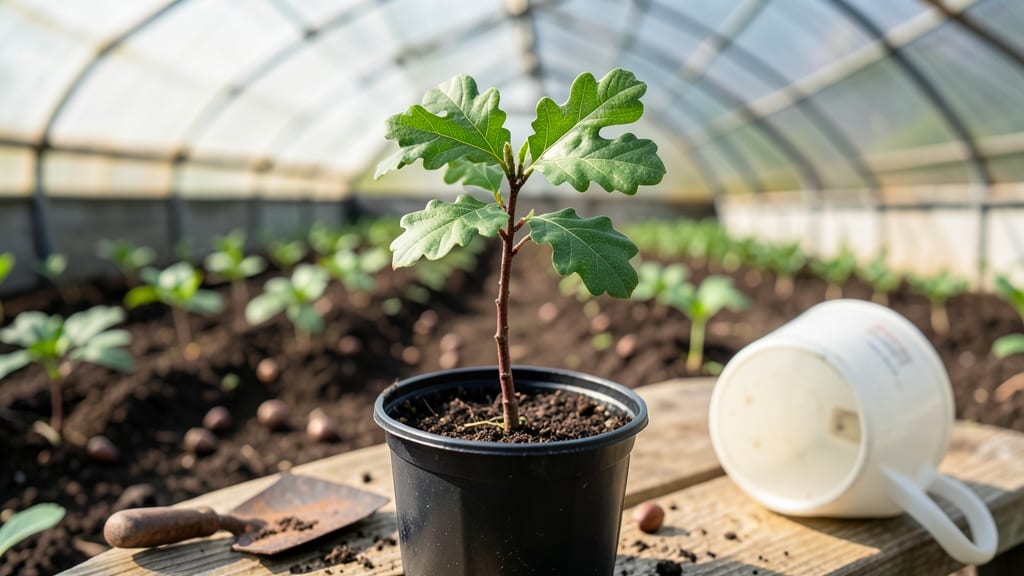
Mastering tree seedling identification by leaf shape can spare you years of frustration—and a hefty gardening bill—before you even plant. can tell an oak from a maple at a glance. The right ID means better spacing, proper pruning, and a garden that thrives instead of fights for sunlight.
Most seedlings reveal their identity through three key traits: leaf shape (lobed, serrated, or smooth), vein patterns (prominent or fine), and how they attach to the stem. A simple magnifying glass or phone app turns this into a quick process—no botany degree required.
I keep a field notebook with pressed leaves from my yard to compare against my growing collection.
Once you master these visual clues, you’ll plant with confidence, knowing each seedling’s mature size and sunlight needs. Your yard becomes a planned ecosystem where trees grow strong, not crowded. The payoff? A mature landscape that requires less cleanup and more enjoyment. Let’s get those seedlings sorted!
This works for backyard plots, urban lots, or even container-grown seedlings—just adjust spacing based on the species’ mature width. Regional variations matter too, so I’ll point out which leaves look different depending on where you live. Grab a flashlight for evening checks and let’s make identification effortless.
The Hidden Triggers Behind Misidentification
Mistakenly labeling a young tree can happen to even the most seasoned gardeners—because seedling identification isn’t just about leaf shape or bark texture. Several sneaky factors can throw off your judgment, leading to confusion between similar species.
Understanding these causes helps you sharpen your eye and avoid costly errors in planting, pruning, or ecosystem restoration. Let’s break down the real culprits behind misidentification.
Seedlings don’t always reveal their true colors—or shapes. Young trees often sprout leaves that look nothing like their mature counterparts, thanks to a phenomenon called juvenile morphology. This is especially true for conifers and hardwoods like oaks, maples, and pines.
- Why it happens: Trees allocate energy to growth in early stages, prioritizing survival over specialized leaf structures. For example, a white oak (Quercus alba) seedling might produce lobed leaves with fewer sinuses than its adult form, mimicking a red oak (Quercus rubra).
- Actionable fix:
- Compare seedlings to reference guides that include juvenile stages (like the Minnesota DNR’s Seedling ID Guide).
- Look for secondary traits, like bud scales, twig color, or the arrangement of leaves (alternate vs. opposite).
- 💡 Pro tip: If in doubt, wait until the seedling’s second or third year—many species “mature” their leaf shape by then.
Drought, poor soil, or extreme temperatures can warp a seedling’s appearance, making it resemble a different species. Stress triggers phenotypic plasticity, where plants alter their growth patterns to survive.
| Stressor | Effect on Seedling | Example |
|---|---|---|
| Drought | Smaller, thicker leaves; stunted growth | A sugar maple (Acer saccharum) under drought might look like a boxelder (Acer negundo) with its compact, serrated leaves. |
| Shade | Larger, thinner leaves to capture light | A white pine (Pinus strobus) seedling in deep shade may develop needles that resemble those of a hemlock (Tsuga canadensis). |
| Poor Soil (e.g., clay or sand) | Altered leaf margins or color | A red maple (Acer rubrum) in sandy soil might develop leaves with jagged edges, confusing it with a silver maple (Acer saccharinum). |
Actionable fix:
- Observe the habitat—seedlings in ideal conditions are more likely to show true species traits.
- 🌡️ Check for signs of stress: Wilting, discoloration, or unusual growth patterns can hint at environmental factors over species ID.
- Grow seedlings in controlled conditions (like a nursery pot) to see their “default” form.
Hybrids are the chameleons of the plant world—they inherit traits from two parent species, creating seedlings that defy easy classification. Hybridization is common in oaks, willows, and poplars, where wind or animals facilitate cross-pollination.
- Why it happens:
- Close relatives (e.g., Quercus palustris and Quercus muehlenbergii) can produce hybrids with leaf shapes that blend or exaggerate features of both parents.
- Some hybrids are sterile, meaning they won’t reproduce true to type, adding to the confusion.
- Actionable fix:
- 📊 Cross-reference with genetic databases: Tools like the USDA’s Hybrid Tree Guide list known hybrids.
- Look for intermediate traits, like a leaf that’s partly lobed (oak) but with some serrations (hickory).
- 🎯 Note the location: Hybrids often thrive in transition zones where parent species overlap.
Just like humans, trees can have dialects. Climate, elevation, and local soil conditions cause geographic variation in leaf shape, size, and color—even within the same species.
- Why it happens:
- For example, eastern white pine (Pinus strobus) seedlings in cooler, northern climates may have longer needles than those in warmer, southern regions.
- Mountain vs. lowland populations of sugar maple can differ in leaf lobing depth due to sunlight exposure.
- Actionable fix:
- Use region-specific field guides (e.g., Peterson Field Guide to Trees editions for your state).
- 🔥 Compare local specimens: Visit a nearby forest or arboretum to see how “your” species typically grows in your area.
- Document variations in your own garden—take photos of seedlings over time to track changes.
By recognizing these triggers, you’ll stop guessing and start seeing the patterns that separate a true species from a lookalike. Next, we’ll dive into practical tools to nail down those tricky IDs—no more second-guessing!
Fixing Common Seedling ID Mistakes
Accurate tree seedling identification doesn’t have to be a guessing game—even when challenges arise. Below, we’ve mapped out practical solutions for the most common pitfalls, from seasonal confusion to misleading leaf traits, along with prevention tips to keep your greenthumb sharp.
Cause: Seedlings look drastically different in winter (bare branches) vs. spring (full foliage), leading to confusion.
How to Fix It: 🔥 Step 1: Focus on Evergreens First
- If the seedling has needles or scale-like leaves year-round, it’s likely a conifer (pine, spruce, or fir). Use needle arrangement (spiral vs. flat clusters) as your first clue.
- Pro Tip: 💡 Run your fingers along the branches—smooth needles (like pine) vs. sharp points (like spruce) can be a dead giveaway.
🍳 Step 2: Dig for Hidden Clues
- In winter, gentle scratch the bark near the base. Conifers often have resin ducts (visible as tiny bubbles), while deciduous trees won’t.
- Prevention: 🌡️ Take reference photos in all seasons—compare summer leaves to winter bark patterns for a foolproof ID.
👨🍳 Step 3: Use Growth Habits as Backup
- Conifers grow upward in dense cones, while deciduous seedlings (like oak or maple) often have horizontal branches with buds in winter.
- Quick Fix: 🎯 Check the soil—pine seedlings thrive in acidic soil, while maple prefers moist, well-drained areas.
Cause: Focusing only on leaf shape (e.g., lobed vs. smooth) while ignoring how they attach to the stem.
How to Fix It: 🔥 Step 1: Master the "Handshake Test"
- Hold the stem and wiggle the leaf gently. If it twists 360° before falling (like a maple), it’s alternate leaf arrangement. If leaves grow in pairs at the same node (like hickory), it’s opposite.
- Visual Aid:
| Arrangement | Example Trees | Key Feature |
|---|---|---|
| Alternate | Oak, Maple, Birch | Leaves spiral up the stem |
| Opposite | Ash, Dogwood, Buckeye | Leaves grow directly across from each other |
| Whorled | Horse Chestnut, Catalpa | 3+ leaves emerge from one point |
🍳 Step 2: Trace the Vein Pattern
- Pinnate veins (one central vein with side branches, like walnut) vs. palmate veins (all veins radiate from one point, like maple).
- Pro Tip: 💡 Hold the leaf up to light—the vein pattern becomes clearer when backlit.
🔪 Step 3: Check the Stem’s "Scar"
- When a leaf falls, it leaves a bud scar. Count the number of buds (e.g., 3 buds = hickory, 1 bud = oak).
- Prevention: ✨ Press a few leaves in a book to preserve samples for later comparison.
Cause: Assuming a tiny seedling will grow into a massive oak or redwood based on a single leaf.
How to Fix It: ⏰ Step 1: Compare to a "Seedling Field Guide"
- Use scaled diagrams (like those in the USDA Plants Database) to match your seedling’s height, stem thickness, and leaf size to known species.
- Example: A white oak seedling has bristle-tipped lobes, while a red oak has pointed lobes—critical at the seedling stage!
🍳 Step 2: Note the "First Leaf" Shape - The cotyledons (first leaves) can reveal the family.
For instance: - Two large, smooth cotyledons = Likely a maple or beech. - Needle-like cotyledons = Pine or spruce family. - Quick Fix: 🎯 Sketch the first leaf you see—it’s often more distinct than later leaves.
👨🍳 Step 3: Cross-Reference with Local Flora
- Use apps like iNaturalist or LeafSnap to upload photos and get AI-assisted matches based on your region.
- Prevention: 🌡️ Join a local gardening group—experts can confirm IDs and share growing tips for your area.
If all else fails:
- Rule out conifers (needles vs. broad leaves).
- Narrow by leaf margin (lobed, serrated, smooth).
- Check bark texture (smooth = birch, rough = oak).
- Observe growth speed (fast = willow, slow = pine).
Final Tip: ✨ Keep a seedling journal—log dates, locations, and photos. Over time, patterns will become instinctive!
Frequently asked questions
How can I tell the difference between a maple and oak seedling just by looking?
Maple seedlings have palmate veins (veins radiating from one point) and smooth-edged or lobed leaves that grow in a spiral pattern. Oak seedlings typically have lobed leaves with bristle tips and alternate leaf arrangement. Hold the leaf up to light to see the vein pattern clearly.
What’s the best time of year to identify tree seedlings?
Spring and early summer are ideal when leaves are fully formed and before pests or disease alter their appearance. Avoid winter when many deciduous trees are bare, but evergreens (like pines or spruces) remain identifiable year-round by their needles and bark.
Are there free apps for tree seedling identification?
Yes! Try LeafSnap (uses AI to analyze leaf shape) or iNaturalist (crowdsourced plant ID). For regional accuracy, download state-specific guides like Seek by iNaturalist. Always cross-check with a physical field guide for tricky cases.
Why do some seedlings look nothing like their mature trees?
This is called juvenile morphology—young trees prioritize survival over specialized traits. For example, a white oak seedling might have fewer lobes than its adult form. Wait until the seedling’s second or third year, or compare to guides that include juvenile stages.
Can I safely press and preserve tree leaves for later identification?
Place leaves between absorbent paper (like coffee filters) and a heavy book for 2-3 weeks. Store them in a sealed envelope with the date and location. This creates a reference library for future comparisons—just avoid pressing diseased or damaged leaves.