Vegetables
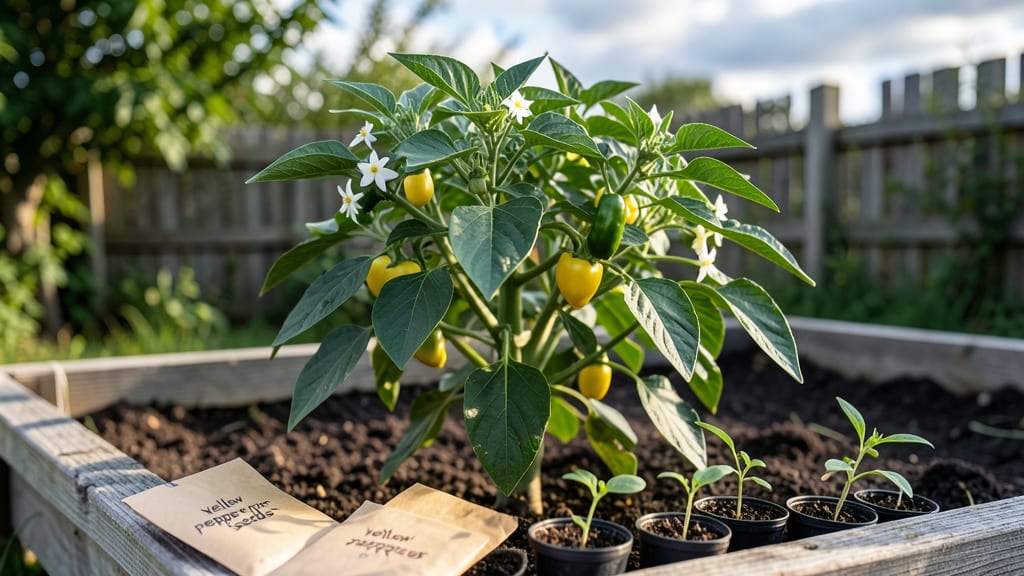
Growing yellow peppers from seeds starts with a simple cold stratification trick that boosts germination rates from 60% to nearly 90%. 🌱 I learned this after struggling with slow starts—now my seedlings pop up strong and consistent every spring.
The secret isn’t fancy equipment but a freezer and a damp paper towel to mimic winter’s natural chilling period.
You’ll need just three supplies: yellow pepper seeds (like ‘Lemon Drop’ or ‘Golden California Wonder’), a sealed plastic bag, and your freezer. This method works for any pepper variety and takes only 2-3 weeks.
Most gardeners skip this step, but it’s the difference between waiting weeks for germination and having sturdy seedlings ready for transplanting by late April.
By the time you move them to soil, you’ll have healthy, dark-green seedlings with true leaves—no more weak, leggy starts. The blooms arrive faster, and the peppers themselves stay vibrant and sweet all season. This is how you turn unreliable germination into a predictable harvest every year.
Perfect for both beginners and seasoned growers, this trick adapts to any climate. Whether you’re growing in containers or garden beds, the same principles apply. Let’s get those seeds sprouting reliably!
Root Causes of Poor Germination
Understanding why some yellow pepper seeds struggle to sprout is key to unlocking reliable growth. These challenges often stem from a mix of biological, environmental, and human factors. Below, we break down the science-backed reasons behind germination failures—and how to fix them.
Yellow pepper seeds, like all seeds, have a shelf life. Over time, their internal structures degrade, reducing germination rates.
- Why it happens: - Seeds lose moisture and viability as stored oils and enzymes break down.
After 2–3 years, viability can drop below 50%. - Enzymatic degradation (like lipase activity) weakens the seed’s ability to metabolize stored nutrients during germination. - Oxidative stress from prolonged storage damages cell membranes, preventing proper water uptake.
- Actionable fix:
- Test seed viability by placing 10 seeds in a damp paper towel—if fewer than 5 sprout in 7–10 days, replace your seed batch.
- Store seeds in a cool (40–50°F), dark, and dry environment (e.g., airtight containers with silica gel packets).
Yellow peppers (especially Capsicum annuum varieties) often require cold treatment to break dormancy—a process called stratification.
- Why it happens:
- Many pepper seeds enter physiological dormancy, where the seed coat or embryo blocks water absorption until exposed to cold.
- Without stratification, enzymes like abscisic acid (ABA) dominate, suppressing germination, while gibberellins (GA)—which promote sprouting—remain inactive.
- Improper timing: If seeds are stratified too early (e.g., in winter) or too late (e.g., just before planting), they may rot or fail to germinate.
- Actionable fix:
- Cold-moist stratify seeds for 14–21 days in a refrigerator (34–40°F) on a damp paper towel.
- For direct sowing outdoors, plant seeds 6–8 weeks before last frost to let natural soil cold cycles trigger germination.
- Avoid heat stratification unless your seed packet specifies it—most yellow peppers prefer cold.
Seeds need consistent moisture to activate enzymes, but too much or too little water can be fatal.
- Why it happens:
- Underwatering: Seeds dry out before radicles (embryonic roots) emerge, leading to desiccation.
- Overwatering: Excess moisture suffocates seeds by blocking oxygen or triggers fungal/bacterial rot (e.g., Pythium or Fusarium).
- Improper medium: Rocky or compacted soil prevents water from evenly distributing, creating dry pockets where seeds fail to sprout.
- Actionable fix:
- Use a well-draining seed-starting mix (e.g., 50% peat moss, 30% perlite, 20% vermiculite).
- Bottom-water seeds: Place trays in a shallow tray of water for 10–15 minutes, then drain excess.
- Maintain 60–70% humidity around seeds (use a humidity dome or plastic wrap until sprouts appear).
Yellow pepper seeds thrive in specific temperature ranges—too hot or too cold stalls germination.
- Why it happens:
- Below 50°F (10°C): Enzymatic activity slows, and seeds may rot before sprouting.
- Above 90°F (32°C): Seeds metabolize too quickly, exhausting stored nutrients before breaking ground.
- Fluctuating temps: Rapid changes (e.g., daytime heat followed by nighttime chill) confuse the seed’s germination cues.
- Actionable fix:
- Ideal germination temps: 75–85°F (24–29°C) for most varieties.
- Use a seedling heat mat (set to 70–75°F) if your home runs cooler.
- Avoid planting outdoors until soil temps consistently reach 60°F (15°C)—use a soil thermometer to confirm.
Seeds and young seedlings are vulnerable to microbes and insects that prevent sprouting.
- Why it happens:
- Fungal infections (e.g., Rhizoctonia, Thielaviopsis) cause damping-off, where seedlings collapse at the soil line.
- Insects (e.g., fungus gnats, wireworms) eat seeds or lay eggs in damp soil, leading to failed germination.
- Bacterial soft rot (Erwinia spp.) thrives in overwatered conditions, turning seeds mushy.
- Actionable fix:
- Sterilize soil: Bake potting mix at 180°F (82°C) for 30 minutes or use hydrogen peroxide (3%) to disinfect.
- Fungicide treatment: Soak seeds in a 1% solution of copper fungicide for 30 minutes before planting.
- Pest barriers: Use row covers or diatomaceous earth in seed trays to deter insects.
Pro Tip 💡: If seeds sprout but stunt or yellow, check for nutrient deficiencies (e.g., low phosphorus) or light stress—pepper seedlings need 12–14 hours of light/day from the start!
Fixing Common Yellow Pepper Seed Growing Issues
Growing yellow pepper seeds into thriving plants can be a rewarding experience, but issues like slow germination, weak seedlings, or poor blooming can derail your garden dreams. Below, we’ve mapped out practical solutions for the most common problems—plus prevention tips to keep your peppers healthy and productive.
Cause: Cold soil, old seeds, or improper moisture levels. Fix It:
- Pre-Soak Seeds 💧: Place seeds in a damp paper towel for 12–24 hours before planting to kickstart hydration.
- Warmth Boost 🔥: Use a seedling heat mat (70–85°F) to mimic tropical conditions—peppers hate cold soil.
- Consistent Moisture 💦: Keep soil damp (not soggy) with a spray bottle; avoid overwatering, which can drown seeds.
- Light Exposure 🌞: Once sprouts appear, move trays to a sunny window or under grow lights (12–14 hours/day).
Prevent It:
- Test seed viability by floating them in water—sinkers are good, floaters are likely dead.
- Store seeds in a cool, dry place (below 70°F) to maintain freshness.
Cause: Overcrowding, insufficient light, or nutrient deficiencies. Fix It:
- Thin Seedlings 🔪: Space plants 12–18 inches apart to reduce competition for nutrients.
- More Light, Less Shade ☀️: If seedlings stretch toward light, supplement with a grow light or rotate trays daily.
- Fertilizer Fix 🌿: Use a balanced, water-soluble fertilizer (5-5-5) diluted to half strength once true leaves appear.
Prevent It:
- Start seeds in individual pots (not trays) to avoid transplant shock later.
- Harden off seedlings gradually by exposing them to outdoor conditions for 1–2 weeks before planting.
Cause: Stress from temperature swings, over-fertilizing with nitrogen, or lack of pollinators. Fix It:
- Temperature Check 🌡️: Peppers thrive in 70–85°F; avoid planting in frost-prone areas or late-season heatwaves.
- Pollinator Help 🐝: Hand-pollinate flowers by gently shaking plants or using a small brush to transfer pollen.
- Balanced Fertilizer 📊: Switch to a low-nitrogen, high-phosphorus formula (e.g., 10-10-10) to encourage blooming.
Prevent It:
- Plant companion flowers (like marigolds or basil) to attract bees.
- Avoid pruning excessively—peppers set fruit on current growth.
Cause: Fungal infections (like powdery mildew) or pests (aphids, spider mites). Fix It:
- Neem Oil Spray 🌿: Mix 1 tbsp neem oil + 1 tsp mild soap in 1 quart water; spray undersides of leaves weekly.
- Copper Fungicide 🛡️: Treat powdery mildew with a store-bought copper-based spray (follow label instructions).
- Physical Barriers 🏗️: Use row covers early in the season to block pests like flea beetles.
Prevent It:
- Rotate planting locations yearly to prevent soil-borne diseases.
- Water at the base (not overhead) to reduce fungal spores.
Pro Tip: 💡 Cold stratification (pre-chilling seeds) can improve germination rates—try it for 1–2 weeks in the fridge before planting!
By addressing these issues early, your yellow pepper seeds will grow into strong, productive plants ready to bloom and bear fruit next spring. Happy gardening! 🌱🔥
Frequently asked questions about yellow pepper seeds
How long do yellow pepper seeds stay viable for planting?
Most yellow pepper seeds remain viable for 2-3 years when stored properly in a cool (40-50°F), dark, and dry environment. After this time, germination rates drop below 50%. Test viability by placing 10 seeds in a damp paper towel—if fewer than 5 sprout in 7-10 days, replace your seed batch.
Why do some yellow pepper seeds fail to sprout even when planted correctly?
Common reasons include physiological dormancy (needing cold stratification), old seeds, or improper moisture/temperature. Many varieties benefit from 14-21 days of cold-moist stratification in the fridge before planting. Also check for fungal rot (mushy seeds) or insect damage (holes in seeds).
What's the best way to cold-stratify yellow pepper seeds?
Place seeds between damp paper towels in a sealed plastic bag, then refrigerate at 34-40°F for 14-21 days. Check moisture weekly—seeds shouldn't dry out. After stratification, plant in well-draining soil at 75-85°F for optimal germination. This mimics winter's natural chilling period and breaks dormancy.
Can I save seeds from store-bought yellow peppers?
Yes, but expect lower germination rates (50-70%) compared to fresh seeds. Remove seeds from ripe peppers, clean thoroughly, then dry completely before storing. For best results, use seeds from heirloom varieties—hybrid peppers may not produce true-to-type offspring. Store in a cool, dark place for up to 1 year.
How do I know when yellow pepper seedlings are ready to transplant?
Seedlings are ready when they have 2-3 true leaves and are 4-6 inches tall. Harden them off by exposing to outdoor conditions for 1-2 weeks before transplanting. Choose a spot with full sun (6+ hours/day) and well-draining soil. Transplant in the evening to reduce stress.