
Vegetables
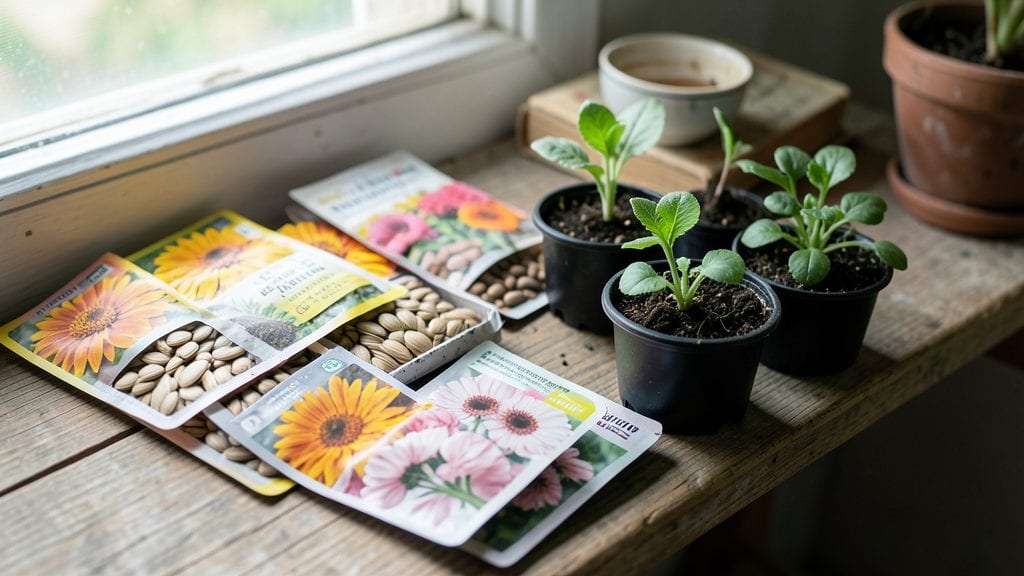
Understanding annual seeds meaning reveals plants that thrive for just one growing season—sprouting, blooming, and producing seeds before dying back completely. This contrasts sharply with perennials, which regrow yearly from established roots, making annuals ideal for quick harvests or seasonal color.
Annual plants pack their entire reproductive cycle into a single season, which is why they grow so rapidly and focus energy on seed production rather than root systems. 🌱 This biological strategy explains why they often outperform perennials in short-season climates or container gardens.
For example, tomatoes and marigolds are classic annuals that deliver vibrant blooms or bountiful fruit within months, then complete their life cycle before winter arrives.
What makes annuals so popular among gardeners is their predictability—you plant, nurture, and harvest within one season, then simply replant the following year. This contrasts with perennials like lavender or asparagus, which establish deep roots over time but require patience for full yields.
The trade-off? Annuals demand more frequent replanting but reward you with immediate results, making them perfect for beginners or small-space growers.
💡 In This Article
- Life Cycle of Annual Plants vs Perennials
- Best Annual Seeds for Gardens and Containers
Life cycle of annual plants vs perennials
Here's what actually happens biologically: annual plants have evolved to allocate nearly all their energy to rapid growth and reproduction within a single season. Their shallow root systems (typically 6-12 inches deep) prioritize quick nutrient absorption over deep anchoring, allowing them to establish and flower faster than perennials.
This strategy works because annuals face higher mortality risks from seasonal changes, so they "bet everything" on producing seeds before winter arrives. 🌱
Compare this to perennials like rosemary or peonies, which develop extensive root networks (often 3-5 feet deep) to store carbohydrates as starches for multiple growing seasons. These plants invest energy in longevity, storing up to 50% of their annual photosynthesis in roots for winter survival.
Annuals, meanwhile, store minimal reserves—just enough to sustain early growth until they can photosynthesize independently.
The timing difference is dramatic: most annuals complete their life cycle in 60-120 days from seed to seed production, while perennials may take 2-5 years to reach full maturity. This explains why basil bolts to flower in just 8-10 weeks—its entire focus is on reproductive success before dying.
The trade-off? Annuals produce 10-100x more seeds per plant than perennials, ensuring genetic continuity despite their short lifespan.
Seasonal adaptations play a key role too. Annuals often exhibit thermoperiodism—flowering triggered by specific temperature ranges—while perennials use vernalization (cold treatment) to time blooming. For example, lettuce flowers when days shorten (12-14 hours light), while asparagus requires 30-60 days of cold to break dormancy.
These differences explain why annuals thrive in short growing seasons.
Consider the energy math: an annual tomato plant might allocate 70% of its resources to fruit production in its single season, while a perennial tomato (like some heirloom varieties) spreads that energy across 3-5 years of growth.
This is why annuals often produce 2-3x more fruit per square foot in their first year compared to perennials. The downside? Their complete die-back means gardeners must replant annually, creating a renewable cycle of growth.
What most gardeners don't realize is how this biological strategy affects soil health. Annuals contribute to organic matter turnover through rapid decomposition, while perennials build soil structure through deep roots. This explains why vegetable gardens (mostly annuals) need more frequent composting than perennial flower beds. 🌿