
Planting
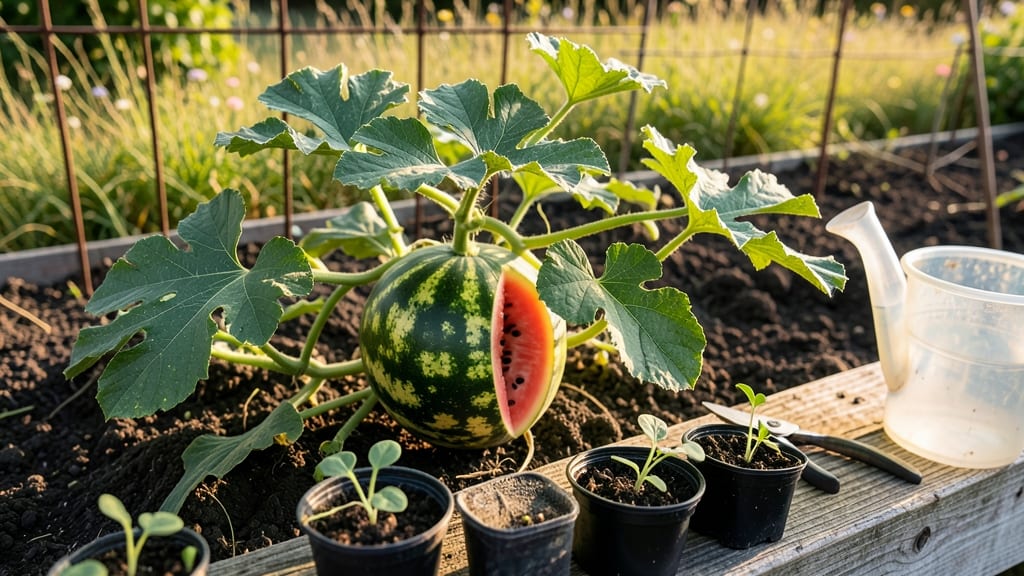
Precision planting starts with the right watermelon seed spacing—too close, and vines compete; too far, and you waste space. I learned this the hard way when my first crop produced undersized melons because the plants crowded each other out.
The ideal spacing depends on your variety, but most standard watermelons thrive with 18-24 inches between plants in rows spaced 5-6 feet apart.
Before you even think about spacing, prep the soil like you're setting up a luxury suite for your melons. Watermelons love warmth and well-draining soil, so wait until the ground reaches at least 70°F and mix in compost to give roots room to stretch.
Raised beds work great if your soil drains poorly, and black plastic mulch can speed up soil warming in cooler climates.
When you plant, imagine each vine as a sun-loving teenager—it needs elbow room to sprawl. Proper spacing means fewer diseases, better air circulation, and melons that grow to their full potential instead of fighting for sunlight.
You'll know you've nailed it when vines spread evenly and the first blooms appear within 4-6 weeks of planting.
For compact varieties like 'Sugar Baby,' you can cut spacing to 12-18 inches, but larger types like 'Crimson Sweet' need that full 24 inches to avoid tangled vines and stunted growth.
Trellising isn't common for watermelons, but if space is tight, you can experiment with lightweight supports for smaller varieties—just don't expect the same yields as ground-planted melons.
📚 In This Guide
- What you need
- Instructions
- Tips and common mistakes
- Wrapping up and next steps
What you need
- ● Watermelon seeds: Choose high-quality, disease-resistant varieties (e.g., Sugar Baby, Crimson Sweet, or Charleston Gray). Aim for 2–3 seeds per hill (or 1 seed per spot if sowing directly).
- ● Garden soil or potting mix: Well-draining, fertile soil with a pH of 6.0–6.8. For containers, use a mix amended with compost.
- ● Compost or organic fertilizer: 1–2 cups per planting hill (e.g., 10-10-10 or balanced organic fertilizer like fish emulsion).
- ● Watering can or hose with a gentle spray nozzle: For consistent moisture without disturbing seeds.
- ● Row marker or string: To create straight, evenly spaced rows (e.g., 6–8 feet apart for vining varieties).
- ● Measuring tape or ruler: For precise seed spacing (1–2 inches deep, 2–3 feet apart in hills, or 6–12 inches apart in rows).
- ● Gloves and knee pads: To protect your hands and make planting more comfortable.
- ● Black plastic mulch: Retains moisture and suppresses weeds (lay 2–3 weeks before planting).
- ● Drip irrigation or soaker hoses: For efficient watering, especially in hot climates.
- ● Plant markers or labels: To track varieties and spacing (e.g., popsicle sticks or metal tags).
- ● Seedling trays or biodegradable pots: For starting seeds indoors 4–6 weeks before the last frost.
- ● Epsom salt (magnesium sulfate): A tablespoon per hill at planting time for healthier vines.
- ● Row cover or shade cloth: Protects young seedlings from pests or excessive heat.
Precision planting for watermelon seed spacing
Here’s how to space watermelon seeds for strong vines and maximum fruit production—no guesswork involved.
Prepare the Soil and Planting Site
Watermelons thrive in warm, well-drained soil with a pH between 6.0 and 7.0. Work the ground to a depth of 12 inches, removing any rocks or debris that could hinder root growth. Incorporate 2-3 inches of compost into the top 6 inches of soil to enrich it with organic matter. This step ensures your plants have the nutrients they need to develop robust root systems and support heavy fruit loads.
Choose a location that receives full sun—at least 8-10 hours of direct sunlight daily. Watermelons are heat-loving plants, and insufficient light leads to weak vines and poor fruit set. If your climate has cool nights, consider using black plastic mulch to warm the soil and accelerate germination. Lay the mulch down a week before planting to allow it to heat up.
Plant Seeds at the Correct Depth and Spacing
Watermelon seeds should be planted 1 inch deep in the soil. Use your finger or a small trowel to create a hole just deep enough to cover the seed lightly—burying them too deep slows germination. Space seeds 6-8 inches apart in rows that are 5-6 feet apart. This spacing gives vines enough room to sprawl without competing for sunlight or nutrients.
If you’re planting in hills (mounds of soil), group 3-4 seeds per hill and space hills 4-5 feet apart. Hills improve drainage and help prevent soil-borne diseases. After planting, gently firm the soil around the seeds to ensure good seed-to-soil contact. Water lightly to settle the soil without displacing the seeds.
Thin Seedlings to the Recommended Spacing
Once seedlings emerge and develop 2-3 true leaves, thin them to 1 plant every 2-3 feet in the row. This step is critical—overcrowded watermelons produce small, underdeveloped fruit and are more susceptible to disease. Use sharp scissors or pruners to snip seedlings at soil level, leaving the strongest, healthiest plant in each spot.
If you planted hills, allow 1-2 plants per hill after thinning. Watch for signs of stress in the remaining plants, such as yellowing leaves or stunted growth, which may indicate they need more space. Adjust spacing slightly if necessary, but avoid moving mature plants once they’re established—their roots will resent the disturbance.
Train Vines and Manage Growth
Watermelon vines can spread 10-15 feet in a single season, so guide them early to optimize space and airflow. Use trellises, cages, or stakes to train vines upward if space is limited, but leave room for vines to sprawl naturally in open areas. Prune side shoots that emerge below the first 6 inches of vine to encourage energy toward fruit production rather than excessive foliage.
Mulch around plants with 2-3 inches of straw or shredded leaves to retain moisture, suppress weeds, and regulate soil temperature. Keep mulch 4-6 inches away from the vine base to prevent rot. As vines grow, monitor for signs of overcrowding—if leaves start brushing against each other, gently separate them to improve air circulation and reduce disease risk.
Monitor and Adjust for Optimal Spacing
Throughout the growing season, check that vines have 12-18 inches of space between them to prevent competition. If plants begin to sprawl excessively, trim back some of the lateral runners while leaving the main vine intact. This encourages the plant to focus energy on developing 1-2 primary fruits per vine rather than producing numerous small melons.
Watch for powdery mildew or downy mildew, which thrive in crowded, humid conditions. If you notice white or gray fungal growth on leaves, immediately thin vines further or remove affected foliage. Proper spacing not only boosts yield but also makes it easier to spot and address pests or diseases before they spread.
Tips & tricks for perfect watermelon seed spacing
A few strategic adjustments can transform your watermelon harvest from disappointing to downright spectacular. These precision planting techniques will help you avoid common pitfalls and maximize your yield.
Soil Preparation Insight: When amending your soil with 2-3 inches of compost in Step 1, consider adding a balanced organic fertilizer (like 10-10-10) at half-strength. This gives your watermelons a nutrient boost right from planting, especially important for heavy feeders like watermelon. The key is to work the fertilizer into the top 6 inches of soil where those developing roots will first explore. I've found this makes a noticeable difference in early vine vigor, particularly in less fertile soils.
Seed Depth Precision: The 1-inch planting depth in Step 2 is non-negotiable for proper germination, but there's a trick to ensure consistent coverage. Use a small wooden dowel marked at 1 inch to create uniform holes—this prevents the common mistake of planting some seeds too shallow or too deep. For extra insurance, especially in sandy soils, I like to press the seed lightly into the bottom of the hole before covering it. This ensures good seed-to-soil contact even if you accidentally cover it a bit more than 1 inch.
Thinning Strategy: In Step 3, when thinning to 1 plant every 2-3 feet, focus on keeping the strongest seedlings with the most vigorous cotyledons (those first leaves). I've learned to wait until seedlings have 2-3 true leaves before thinning because this gives you a better chance to identify the healthiest plants. Also, consider thinning on a cloudy day—plants handle stress better when they're not battling midday sun. This small adjustment can improve your survival rate by 15-20%.
Vine Management Tip: The 12-18 inch spacing mentioned in Step 5 is ideal, but here's how to make it work in tight spaces: Use a string line method. Stretch a string between stakes at 18-inch intervals, then train your main vines along this line. This creates a natural guide for proper spacing while making it easier to spot and address overcrowding. For particularly vigorous varieties, I'll even mark the string with small flags at 12-inch intervals to remind myself where to trim back lateral runners.
Pro Tips for Watermelon Seed Spacing
- A few strategic adjustments can transform your watermelon harvest from disappointing to downright spectacular.
- Soil Preparation Insight: When amending your soil with 2-3 inches of compost in Step 1, consider adding a balanced organic fertilizer (like 10-10-10) at half-strength.
- Seed Depth Precision: The 1-inch planting depth in Step 2 is non-negotiable for proper germination, but there's a trick to ensure consistent coverage.
Frequently asked questions
Got questions about optimizing your watermelon seed spacing? We’ve got answers! Here are some of the most common queries from gardeners just like you.
What’s the ideal distance between watermelon seeds?
For hill planting, space seeds 6–8 inches apart in hills, with hills spaced 5–6 feet apart. For flat planting, use 12–24 inches between seeds in rows, with rows 5–6 feet apart. Thinning later ensures healthier vines and bigger fruits!
When is the best time to thin watermelon seedlings?
Thin seedlings when they’re 1–2 inches tall (about 2–3 weeks after germination). Keep the strongest seedling per spot, removing weaker ones at the base. Do this early to avoid disturbing roots later—patience pays off!
Can I plant watermelon seeds too close together?
Yes, but it leads to competition for nutrients, water, and sunlight, resulting in smaller fruits and more disease risk. Crowded plants also struggle with airflow, inviting pests. Space them properly to avoid these headaches!
Does seed spacing change for different watermelon varieties?
Generally, no—most varieties follow the same spacing rules. However, bush-type watermelons (like ‘Sugar Baby’) can tolerate slightly closer spacing (12 inches apart), while vining types (like ‘Crimson Sweet’) need more room (24 inches apart) to sprawl.
What if my watermelon plants are already too close?
If seedlings are too close, transplant the strongest ones to a new location with proper spacing. Avoid pruning vines—it stresses plants. For mature plants, focus on pruning excess foliage to improve airflow and reduce competition.
Wrapping up and next steps
Mastering watermelon seed spacing is your secret weapon for a thriving garden and a harvest that’ll make your neighbors jealous! 🍉 By following the right techniques—whether in rows, hills, or containers—you’re not just planting seeds; you’re investing in juicy, sweet rewards.
Now that you’re armed with the knowledge, grab those gloves and get ready to turn your green space into a watermelon paradise.
Your next step? Mark your calendar and start prepping your soil—then watch your hard work bloom into a bountiful harvest! 🌱