
Vegetables
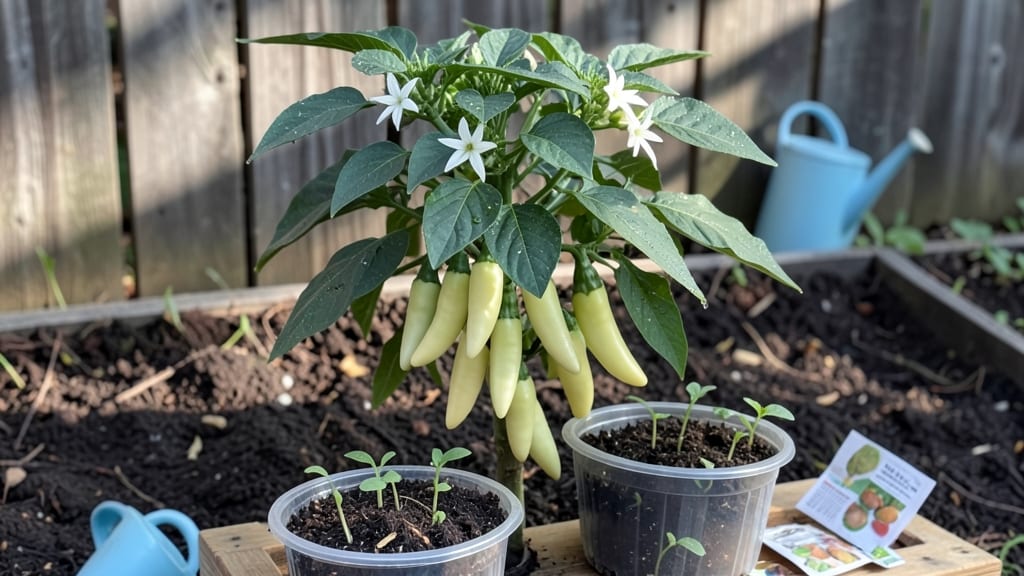
Banana pepper seeds develop inside the fruit after successful pollination, reaching full maturity in 70-90 days. These tiny seeds are completely edible, offering a mild, nutty flavor that works beautifully in both dried and pickled applications.
These seeds aren't just a byproduct—they're a flavor powerhouse in their own right. 🌱 When you dry them whole, they develop a toasty depth that pairs perfectly with charred meats or roasted vegetables, while pickled seeds add a tangy crunch to salads and tacos.
The key to unlocking their full potential lies in proper harvesting: wait until the peppers are fully ripe but still firm, then carefully extract the seeds to preserve their texture and flavor.
Many home gardeners overlook these seeds, but they're actually one of the most versatile components of the pepper itself.
What's fascinating is how their flavor profile evolves through different preservation methods. Fresh seeds taste slightly bitter, but proper drying or fermenting transforms them into a subtle, aromatic spice that enhances dishes without overpowering them.
I've even used them as a natural salt substitute in homemade spice blends—just crush them lightly and mix with smoked paprika for an instant flavor boost. The best part? You don't need fancy equipment; a simple dehydrator or even your oven on low heat will do the trick.
💡 In This Article
- How Banana Pepper Seeds Develop Inside the Fruit
- Culinary Uses for Banana Pepper Seeds Beyond Garnishes
How banana pepper seeds develop inside the fruit
Banana pepper seeds begin their journey when pollination occurs, typically through bees or wind carrying pollen between flowers. The fertilized ovule inside the ovary swells as it develops into a seed while the surrounding fruit grows simultaneously.
This process kicks off around 30-40 days after flowering, with seeds reaching their initial form by 50 days. The key factor here is ethylene gas production—the plant's natural hormone that signals both fruit ripening and seed maturation, creating that perfect balance between growth and hardening.
Seed development occurs in distinct stages, starting with soft, gel-like embryos that gradually firm up as starches convert to proteins and oils. By 70-90 days, the seeds have fully hardened due to lignin deposition—a complex polymer that strengthens plant cell walls.
This hardening process is why dried banana pepper seeds maintain their crunchy texture. Temperature plays a crucial role too: ideal ranges of 70-85°F during maturation ensure proper enzyme activity, while humidity below 60% prevents mold growth that could ruin seed viability.
What most gardeners don't realize is how light exposure affects seed quality. Peppers grown in full sun produce seeds with higher oil content, which translates to richer flavor when dried. The seeds near the pepper's center tend to develop first, creating a natural gradient where outer seeds mature slightly later.
This is why harvesting fully ripe peppers gives you the most uniform seed quality. The hardening process also makes seeds more resistant to pests—a built-in survival mechanism that explains why properly stored banana pepper seeds can remain viable for 2-3 years.
Environmental stressors can dramatically alter seed development. For example, sudden temperature drops below 50°F can cause seed abortion, while excessive water stress triggers premature hardening. The plant's natural defense mechanism kicks in when it detects these threats, redirecting resources to protect the developing seeds.
This is why consistent watering (about 1-1.5 inches per week) and mulching are crucial for optimal seed development—both practices help maintain stable soil moisture and temperature.
Here's a fascinating detail about seed texture: the initial softness comes from high moisture content (around 70-80%) during early development. As the seeds mature, this moisture decreases to 10-15%, which is why properly dried seeds have that satisfying crunch.
The hardening process also increases their shelf life by preventing microbial growth—a natural preservation method that makes these seeds perfect for long-term storage without refrigeration.
The science behind seed hardening involves cell wall thickening through cellulose and hemicellulose deposition. This structural reinforcement is what gives dried banana pepper seeds their characteristic snap when used as garnishes.
What's particularly interesting is how this process mirrors what happens in other seed-bearing fruits like jalapeños and habaneros—though banana pepper seeds tend to be slightly larger and more uniform in shape, making them ideal for culinary applications.