
Trees
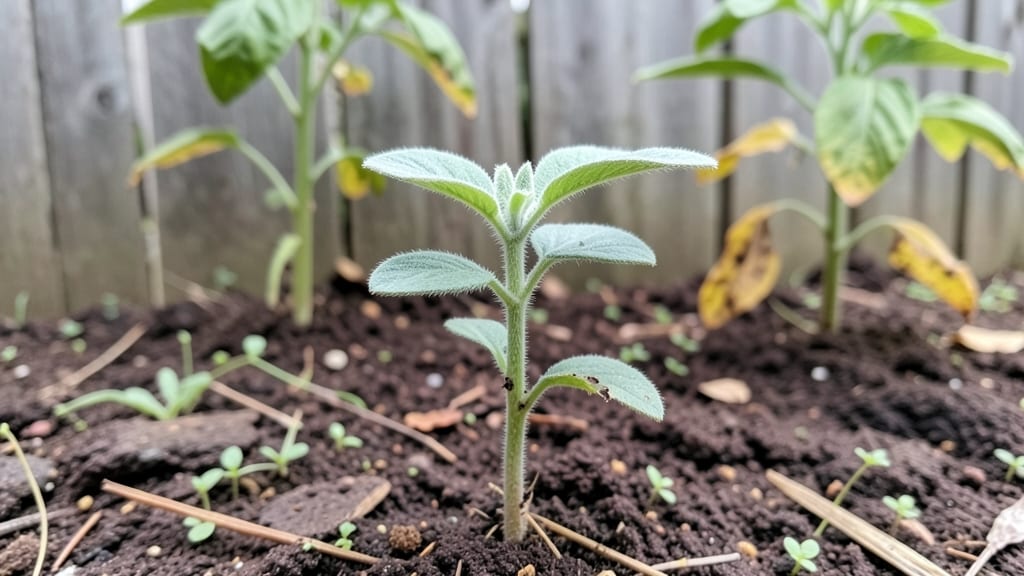
Mastering borage seedling identification early keeps you from pulling out the wrong plants later—those first leaves look like tiny starbursts, deep green and fuzzy-edged, arranged in a rosette right at the soil line.
I’ve pulled up what I thought were borage seedlings only to find wild comfrey or lamb’s quarters hiding underneath, so I learned to check the stems too.
The real giveaway is the hairy stems and square shape when you look closely. Borage’s stems feel rough to the touch, almost like sandpaper, while its leaves grow in a whorl pattern around the stem.
If you see smooth stems or alternate leaf patterns, you’re dealing with something else—maybe even a weed that’ll outcompete your borage before it gets established.
Once you confirm those fuzzy leaves and square stems, your seedlings are ready for transplanting. They’ll grow fast once they’re in the ground, reaching full height by summer with those iconic blue star-shaped flowers.
The earlier you spot them, the sooner you can give them space to thrive without fighting for sunlight.
This works for both garden beds and containers, though borage’s self-seeding habit means you’ll likely have more than you bargained for next year. Keep an eye out for those telltale fuzzy leaves, and you’ll never mistake borage for anything else again.
Mistaking Borage for Other Plants
Identifying borage seedlings can be tricky—especially when they resemble other plants in early growth stages. Misidentification often stems from similar leaf shapes, growth patterns, or environmental overlaps with common weeds or edible plants.
Below are the key reasons why confusion arises, along with scientific insights to help you spot the differences.
Borage (Borago officinalis) seedlings share leaf structures with several other plants, making visual identification challenging.
- Borage vs. Comfrey (Symphytum officinale):
Both have hairy, rough leaves and a square stem, but comfrey leaves are broader, more heart-shaped, and grow in a basal rosette before flowering. Borage leaves, in contrast, are more triangular and less lobed in early stages.
- Borage vs. Forget-Me-Not (Myosotis spp.):
Forget-me-nots have small, oval leaves with serrated edges, while borage seedlings exhibit coarser, more jagged lobes. Additionally, forget-me-not stems are thin and wiry, whereas borage stems are sturdy and slightly woody.
- Borage vs. Lamb’s Quarters (Chenopodium album):
Both plants can appear fuzzy, but lamb’s quarters leaves are more triangular with a powdery coating, while borage leaves have a distinctive star-shaped hair pattern under magnification.
Young borage seedlings (cotyledon and first true leaves) lack the distinctive blue flowers or star-shaped hairs that mature plants display. This makes them easy to overlook or mistake for:
- Weeds like purslane (Portulaca oleracea) – which has succulent, spoon-shaped leaves and lacks the rough texture of borage.
- Edible greens like spinach (Spinacia oleracea) – spinach leaves are smooth and arrowhead-shaped, while borage’s are coarser and more irregular.
- Wild mint (Mentha spp.) – mint has opposite leaves (paired at nodes), whereas borage leaves grow alternately along the stem.
Borage thrives in poor, well-drained soils and often grows alongside disturbed or neglected areas, where it can be mistaken for:
- Wild borage lookalikes like hedge bindweed (Calystegia sepium) – bindweed has heart-shaped leaves and twining vines, while borage grows upright.
- Groundsel (Senecio vulgaris) – a common weed with small, jagged leaves, but groundsel lacks borage’s distinctive star-shaped hairs and has a musty odor when crushed.
- Chickweed (Stellaria media) – chickweed has smooth, oval leaves and a branching growth habit, while borage remains more robust and upright.
Experienced gardeners rely on subtle but critical features that beginners may miss:
- Leaf Arrangement: Borage has alternate leaves (one per node), while many lookalikes (like mint) have opposite leaves (paired).
- Stem Texture: Borage stems are slightly hairy and square, whereas weeds like plantain (Plantago) have smooth, round stems.
- Root Structure: Borage develops a taproot system, while many weeds (e.g., dandelions) have fibrous or shallow roots.
💡 Pro Tip: If you’re unsure, crush a leaf—borage emits a mild cucumber-like scent, while many weeds smell earthy, bitter, or rank.
Quick Fixes for Borage Seedling Confusion
Got tangled in borage seedling mix-ups? Don’t panic—here’s your step-by-step troubleshooting guide to nail those leaf shapes, stems, and growth patterns like a pro. Whether you’re dealing with misidentifications, slow growth, or pest problems, these solutions will get you back on track with confidence.
Problem: Your borage seedlings resemble other common herbs (like comfrey or forget-me-nots) or weeds (e.g., lamb’s quarters), making ID tricky.
🔥 Fix: Master the 3-Point Checklist
- Leaf Shape & Texture - Borage leaves are hairy, jagged, and lobed (like rough-edged puzzle pieces).
Run your fingers over them—if they feel fuzzy or bristly, it’s likely borage. 🌿 - Compare: Forget-me-nots have smooth, rounded leaves; lamb’s quarters are more triangular and waxy.
- Stem & Growth Habit - Borage stems are sturdy, slightly woody, and covered in fine hairs.
Look for star-shaped flowers (even tiny buds) as a dead giveaway. - Pro Tip: 💡 Snap a close-up photo of the leaf veins—borage’s veins are prominent and forked, while weeds often have parallel or faint veins.
- Root & Seedling Structure
- Gently dig up a seedling (if possible) to check the taproot. Borage develops a thick, central root early on, while many weeds have shallow, fibrous roots.
Prevention:
- Start seeds indoors in small pots for easier monitoring. Label trays with photos of mature borage vs. common lookalikes.
- Use a magnifying glass for fuzzy or hairy details—this is borage’s signature trait!
Problem: Your seedlings are leggy, pale, or barely sprouting, making them hard to ID (or even keep alive).
🍳 Fix: Optimize Light, Soil, and Care 1. Light Issues
- Problem: Seedlings stretching toward light (etiolation) or staying dormant.
- Fix: Move trays to a south-facing window or use grow lights (12–16 hours/day).
Rotate pots weekly for even growth. - Quick Test: 🌡️ If leaves are yellowing or leaning, it’s a light deficiency.
- Soil & Moisture
- Problem: Compacted soil or over/under-watering halts growth.
- Fix:
- Use well-draining soil (mix potting soil with perlite or sand).
- Water only when the top inch is dry—borage hates soggy roots but wilts fast if parched.
- Pro Tip: ✨ Bottom-watering (place trays in shallow water for 10 mins) prevents fungal issues.
- Nutrient Boost
- Problem: Nutrient-deficient soil leads to weak stems.
- Fix: After 2–3 weeks, fertilize with a balanced, water-soluble fertilizer (diluted to half strength). Borage is hardy but benefits from a light feeding every 4–6 weeks.
Prevention:
- Pre-sprout seeds in damp paper towels for 2–3 days to speed germination.
- Thin seedlings to 2–3 inches apart once true leaves appear—crowding stresses them.
Problem: Tiny holes, chewed leaves, or moldy stems make seedlings unrecognizable (and unhealthy).
👨🍳 Fix: Targeted Pest Control
- Common Culprits
- Aphids (tiny green/black bugs on undersides of leaves).
- Fungal spots (dark patches, often after overwatering).
- Slugs/snails (irregular holes in leaves).
- DIY Solutions
- Aphids: Spray with soapy water (1 tsp mild soap + 1 quart water) or introduce ladybugs.
- Fungus: Remove affected leaves and treat with neem oil (1 tsp per quart of water, spray every 7 days).
- Slugs: Set up beer traps (bury a shallow dish of beer near seedlings) or use copper tape around pots.
Prevention:
- Inspect new plants before bringing them indoors.
- Space seedlings widely to improve airflow (reduces fungal risk).
- Rotate crops if growing borage in garden beds—don’t plant in the same spot yearly.
| Trick | How It Helps | When to Use |
|---|---|---|
| Leaf Rub Test | Rub a leaf between fingers—borage feels velvety. | Early ID (before flowers) |
| Flower Bud Hunt | Look for tiny star-shaped buds (even on small seedlings). | Confirming ID in 4–6 weeks |
| Growth Rate Tracker | Borage grows 1–2 inches per week—if slower, check light/soil. | Monitoring stunted seedlings |
| Side-by-Side Comparison | Place seedlings next to printed images of borage vs. lookalikes. | Group ID sessions |
Final Reminder: 🎯 Patience is key! Borage seedlings take 10–14 days to sprout and may look plain until they develop true leaves. Bookmark this guide and revisit it when in doubt—your green thumb will thank you.
Frequently asked questions
What do borage seedlings look like in their earliest stages?
Borage seedlings start with two small, fuzzy cotyledons (seed leaves) that resemble tiny starbursts. Within 1-2 weeks, the first true leaves appear—deep green, jagged, and covered in fine hairs. Look for a square-shaped stem and leaves growing alternately along it.
How can I tell if my seedlings are borage and not just weeds?
Check for these key traits: hairy, lobed leaves (like rough-edged puzzle pieces), a square stem, and a taproot when gently dug up. Crush a leaf—borage smells faintly like cucumber, while most weeds have no scent or smell earthy.
Why do my borage seedlings look different from photos I’ve seen?
Seedlings often lack the fuzzy texture and star-shaped flowers seen in mature plants. Early leaves may appear smoother or less lobed. Use a magnifying glass to spot the fine hairs and compare leaf veins—borage’s are prominent and forked, unlike many weeds.
Can I transplant borage seedlings too early?
Wait until seedlings have 2-3 sets of true leaves (about 4-6 weeks after sprouting) and a visible taproot. Transplanting too soon stresses young plants. Harden them off by placing outdoors for 1-2 hours daily before full relocation.
What’s the fastest way to confirm borage vs. comfrey seedlings?
Comfrey leaves are broader and heart-shaped, while borage leaves are more triangular with jagged edges. Check the stem shape—both are square, but borage’s is slightly hairier. For absolute certainty, wait for flowers: borage blooms with bright blue star-shaped flowers, while comfrey has bell-shaped blooms.