
Propagation
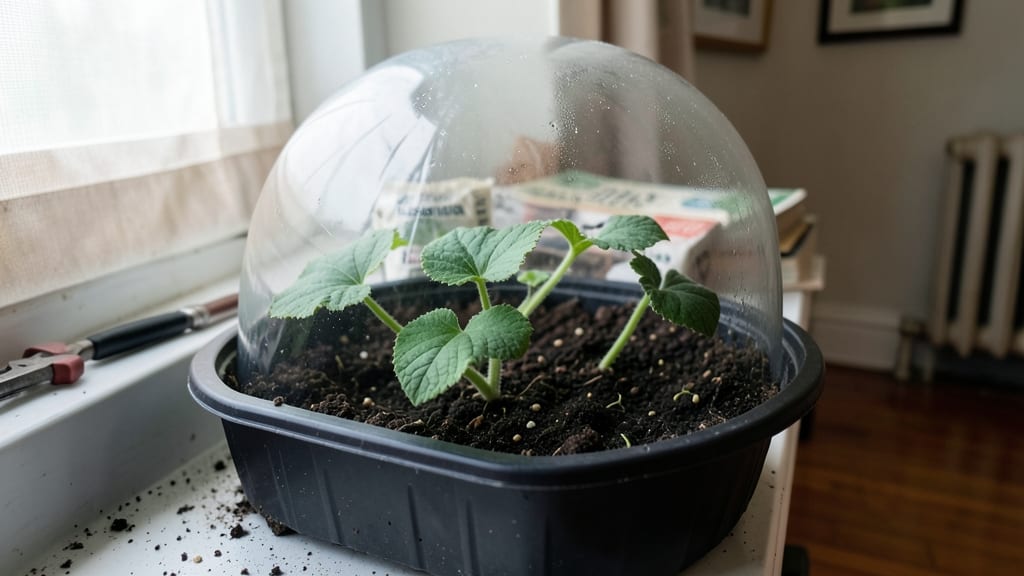
You can start cucumber seeds indoors successfully, especially in cooler regions, by using biodegradable pots, maintaining soil temperatures between 70-85°F, and providing grow lights for 2-3 weeks before transplanting after the last frost when soil reaches 60°F. Prevent damping-off disease by avoiding overwatering.
Starting cucumber seeds indoors gives you a head start in the growing season, particularly if your climate has short summers. 🌱 The key is creating the right environment—warmth triggers germination, while consistent light prevents leggy seedlings.
I’ve found that using small biodegradable pots helps avoid root disturbance during transplanting, and a simple soil thermometer ensures you’re maintaining the ideal 70-85°F range for rapid growth.
Once seedlings develop their first true leaves, they’re ready for gradual outdoor acclimation. Hardening off over 7-10 days by placing them outside for increasing durations each day helps them adjust to wind and sunlight.
This method has given me a 2-3 week advantage over direct sowing, with healthier plants that establish faster in the garden.
💡 In This Article
- Optimal Indoor Germination Conditions for Cucumber Seeds
- Step-by-Step Indoor Cucumber Seedling Transplant Guide
Optimal indoor germination conditions for cucumber seeds
Cucumber seeds need specific conditions to germinate efficiently indoors. The magic happens when soil warmth reaches 70-85°F, triggering enzymes in the seed that break down stored nutrients.
This process, called hydrolysis, activates the seed's metabolism within 5-7 days—much faster than cooler soil (60°F), where germination can take 2-3 weeks. The warmth also prevents fungal growth that causes damping-off, a common issue with cucumbers.
Moisture plays a critical role too. Cucumber seeds require consistent dampness (not soggy) to activate germination. Think of it like a sponge—too dry, and the seed won't swell; too wet, and it suffocates.
A moisture meter reading of 40-50% in the top inch of soil is ideal. I've found that misting seeds lightly twice daily with room-temperature water maintains this balance without over-saturating the medium.
Light becomes crucial once sprouts emerge. Grow lights are superior to regular bulbs because they emit full-spectrum wavelengths, particularly blue (400-500nm) for compact growth and red (600-700nm) for energy production.
A 12-16 hour photoperiod mimics summer daylight, preventing seedlings from stretching toward weak light sources—a condition called etiolation. Without proper light, seedlings develop weak stems that snap easily during transplanting.
Here's what's actually happening under your grow light: Chlorophyll production peaks under these wavelengths, turning the seedlings' leaves a vibrant green. This is your visual cue that photosynthesis is working efficiently. Without it, leaves turn pale yellow, a sign of nutrient deficiencies despite healthy soil.
I've seen cucumber seedlings grow 2 inches per week under ideal light conditions versus just 0.5 inches with inadequate lighting.
Temperature fluctuations are the silent killer of seedling success. Even a 5°F drop below 70°F can stall germination. That's why I recommend using a seedling heat mat set to 80°F for the first 10 days.
The mat creates a stable microclimate, while a simple soil thermometer lets you monitor conditions without guesswork. This precision is what separates thriving seedlings from failed starts.
One nuance most gardeners miss: humidity matters too. Cucumber seedlings thrive in 50-60% relative humidity. Too dry air causes leaves to crisp at the edges, while excessive humidity promotes fungal diseases.
A clear plastic dome over seedlings creates this ideal environment until true leaves appear—then gradually remove it to encourage natural hardening.
The payoff? Healthy cucumber seedlings with sturdy stems and deep green leaves that transplant beautifully. This attention to detail gives you a 3-week head start over direct sowing, with plants that hit the ground running when summer arrives. 💫