
Vegetables
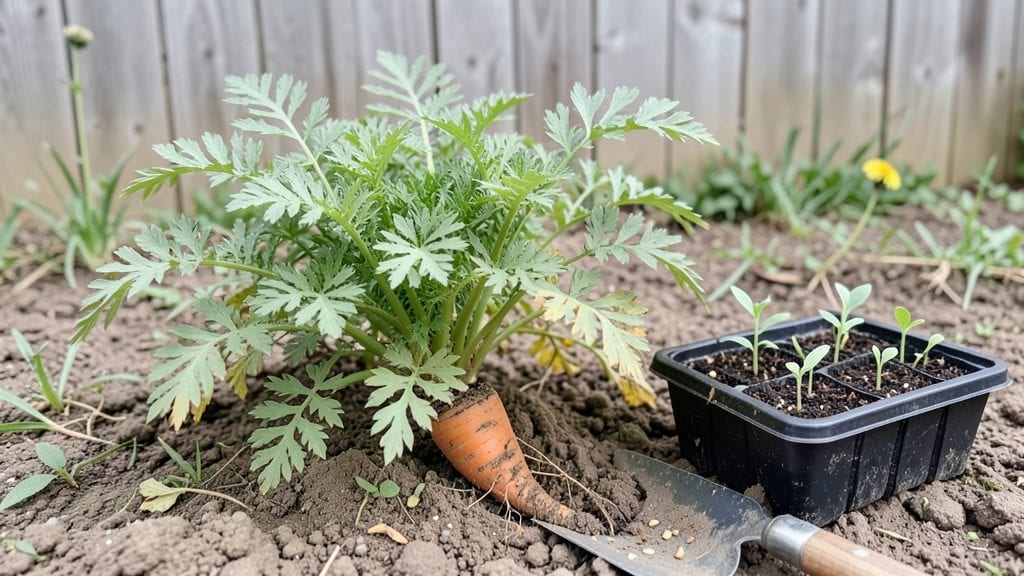
Planting carrot seeds at the right depth is the fastest way to avoid patchy germination and wasted effort.
Struggling with patchy carrot germination? The secret isn't just water or sunlight—it's planting at the perfect carrot seed depth, and getting it wrong can mean the difference between a thriving harvest and wasted seeds. Too shallow, and they dry out; too deep, and they rot before sprouting.
In USDA Zone 6a, where spring planting runs from March to April, the ideal depth is just ¼ inch—about the thickness of a dime.
This ensures moisture reaches the tiny seeds while keeping them close enough to sunlight for quick sprouting. Loose, well-drained soil makes all the difference, too.
Below, I’ll walk you through the exact technique for consistent depth, the tools that help, and how to fix common mistakes—so you can go from frustrated to harvesting crisp, homegrown 🥕 in 70 days.
The ideal carrot seed depth for maximum germination rates
If you've ever planted carrots only to watch them sprout unevenly—or worse, fail to emerge at all—you're likely dealing with a seed depth problem. Carrot seeds are tiny and delicate, requiring precise placement to break through the soil without rotting or struggling.
The ideal carrot seed depth is a narrow range of ¼ to ½ inch, but achieving this consistently takes more than just guessing. Soil texture, moisture levels, and even temperature play critical roles in whether your seeds will sprout uniformly or disappear into the earth.
Most gardeners assume deeper means safer, but planting carrot seeds too deep (over ½ inch) can suffocate them, while planting too shallow (under ¼ inch) exposes them to drying out or being washed away.
The key is striking a balance where seeds receive just enough moisture and warmth to germinate while staying protected from harsh conditions. Let’s break down the science behind the perfect depth and how to adapt it to your garden’s unique conditions.
The ¼-inch depth is the absolute minimum for most carrot varieties, as this is the threshold where seeds receive enough moisture to hydrate without drying out. However, if your soil is sandy or dry, you can gently increase depth to ½ inch to retain moisture longer.
Conversely, in heavy clay soils, stick to the ¼-inch mark to prevent seeds from suffocating as the soil compacts around them.
Soil moisture is just as critical as depth. If your seeds are planted too deep in dry soil, they may never germinate because they can’t access the water they need. On the other hand, planting too shallow in waterlogged soil can cause seeds to rot before sprouting.
The solution? Aim for consistently moist soil—not soggy, not bone-dry—by watering gently after planting and using a light layer of mulch to lock in humidity.
Temperature also influences how deeply you should plant. Carrot seeds germinate best in soil that’s at least 55°F, but they thrive when soil temperatures hover around 70–80°F.
If you’re planting in early spring or fall, when soil is cooler, you can plant slightly deeper (½ inch) to provide insulation. In hot summer conditions, shallow planting (¼ inch) helps seeds escape overheating while still staying protected.
One of the most common mistakes is using a seed drill or planter that buries seeds too deeply. Many gardeners assume these tools will handle everything, but they often default to deeper settings.
To fix this, calibrate your drill to release seeds at ¼-inch depth or use a seedling tray with fine soil to manually adjust depth. For container gardening, a depth gauge (like a popsicle stick) can help verify placement without guesswork.
If your carrots fail to sprout after 3–4 weeks, depth-related issues are often the culprit. Dig up a small section of soil near unsprouted seeds to check their placement. If they’re buried over ½ inch deep, they’ve likely rotted.
If they’re too shallow or exposed, they may have dried out. Adjust your technique and re-plant, this time using the ¼–½ inch rule as your guide.
For baby carrots or heirloom varieties, which often have slower germination, err on the side of shallower planting (¼ inch) to encourage faster sprouting. Meanwhile, hybrid varieties with faster germination times can handle the ½-inch maximum without issue.
Always refer to your seed packet for variety-specific recommendations, as some types (like Danvers or Nantes) are more forgiving than others.
Finally, remember that even spacing matters just as much as depth. Plant seeds 1–2 inches apart in rows spaced 12–18 inches apart to give roots room to grow without competing.
Use a seedling marker or string line to maintain straight rows, and avoid overcrowding, which can lead to forked or stunted carrots due to root competition.
How to plant carrot seeds at the right depth: step-by-step guide
Getting the carrot seed depth right is like hitting the bullseye—too shallow, and they dry out; too deep, and they struggle to break through. I’ve learned the hard way that ¼ to ½ inch is the sweet spot for most varieties, but achieving that consistently takes the right approach.
Whether you’re sowing in garden beds or containers, precision matters more than you might think.
Carrot seeds are tiny and delicate, so even a slight misjudgment in depth can lead to uneven germination. I’ve experimented with everything from finger-planting to specialized seed drills, and the key is always consistency.
Below, I’ll walk you through my foolproof method, including tools, soil prep, and visual cues to ensure every seed gets the perfect burial.
Step-by-Step Guide to Planting Carrot Seeds at the Right Depth
- Prep the Soil: Loosen soil to a depth of 6 inches with a garden fork or tiller. Remove rocks and clumps larger than ½ inch—carrots hate obstructions! Mix in 2 inches of compost to improve drainage and fertility.
- Mark Rows: Use a stick or string to create rows 12–18 inches apart. For containers, space rows 4–6 inches apart. This gives roots room to spread without competing.
- Plant the Seeds: Scatter seeds ¼ inch apart in rows. For precision, use a seed drill or spacing tool—they’re worth the investment! If hand-planting, sprinkle seeds lightly over the row and avoid touching them.
- Cover with Soil: Gently sift ¼–½ inch of fine soil over seeds using a sieve or fine-mesh screen. This ensures even coverage. Press lightly with your fingers to eliminate air pockets but don’t compact the soil.
- Verify Depth: Use a toothpick or pencil to check depth in 3–4 spots. The soil line should be consistent—no bare spots or mounds. If needed, add or remove soil to standardize.
- Water Gently: Mist the soil with a fine spray nozzle until moist but not soggy. Aim for 1 inch of water to settle seeds without displacing them. Avoid overhead watering afterward to prevent soil crusting.
- Mulch Lightly: Apply a thin layer of straw or peat moss (¼ inch) to retain moisture and deter weeds. This also helps maintain the ideal soil temperature for germination (60–70°F).
Pro Tip: For containers, use a soil depth gauge to ensure uniformity—carrots in pots need the same care as in-ground!
I’ve found that container gardening requires extra attention to depth. Use a deep pot (at least 12 inches) and fill it with a light, sandy loam mix. Press seeds into the soil with a chopstick to gauge depth—this gives you a visual reference for that ¼-inch target.
Once seeds are planted, patience is key. Germination takes 2–3 weeks, and thin seedlings to 3 inches apart once they’re 2 inches tall. Thinning ensures roots have space to grow straight and strong.
If you’re worried about depth, remember: light is your friend—sprouts will push through if covered properly.
After thinning, keep soil consistently moist but not waterlogged. Carrots are finicky about soggy conditions, so drip irrigation is my go-to for even moisture without disturbing the soil. With the right depth and care, you’ll go from tiny seeds to crunchy, homegrown carrots in no time!