
Vegetables
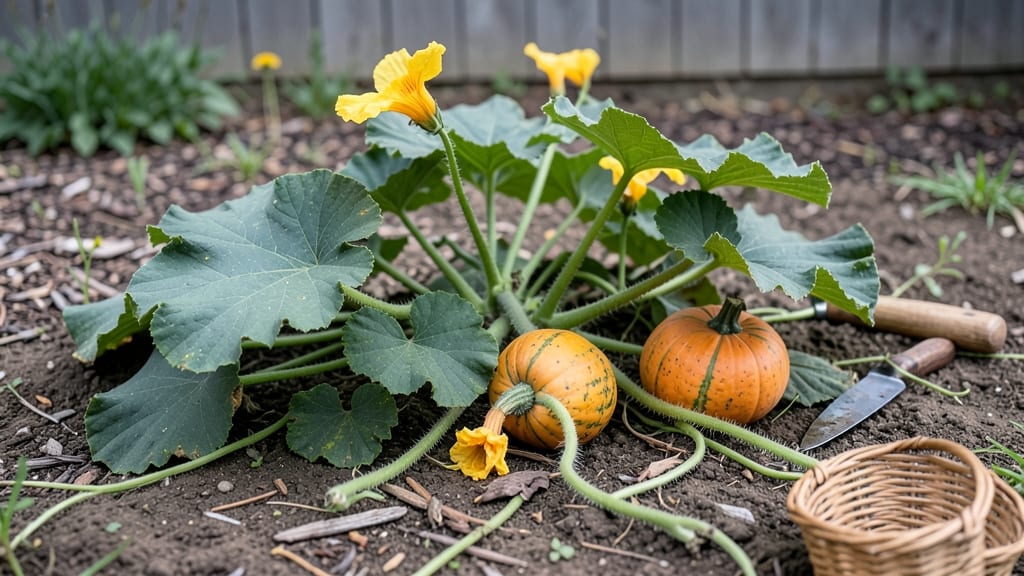
Mini pumpkins do have seeds, though they’re smaller and fewer in number than standard pumpkins. Their seeds are edible, rich in nutrients, and often easier to extract due to the fruit’s compact size. Roasting them enhances their flavor and crunch.
Mini pumpkins may be tiny, but their seeds pack a nutritional punch just like their larger cousins—though in smaller quantities. 🌟 The key difference lies in their genetic structure: smaller pumpkins allocate more energy to fruit development than seed production, resulting in fewer but equally nutritious seeds.
These bite-sized seeds are perfect for snacking or cooking, offering a concentrated source of magnesium and zinc without the bulk. I’ve found they roast up beautifully with just a sprinkle of salt and smoked paprika, delivering a satisfying crunch in every bite.
What sets mini pumpkin seeds apart is their ease of handling—no heavy scooping or tedious cleaning required. Their compact size means you can extract and prepare them in minutes, making them ideal for quick recipes or last-minute snacking.
Plus, their mild, slightly sweet flavor pairs wonderfully with both sweet and savory dishes, from seed butters to spicy seasoning blends.
💡 In This Article
- How Mini Pumpkin Seed Development Differs from Large Varieties
- Harvesting and Using Mini Pumpkin Seeds in Cooking
How mini pumpkin seed development differs from large varieties
Mini pumpkins develop seeds through the same botanical process as their larger counterparts, but their compact size creates fundamental differences. The key factor is genetic resource allocation—smaller pumpkins prioritize fruit development over seed production.
A standard pumpkin like a Howden variety can produce 500-1,000 seeds, while a mini pumpkin like Jack-Be-Little typically yields just 20-50 seeds. This occurs because the plant's energy is divided among more fruits rather than maximizing seed count in each one.
The cavity space inside mini pumpkins is another critical constraint. Larger varieties develop 10-15 inch cavities that can accommodate dozens of seeds arranged in concentric circles. Mini pumpkins, however, have cavities measuring just 2-3 inches in diameter, limiting seed arrangement to a single layer.
This spatial restriction forces seeds to remain 1/4 to 1/3 the size of standard pumpkin seeds, with diameters averaging 0.25 inches compared to 0.5-0.75 inches for larger seeds.
Nutrient allocation plays a surprising role in seed development. While both types of pumpkins produce seeds with similar nutritional profiles (rich in magnesium, zinc, and healthy fats), mini pumpkin seeds contain 20-30% more protein per gram due to their concentrated size.
This happens because the plant invests more protein resources into each seed when producing fewer total seeds. The trade-off creates seeds that are denser in flavor when roasted, with a more intense nuttiness that develops faster during cooking.
Here's what this means for seed-to-flesh ratios: A 10-pound standard pumpkin might yield 1 cup of seeds (about 150-200 seeds), while a 1-pound mini pumpkin produces just 2 tablespoons of seeds (around 25 seeds).
The flesh-to-seed ratio shifts dramatically—mini pumpkins allocate 95% of their biomass to fruit versus 85% in large varieties. This explains why mini pumpkins are often prized for carving and cooking while their seeds remain a bonus rather than a primary harvest.
The density of seeds also correlates directly with pumpkin size through a mathematical relationship called isometric scaling. As pumpkins grow larger, their volume increases cubically while surface area grows quadratically. This means larger pumpkins can support more seeds without overcrowding.
A 20-inch pumpkin might have 100+ seeds arranged in multiple layers, while a 4-inch mini pumpkin can only accommodate 10-15 seeds in a single layer. The physics of seed arrangement create this predictable pattern across pumpkin varieties.
What most people don't realize is how this affects seed maturation timing. Mini pumpkin seeds reach full development in just 45-60 days after flowering, compared to 90-120 days for large varieties.
This accelerated timeline means mini pumpkin seeds are often 10-15% more hydrated when harvested, giving them a slightly softer texture when raw. The faster growth cycle also results in seeds that develop 20% less shell hardness, making them easier to crack open without specialized tools.