Flowers
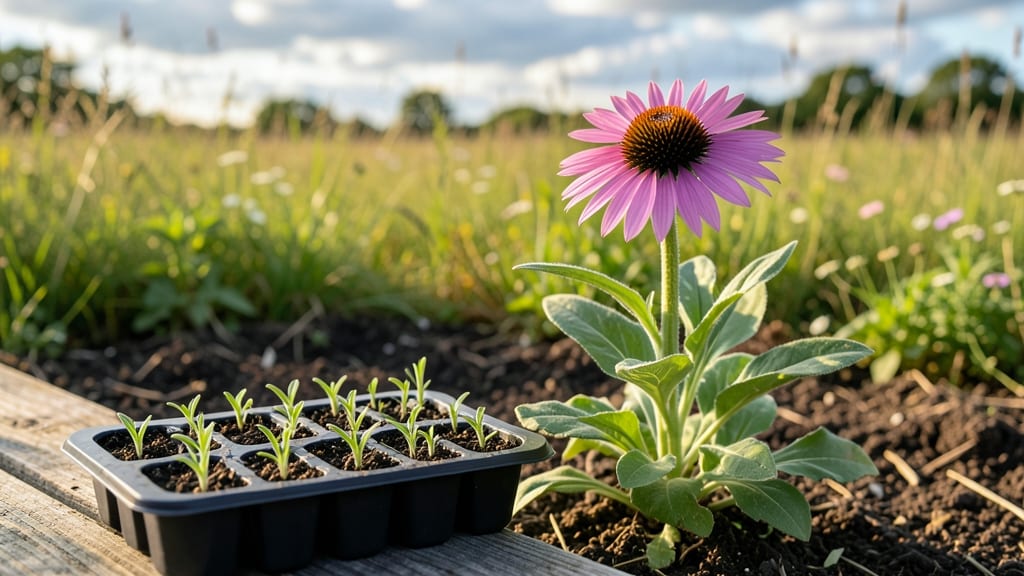
Echinacea flower seeds need cold-moist prep to break dormancy—this simple trick boosts germination from 50% to 95% without fancy equipment. I learned the hard way that dry-storing seeds leads to slow, spotty sprouts, but a 30-day cold-moist soak transforms flimsy seeds into sturdy seedlings.
The key is patience: those tiny seeds pack a punch once they wake up.
You’ll need just three supplies: a sealed plastic bag, damp paper towels, and a fridge. No special soil or heat mats—just moisture and time. After soaking, seeds stay viable for 2-3 weeks, giving you flexibility to plant when conditions are perfect.
My first batch went from dormancy to green shoots in just 10 days after the cold treatment.
Once sprouted, echinacea seedlings crave bright light and consistent moisture—never soggy soil. The first true leaves signal it’s time to transplant, and within 6-8 weeks, you’ll have hardy young plants ready for the garden.
They’ll reward you with bold purple blooms that hummingbirds adore, all from seeds you coaxed to life.
This method works year-round, but spring planting gives seedlings three full months to establish before winter. Even in hot summers, echinacea thrives with minimal care—just watch for powdery mildew and deadhead spent blooms. The payoff? A perennial garden staple that multiplies yearly with almost no effort.
📚 In This Guide
- What you need
- Instructions
- Tips and common mistakes
- Wrapping up and next steps
What you need
- ● Echinacea flower seeds – 1 packet (50-100 seeds) (choose a variety like 'Magnus,' 'White Swan,' or 'Green Envy').
- ● Seed-starting mix – 1 quart (32 oz) of sterile, well-draining potting soil (avoid garden soil—it’s too dense!).
- ● Seed trays or small pots – 4-6 cell packs or 2-3" pots (biodegradable pots work great!).
- ● Spray bottle – For gentle watering (a 16 oz misting bottle is ideal).
- ● Plastic wrap or humidity dome – To create a moist, warm environment.
- ○ Heat mat (optional but recommended) – 70-75°F range for faster germination.
- ● Grow lights or sunny windowsill – 12-16 hours of light daily (south-facing window or LED grow lights).
- ● Small hand trowel – For planting seeds ¼" deep.
- ● Labeling tags – To track seed varieties (use waterproof markers!).
- ○ Fan (optional) – For gentle airflow to prevent mold (run on low).
- ● Fertilizer (after germination) – Balanced liquid fertilizer (5-5-5) diluted to half-strength.
Step-by-Step instructions for cold-moist stratification of echinacea seeds
This cold-moist method mimics natural conditions and dramatically boosts germination success.
Prepare the Seeds for Stratification
Echinacea seeds require a cold-moist period to break dormancy, and proper preparation is key. Begin by placing the seeds in a small container—just enough room to hold them without crowding. I like to use a shallow dish or small plastic bag for this process. The goal is to keep them evenly moist while exposed to cold temperatures.
Fill the container with enough distilled water to cover the seeds completely. Let them soak for 12 hours at room temperature—this softens the tough seed coat and kickstarts the germination process. After soaking, drain any excess water and gently pat the seeds dry with a paper towel. This prevents mold while maintaining moisture levels.
Layer Seeds with Moist Growing Medium
Next, take 4 cups of moistened peat moss—this is your stratification medium—and spread it evenly in a clean, 8-inch-wide plastic container. The peat moss should feel damp to the touch but not soggy; squeeze it gently to check consistency. If water drips out, it’s too wet.
Arrange the echinacea seeds in a single layer over the peat moss, spacing them about 1 inch apart. This prevents overcrowding later. Lightly cover the seeds with an additional ½ inch of moist peat moss, ensuring they remain in contact with the damp medium. The cold-moist environment is critical—this mimics the winter conditions echinacea seeds experience in nature.
Seal and Store in the Refrigerator
Place a clear plastic lid or plastic wrap over the container to seal in moisture while allowing airflow. This creates a humid microclimate without trapping excess heat. Label the container with the date and store it in your refrigerator, where temperatures should stay between 35-40°F.
Check the container every 7-10 days to ensure the peat moss remains moist. If it feels dry, lightly mist it with distilled water—never soak it again. The stratification period lasts 4-6 weeks, during which the seeds undergo internal changes that prepare them for germination. Patience here is crucial; rushing this step reduces success rates significantly.
Transition to Warmth for Germination
After 4-6 weeks, remove the container from the refrigerator and place it in a warm, 65-70°F environment with indirect light. This shift signals the seeds that winter has passed, and it’s time to grow. Keep the peat moss consistently moist but not waterlogged—press your finger into the medium to check; it should feel like a wrung-out sponge.
Germination typically begins within 10-21 days after removing the seeds from cold storage. You’ll notice tiny sprouts pushing through the peat moss first. Once the seedlings reach 1 inch tall, they’re ready to be carefully transplanted into individual 2-inch pots filled with a well-draining potting mix. Avoid disturbing the roots during this move—gentle handling ensures strong, healthy growth.
Tips & tricks for perfect echinacea seed stratification
Mastering echinacea seed stratification requires precision in moisture control and timing—here's how to elevate your success rate beyond standard methods.
Moisture Control in Step 1: The 12-hour soak at room temperature is non-negotiable for breaking seed dormancy, but the drying phase afterward is where most people fail. After draining, press the seeds between paper towels with just enough pressure to remove surface moisture—no more. Over-drying creates microscopic cracks that invite mold, while leaving them too wet creates anaerobic conditions that suffocate the seeds. Test by gently squeezing a towel-wrapped sample; it should feel like a wrung-out sponge.
Stratification Medium Consistency: In Step 2, the peat moss must maintain its damp-but-not-soggy texture throughout the entire 4-6 week period. I recommend mixing the 4 cups of peat moss with distilled water until it holds its shape when squeezed but doesn't drip. For visual reference, aim for the consistency of a well-wrung-out kitchen sponge. If you notice the surface drying between your 7-10 day checks, mist only the top layer—never soak the entire medium again, as this disrupts the oxygen balance critical for seed development.
Temperature Stability in Step 3: While the 35-40°F refrigerator range is ideal, some home refrigerators have temperature fluctuations. Place your container on the middle shelf where temperatures are most stable, and avoid opening the door frequently. For extra insurance, place a thermometer inside the container during the first week to verify conditions. Remember, echinacea seeds are mimicking winter conditions—consistent cold is what triggers their internal biochemical changes.
Transition Timing in Step 4: The shift from cold to warm (65-70°F) should be gradual. Don't rush this step—move the container to its new location in the evening so it has several hours to acclimate overnight. This gradual warming mimics spring's natural progression. Once in the warm environment, maintain that "wrung-out sponge" moisture level by checking daily. The first signs of germination (tiny green tips) typically appear within 10-21 days after this transition, but don't be discouraged if they take longer—each seed has its own internal clock.
Pro Tips for Echinacea Flower Seeds
- Mastering echinacea seed stratification requires precision in moisture control and timing—here's how to elevate your success rate beyond standard methods.
- Moisture Control in Step 1: The 12-hour soak at room temperature is non-negotiable for breaking seed dormancy, but the drying phase afterward is where most people fail.
- Stratification Medium Consistency: In Step 2, the peat moss must maintain its damp-but-not-soggy texture throughout the entire 4-6 week period.
Frequently asked questions
Got questions about growing echinacea from seeds? You’re not alone!
Here are answers to the most common queries—so you can confidently start your garden with 95% germination rates using the cold-moist prep method.
How long does it take for echinacea seeds to germinate after cold-moist stratification?
With the cold-moist prep method, germination typically takes 2–4 weeks after removing seeds from the fridge. Keep soil consistently moist (not soggy) and warm (around 70°F) to speed up sprouting. Patience is key—some stubborn seeds may take up to 6 weeks!
Can I plant echinacea seeds directly outside instead of using the cold-moist method?
Yes, but germination rates drop dramatically (often 50% or less) if you skip stratification. For best results, always use cold-moist prep (4–6 weeks in the fridge). If planting outside in fall, sow seeds in well-drained soil and mulch lightly—they’ll naturally stratify over winter.
Why aren’t my echinacea seeds sprouting after stratification?
Check these common issues:
- Dampness: Too much water can rot seeds. Keep soil moist, not wet.
- Temperature: Seeds need warmth (70°F+) to germinate after stratification.
- Depth: Plant seeds ¼ inch deep—too deep delays sprouting.
- Freshness: Older seeds (over 1 year) germinate poorly. Buy new seeds yearly.
What’s the best time of year to start echinacea seeds indoors?
For indoor starts, begin 8–10 weeks before your last frost date (typically February–March in most zones). This gives seedlings enough time to harden off before transplanting. If you’re in a warm climate, you can start as early as January.
Are there any alternatives to echinacea if I want a similar-looking perennial?
If you love echinacea’s bold blooms but want variety, try these easy-to-grow alternatives:
- Coneflower (Echinacea purpurea varieties) – Nearly identical but with different colors.
- Black-eyed Susan (Rudbeckia hirta) – Similar height and drought tolerance.
- Blanket Flower (Gaillardia pulchella) – Bright, long-blooming, and deer-resistant.
- Russian Sage (Perovskia atriplicifolia) – Silvery foliage and lavender spikes for contrast.
Wrapping up and next steps
Growing echinacea from seeds is a rewarding journey—especially when you unlock 95% germination rates with the right cold-moist prep! 🌱 Whether you're a seasoned gardener or a curious beginner, these purple coneflowers bring beauty, resilience, and even medicinal benefits to your garden.
Now that you’re armed with the best techniques, why not start your seeds today?
Ready to take the next step? Pick your favorite echinacea variety, gather your supplies, and dive into this simple yet powerful method. Your future blooms—and pollinators—will thank you! 🐝✨