
Picking
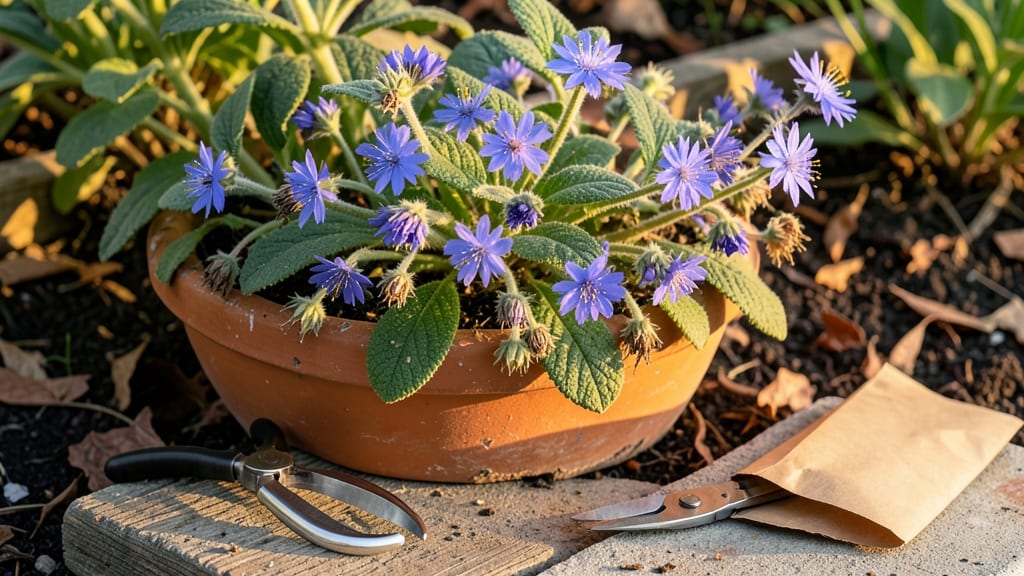
Harvesting borage seeds at the right moment means you'll never buy them again—just wait for those star-shaped flowers to turn into dry, papery seed heads. I learned the hard way that waiting too long means seeds scatter everywhere, while harvesting too early leaves you with nothing but empty husks.
The key is watching for those telltale brown centers and crisp textures that signal peak ripeness.
You only need three simple tools: sharp pruning shears for clean cuts, paper bags for drying, and a sunny windowsill to finish the job. I use old coffee filters tucked into the bag openings to keep seeds from escaping while they dry.
The process takes about two weeks from harvest to ready-to-store seeds, but it’s worth every minute to avoid next year’s seed shortage.
Once dried, you’ll have a stash of tiny black seeds that store for years in airtight containers. The smell of fresh borage comes back every time you plant them—like summer in a jar. Just be ready to deal with the occasional seedling popping up unexpectedly in your garden beds.
Troubleshooting is easy: if seeds feel damp, spread them out to dry longer; if they’re already scattered, blame the wind and try again next year. Either way, you’ll end up with a self-sufficient supply of one of the most useful garden plants around.
📚 In This Guide
- What you need
- Instructions
- Tips and common mistakes
- Wrapping up and next steps
What you need
- ● Pruning shears or sharp scissors – A clean, sharp pair (like Felco F-2 pruners) to snip stems without crushing them.
- ● Paper bags or breathable fabric sacks – At least 3–5 medium-sized bags (10–12" wide) to collect seeds and allow airflow.
- ● Drying tray or screen – A flat, elevated surface (like a wire mesh or baking sheet) to spread seeds for drying.
- ● Fine-mesh sieve or colander – For separating seeds from chaff after drying.
- ○ Air-tight storage containers – Glass jars or resealable bags with silica gel packets (optional) to preserve viability.
- ● Handheld fan or dehydrator – Speeds up drying in humid climates.
- ● Labeling tags – To mark harvest dates and seed varieties.
- ● Gloves – Protects hands from prickly stems (though borage isn’t overly aggressive).
- ● Sun hat & sunscreen – For comfortable outdoor harvesting on sunny days!
Step-by-Step instructions for harvesting borage seeds
Here's how to collect, dry, and store borage seeds so you can grow this self-seeding beauty again next year.
Identify and Select the Right Seed Heads
Look for borage flowers that have fully bloomed and are now forming seed pods. These appear as small, round, green capsules that start to turn brownish as they mature. The pods will feel slightly leathery to the touch when ready. Harvest them when they've turned a deep brown color but before they split open naturally—this usually happens about 6-8 weeks after flowering begins.
Gently twist the seed heads from the stem rather than cutting them. This prevents damage to the plant and makes it easier to handle the delicate pods. If you miss the window and the pods split open, you can still collect seeds by placing the opened pods in a paper bag and shaking them gently to catch the tiny, black seeds.
Dry the Seed Heads Properly
Once collected, lay the seed heads out on a clean, dry surface in a warm, dry location with good airflow. A mesh screen or a piece of window screen works perfectly. Avoid direct sunlight, as it can cause the seeds to overheat and lose viability. Instead, place the seed heads in a spot with indirect light, like a shaded porch or a well-ventilated room.
It typically takes about 1-2 weeks for the seed heads to dry completely. You’ll know they’re ready when the pods are brittle and crumble easily when gently squeezed. If you’re in a humid climate, you may need to speed up the drying process by using a small fan to circulate air around the seed heads.
Extract and Store the Seeds
Once the seed heads are fully dry, place them in a clean paper bag and gently crush or rub them between your fingers to release the seeds. The tiny, black seeds will fall to the bottom of the bag, while the chaff and debris will remain on top. Shake the bag occasionally to help separate the seeds from the plant material.
Transfer the seeds to a small, airtight container like a glass jar or a labeled envelope. Store them in a cool, dark place, such as a pantry or refrigerator. Properly stored borage seeds can remain viable for 2-3 years, though they’re best used within the first year for the highest germination rate.
Label and Organize Your Seeds
Always label your seed storage container with the date and the type of seed. Borage seeds are small and dark, so they can easily be mixed up with other seeds if not properly identified. Include any notes about the growing conditions of the parent plant, such as whether it thrived in full sun or partial shade, as this can help guide your planting decisions next season.
Keep your seeds in a dry environment to prevent moisture buildup, which can lead to mold or spoilage. If you’re storing multiple types of seeds, consider using separate containers or clearly marking each one to avoid confusion. This simple step ensures you’ll have healthy, ready-to-plant seeds whenever you’re ready to grow more borage.
Tips & tricks for perfect borage seed harvesting
Harvesting borage seeds successfully takes patience and attention to detail—here's how to avoid common mistakes and maximize your yield.
Timing is Everything: The 6-8 week window after flowering is critical for harvesting borage seeds at their peak. I learned this the hard way by waiting too long and watching the pods split open naturally, scattering seeds everywhere. Mark your calendar when you first notice flowers forming to track this timeline accurately. If you're in a cooler climate, the pods may take slightly longer to mature, so check them weekly once they start turning brown.
Handling Technique Matters: When twisting seed heads from the stem in Step 1, use a gentle but firm motion to avoid damaging the delicate pods. I recommend wearing gloves—borage plants can irritate sensitive skin, and the tiny seeds are easy to lose when handling. If you do miss the perfect window and pods split open, place them in a paper bag immediately and shake gently over another bag to catch the falling seeds. This simple step can recover up to 80% of what would otherwise be lost.
Drying Conditions Make All the Difference: The 1-2 week drying period in Step 2 requires consistent conditions. I've found that placing seed heads on a mesh screen in a well-ventilated area with indirect light works best. In humid climates, I've had to use a small fan to circulate air and prevent mold. Watch for the pods to become brittle—this is your clear signal they're ready. If you rush the drying process, seeds may not store properly and could lose viability.
Storage Wisdom: The 2-3 year viability mentioned in Step 3 is impressive, but seeds are best used within the first year for highest germination rates. I store my borage seeds in small glass jars with tight-sealing lids in my refrigerator's crisper drawer. The cool, dark environment helps maintain freshness. Always label your containers with both the date and seed type—borage seeds look nearly identical to many other small black seeds, and I've accidentally mixed them up before!
Pro Tips for Harvest Borage Seeds
- Harvesting borage seeds successfully takes patience and attention to detail—here's how to avoid common mistakes and maximize your yield.
- Timing is Everything: The 6-8 week window after flowering is critical for harvesting borage seeds at their peak.
- Handling Technique Matters: When twisting seed heads from the stem in Step 1, use a gentle but firm motion to avoid damaging the delicate pods.
Frequently asked questions
Got questions about harvesting borage seeds?
You’re not alone! Here are answers to the most common queries to help you master the process like a pro.
When is the best time to harvest borage seeds?
Harvest borage seeds when the flower heads turn brown and papery (usually 4–6 weeks after blooming). Avoid harvesting too early—the seeds won’t be fully mature, or too late, as they may scatter or degrade. Aim for late summer to early fall in most climates for peak yield.
How long does it take for borage seeds to mature after flowering?
Borage seeds typically take 4–6 weeks to mature after the flowers bloom. Keep an eye on the seed heads: they’ll start as green buds, then turn yellow, and finally dry out to a brown, brittle state. Patience is key—harvesting too soon means immature seeds that won’t germinate well.
What’s the best way to dry borage seeds before storage?
Spread the seed heads in a single layer on a tray in a warm, dry, well-ventilated spot (like a sunny windowsill or dehydrator at 95°F). Avoid direct sunlight or high humidity, which can cause mold. They’re ready when the heads crumble easily—usually 1–2 weeks of drying.
Can I save borage seeds from store-bought plants?
Yes, but with a catch! Store-bought borage may be hybridized or treated with chemicals, which can affect seed viability. If you’re unsure, grow your own from seed first, then save seeds from those plants. For best results, stick to heirloom or organic sources when saving seeds long-term.
Why are my borage seed heads getting eaten or damaged?
Pests like aphids, slugs, or birds love borage seeds. To protect your harvest:
- Use row covers or netting over seed heads.
- Handpick pests early in the day.
- Try neem oil or soapy water sprays as a natural deterrent.
Wrapping up and next steps
Harvesting borage seeds is a rewarding way to save money and ensure a fresh supply of this versatile herb for years to come! 🌱 By following these steps—identifying peak ripeness, using the right tools, and storing seeds properly—you’ll unlock a treasure trove of flavor and nutrition.
Whether you’re a seasoned gardener or just starting out, your efforts will pay off with a thriving borage patch next season.
Ready to take the next step? Try planting your saved seeds in early spring or late summer—just follow the same care tips you’d use for fresh borage plants. Happy gardening! 🌿