
Trees
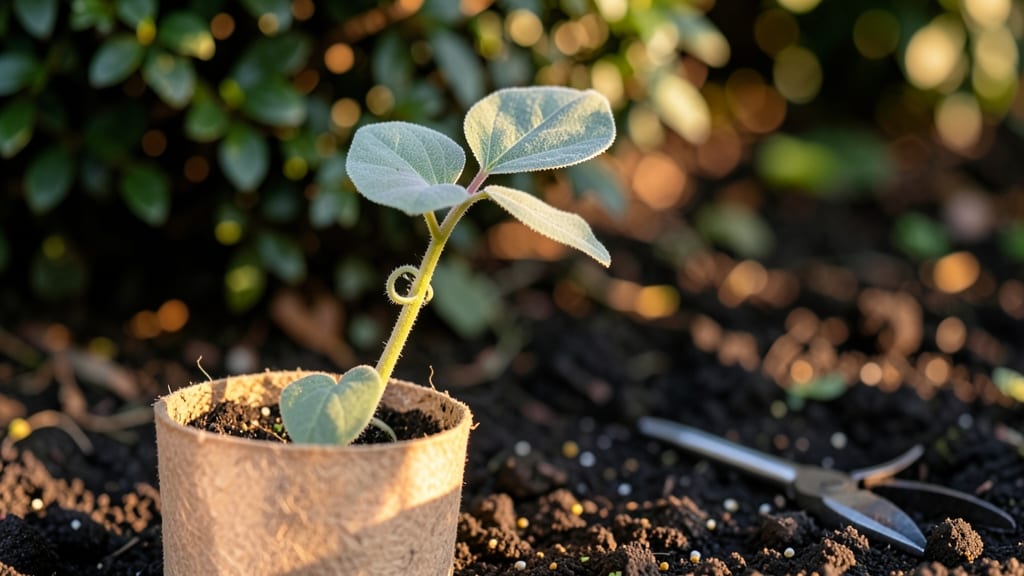
The identification of a moonflower seedling early saves you from weeding out what could be your next showstopping vine later—those first leaves look like tiny, heart-shaped arrows. 🌱 Compare them to morning glory seedlings, which often have jagged edges or fuzzy stems, and you’ll spot the difference instantly.
Moonflower stems start thin but grow surprisingly fast—expect 6-12 inches per week once established. The vines twist clockwise as they climb, and the leaves grow larger with each node, eventually reaching 3-5 inches wide.
If you’re still unsure, check the underside of the leaves: moonflower leaves have a faint silvery sheen that morning glory lacks.
Once you confirm those distinctive arrow-shaped leaves and rapid growth, give your seedlings room to stretch. They’ll need a sturdy trellis or fence to support their weight, and regular watering to keep the soil moist but not soggy.
Within 8-10 weeks, you’ll have vines heavy with those iconic white, moon-shaped blooms lighting up your garden at night.
If you’re growing in warm climates, start seeds indoors 6-8 weeks before last frost—they germinate quickly in warm soil. For cooler areas, wait until after your last frost date to sow directly in the ground.
The key is patience; moonflowers reward it with dramatic, fragrant blooms that turn every evening into a stargazing moment.
📚 In This Guide
- What you need
- Instructions
- Tips and common mistakes
- Wrapping up and next steps
What you need
- ● Moonflower seeds or seedlings: 1–5 (depending on your setup; start small if testing identification skills).
- ○ Growing containers: 4–6-inch pots (1–2 per seedling) with drainage holes. Optional: Biodegradable seedling pots for transplanting.
- ● Potting mix: 1–2 gallons of well-draining, organic soil blend (e.g., 60% peat moss, 30% perlite, 10% compost).
- ● Watering can or spray bottle: With a fine mist nozzle for gentle hydration.
- ○ Gloves (optional): Lightweight gardening gloves to protect hands from soil and thorns.
- ● Magnifying glass or loupe: 2x–4x magnification to inspect leaf veins and textures.
- ● Ruler or measuring tape: For tracking vine growth and leaf dimensions (inches/cm).
- ● Camera or smartphone: With a macro setting to capture leaf shapes and seedling details.
- ● Field guide or printed reference: A moonflower identification chart (e.g., Moonflower (Ipomoea alba) vs. similar vines like morning glories).
- ● Notebook or app: For logging growth patterns (e.g., Gardenate or iNaturalist).
- ● A sunny or partially shaded spot with 6+ hours of indirect light daily (moonflowers are tropical!).
- ● Basic knowledge of vine identification (e.g., distinguishing tendrils vs. leaves).
- ○ Optional but helpful: A humidity tray or plastic dome to maintain moisture for seedlings.
How to identify moonflower seedlings by leaf shape and vine habit
Here's how to spot those delicate first leaves and tell moonflowers apart from lookalikes.
🌱 Step 1: Examine the Cotyledons for Key Shape Clues
The very first leaves—called cotyledons—are your best early clue. Moonflower seedlings produce heart-shaped cotyledons that are slightly rounded at the base, unlike the more pointed or oval shapes of other night-blooming vines. Hold the seedling near a bright window and look for that distinctive broad, slightly uneven base where the leaf attaches to the stem.
I always compare them to a tiny maple leaf—same general shape but with smoother edges. If the first leaves look more like small, pointed arrows or elongated ovals, you're probably dealing with a different vine species. Moonflower cotyledons also tend to be darker green than many imposters, which helps them stand out against the soil.
🌿 Step 2: Wait for True Leaves to Confirm the Classic Pattern
Once the seedling produces its first set of true leaves (the second set after cotyledons), you'll see the classic moonflower pattern: palmately compound leaves with 5-7 leaflets arranged like fingers radiating from a central point. These leaflets are oval with serrated edges and grow on long, thin petioles that create that distinctive "hand" shape.
Here's the thing—don't confuse this with morning glory, which also has compound leaves but typically has 3-5 leaflets with more pointed tips. Moonflower leaflets have a more rounded appearance and grow in a more symmetrical pattern. You'll notice the central stem where they attach is hairy, another key identifier.
⏰ Step 3: Observe Vine Growth Habit and Speed
Moonflower seedlings grow rapidly—you'll see 2-3 inches of vine growth per week once established. The stems are slender, slightly woody at the base, and develop tiny hooked tendrils at the leaf nodes that help them climb. These tendrils are less than ½ inch long and appear as small, curled hairs along the stem.
Unlike morning glory's more aggressive sprawling habit, moonflowers grow in a more upright, twining pattern. If you see seedlings with broad, heart-shaped leaves and vines that naturally coil around supports rather than spread flat, you're on the right track. The growth rate is your final confirmation—if it's growing faster than 1 inch per week, it's probably a different fast-growing vine.
💧 Step 4: Check for Early Flower Buds (Seasonal Confirmation)
In late summer, you'll see the first buds forming in leaf axils—those little nooks where leaves meet the stem. Moonflower buds are round and fuzzy, unlike the smoother, more pointed buds of morning glory. These buds typically appear 6-8 weeks after germination in warm climates, so if you're identifying seedlings in early summer, watch for this development.
Real talk: this step is more about confirmation than identification. If you're certain from the leaves but want to be absolutely sure, wait until buds form. The fuzzy texture is unmistakable—run your finger over a bud and you'll feel that characteristic softness that distinguishes moonflowers from their lookalikes.
Tips & tricks for perfect moonflower seedling identification
Mastering moonflower seedling identification takes practice, but these key insights will help you spot them with confidence every time.
The Cotyledon Comparison: When examining those first leaves in Step 1, I've found that using a magnifying glass helps reveal the subtle uneven base that distinguishes moonflower cotyledons. Hold them up to a bright window and compare to a maple leaf—look for that slightly rounded, asymmetrical attachment point. This is where beginners often make mistakes by confusing them with pointed arrow-shaped leaves from other vines.
Leaflet Count Confirmation: In Step 2, don't just count leaflets—observe their arrangement. Moonflowers typically have 5-7 leaflets, but what sets them apart is how they radiate from the central stem. Run your finger along the central stem where leaflets attach: you'll feel that characteristic hairiness that's absent in morning glory vines. This tactile check is my secret weapon for positive identification.
Growth Rate Reality Check: The 2-3 inches per week growth rate mentioned in Step 3 is crucial, but don't get discouraged if early growth is slower. Seedlings often establish themselves in the first 2-3 weeks before hitting that rapid growth phase. I've seen moonflowers grow as little as 1 inch per week in cooler conditions, so track growth over several weeks rather than expecting immediate results.
Bud Texture Test: When checking for buds in Step 4, don't just look—touch! The fuzzy texture is unmistakable when you run your finger over a bud. I've used this simple test hundreds of times to confirm identifications when leaf patterns were ambiguous. This tactile confirmation often reveals what visual inspection might miss, especially in early development stages.
Pro Tips for Moonflower Seedling Identification
- Mastering moonflower seedling identification takes practice, but these key insights will help you spot them with confidence every time.
- The Cotyledon Comparison: When examining those first leaves in Step 1, I've found that using a magnifying glass helps reveal the subtle uneven base that distinguishes moonflower cotyledons.
- Leaflet Count Confirmation: In Step 2, don't just count leaflets—observe their arrangement.
Frequently asked questions
Got questions about spotting and nurturing moonflower seedlings? Here are some of the most common ones—plus quick, actionable answers to help you grow with confidence!
What do moonflower seedlings look like in their earliest stages?
Moonflower (Ipomoea alba) seedlings start as tiny, oval-shaped leaves (about 1–2 inches long) with a slightly pointed tip. The first true leaves are heart-shaped and slightly fuzzy. Early growth is slow, so don’t expect rapid vine development—patience is key! If leaves are jagged or lobed, it’s likely a different vine (like morning glory).
How long does it take for moonflower seedlings to show identifiable vine growth?
Seedlings typically take 4–6 weeks to develop recognizable vine patterns. You’ll notice elongated stems with tendrils (spiral-like structures) by 6–8 weeks. If your seedlings aren’t vining by 8 weeks, check for underwatering or cool temperatures (below 60°F/15°C). A heat mat or greenhouse can speed up growth in cooler climates.
Can I identify moonflower seedlings by leaf shape alone, or do I need to wait for flowers?
Leaf shape is 90% reliable for identification! Moonflower leaves are heart-shaped with smooth edges and a slightly waxy texture. Wait for flowers (white, trumpet-shaped, blooming at night) only if you’re unsure—by then, it’s too late to transplant or troubleshoot. Compare with a leaf identification guide if needed.
My moonflower seedlings look healthy but aren’t growing—what’s wrong?
Slow growth is often due to nutrient deficiencies or root-bound pots. Try these fixes:
- Fertilizer: Use a balanced 10-10-10 liquid fertilizer every 2–3 weeks.
- Light: Moonflowers need 6+ hours of sunlight daily—move seedlings to a sunnier spot if leaves yellow.
- Transplant: If roots circle the pot, repot into a larger container with well-draining soil.
Are there any lookalikes I should watch out for?
Yes! Morning glories (like Ipomoea purpurea) have similar vines but three-lobed leaves and smaller flowers. Sweet potato vines (Ipomoea batatas) have deeply lobed, maple-like leaves. For peace of mind, check the stem texture (moonflowers are smooth) and flower timing (moonflowers bloom at night).
Wrapping up and next steps
Identifying moonflower seedlings is all about paying attention to those distinctive heart-shaped leaves and vigorous vine growth—two telltale signs that set them apart! 🌱 Whether you’re a gardening newbie or a seasoned green thumb, recognizing these early clues ensures you can nurture your moonflower into a stunning, fragrant climber.
Now that you’re equipped with the know-how, why not plant a seed or two and watch your garden transform with evening-blooming magic?
🌿 Your Next Step: Plant & Thrive!
Ready to grow? Grab your gloves, find a sunny spot, and give those seedlings the love they deserve. Happy planting—and may your moonflowers bloom bright! 🌙✨