
Vegetables
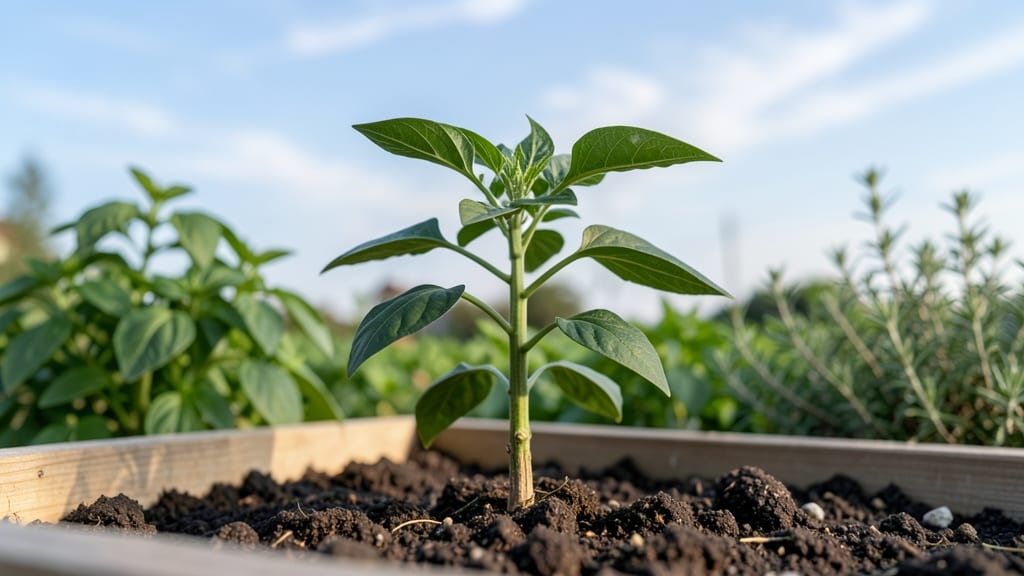
When pepper seedling leaves point upward, it signals light deprivation that triggers weak, stretched growth. Correct this by rotating plants daily and relocating them to a brighter area with at least 6+ hours of direct light—you’ll see improvement in 3–5 days.
This upward-leaning growth, called etiolation, happens when seedlings stretch toward light sources like windows or grow bulbs, weakening their stems. 🌱 The culprit is hormonal imbalance—too much auxin (a growth hormone) and not enough chlorophyll production.
Without proper light exposure, seedlings become leggy and prone to falling over, which can stunt their entire development cycle. If you’re using indoor lights, consider LED grow bulbs that emit blue and red wavelengths, which mimic sunlight and promote healthier leaf expansion.
💡 In This Article
- How Light Affects Pepper Seedling Growth
- Fixing Upward-Leaning Pepper Seedlings: Step-by-Step Guide
How light affects pepper seedling growth
When pepper seedlings stretch upward with leaves pointing skyward, they're experiencing etiolation, a survival mechanism triggered by insufficient light. This occurs when seedlings detect low light levels and prioritize stem elongation to reach potential light sources.
The plant's auxin hormone (a growth regulator) accumulates in the stem's shaded side, causing cells to elongate rapidly. This hormonal shift diverts energy from leaf development to vertical growth, resulting in those telltale upward-pointing leaves and weak, spindly stems.
The science gets even more interesting when we examine light spectra. Healthy pepper seedlings thrive under blue (400-500nm) and red (600-700nm) wavelengths—blue promotes compact growth and leaf development, while red stimulates flowering. Under natural sunlight, these wavelengths balance perfectly, but indoor lighting often lacks sufficient blue light.
Without it, seedlings grow 20-30% taller but produce leaves that are 50% narrower with reduced chlorophyll, making them pale and inefficient at photosynthesis. 🌿 This is why seedlings under fluorescent lights often develop that classic "leggy" appearance.
Chlorophyll production takes a direct hit when light is limited. In ideal conditions, pepper seedlings can produce up to 1.5-2.0 mg of chlorophyll per gram of leaf tissue. Under low-light conditions, this drops to 0.5-0.8 mg, severely limiting the plant's ability to convert sunlight into energy.
The leaves become thin and yellowish because the plant prioritizes stem growth over leaf development. This energy imbalance creates a vicious cycle: weaker leaves mean less photosynthesis, which further limits growth potential. The upward growth pattern also makes stems more susceptible to breaking under their own weight.
Comparing natural sunlight to artificial light reveals dramatic differences. Direct sunlight provides 10,000-100,000 lux of light intensity, while most indoor spaces offer only 100-500 lux. Even grow lights can fall short if not properly positioned—seedlings need to be within 6-12 inches of the light source to receive adequate illumination.
The angle matters too: light should come from above to prevent sideways bending, which creates additional stress on the plant's structure. Without proper light exposure, pepper seedlings may never reach their full genetic potential, often producing 30-40% smaller yields than properly lit counterparts.
What most gardeners don't realize is that light quality affects more than just growth direction. The photoperiod (light duration) also plays a crucial role. Pepper seedlings benefit from 14-16 hours of light per day, mimicking their natural tropical growing conditions.
Shorter days trigger hormonal changes that can delay flowering and fruiting. This is why indoor growers often supplement natural daylight with artificial lights during winter months when daylight hours shrink. The key is consistency—fluctuating light conditions create stress that manifests as uneven growth patterns and those upward-pointing leaves.
Interestingly, pepper seedlings exhibit different growth responses based on their variety. Heat-loving varieties like jalapeño or habanero show more dramatic etiolation under low light than cooler-climate peppers like bell peppers. This genetic variation means your correction approach might need adjustment based on what you're growing.
For example, jalapeño seedlings might need 20% more light intensity than bell pepper seedlings to achieve the same growth response. Understanding these nuances helps tailor your light solution to the specific needs of your pepper plants. ✨