Trees
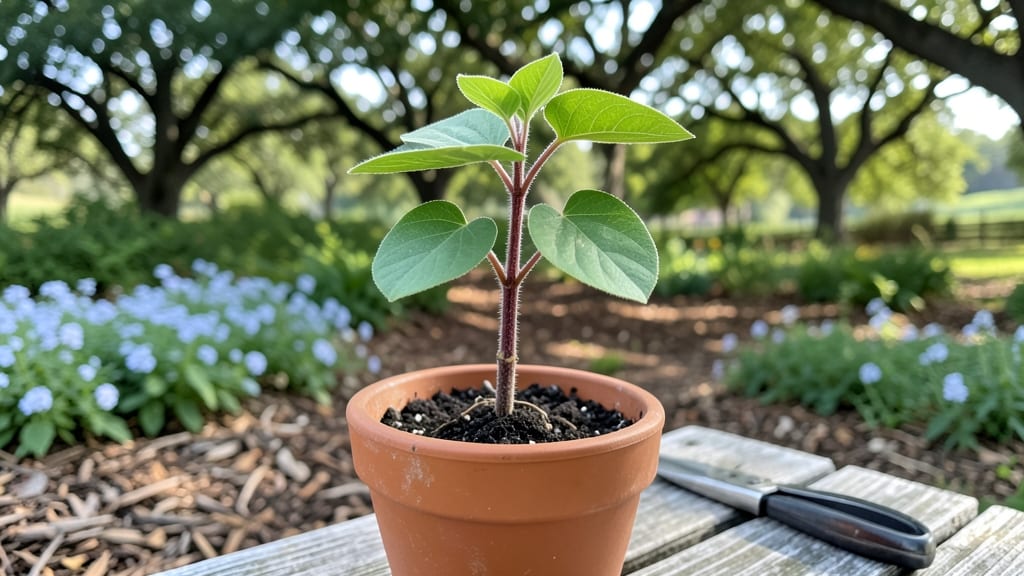
The thrill of redbud seedling identification hit me the first time I spotted a cluster in my backyard—what I thought was a weed. turned out to be the start of something special.
The leaves are smooth-edged and bright green, while the bark on young seedlings peels in thin layers, revealing a lighter underlayer.
Most redbud seedlings appear between 2-4 inches tall before their first year, with leaves that unfold in early spring—often before the flowers bloom. The key is comparing them to other seedlings: redbuds lack thorns (unlike hawthorn) and have smoother bark than dogwoods.
Eastern and Western redbuds share these traits, but Western varieties tend to grow slightly taller and have slightly darker leaves.
Correct identification means you’ll know exactly how to care for them—redbuds thrive in full sun to partial shade and well-draining soil. A misidentified seedling could mean wasted effort or stunted growth. Once you spot the right clues, you’ll recognize them instantly, even as they mature into those stunning spring bloomers.
Whether you’re clearing a wild area or propagating your own, these visual cues save time and ensure you’re planting the right tree. Here’s how to tell them apart from look-alikes and what to do next once you’ve confirmed your find.
Nature’s Deceptive Tricks
Identifying redbud seedlings can be tricky because several factors mimic their appearance or confuse their growth patterns. Understanding these causes helps gardeners and ecologists spot the real deal with confidence. Here’s why misidentification happens—and how to avoid falling for common pitfalls.
Young redbud trees (Cercis canadensis) often resemble other early-stage seedlings due to their slow, delicate development. Their heart-shaped leaves and pink blooms only become distinctive after 2–3 years, leaving room for error in younger specimens.
- Why it happens: Redbuds start with broad, rounded leaves that resemble those of honeylocust, shadbush, or even some maple seedlings. Without flowers or mature bark, their identity is ambiguous.
- Actionable clue: Look for clustered buds along branches—a hallmark of redbuds, even in seedlings. Most mimics have alternate or spiral bud arrangements.
- Pro tip: 💡 Snap a close-up of the leaf veins. Redbud veins radiate outward from a central point (palmate venation), while many look-alikes have pinnate (feather-like) patterns.
Redbuds’ most iconic feature—their vibrant pink spring flowers—only appears for 1–2 weeks annually. Outside this window, seedlings may be mistaken for other spring-flowering trees or even shrubs.
- Why it happens: If you spot a seedling without flowers, you might overlook it entirely or confuse it with:
- Eastern red cedar (needle-like foliage)
- Serviceberry (tooth-edged leaves, white flowers)
- Even dogwood (similar leaf shape but opposite branching).
- Actionable clue: Check for bark texture. Mature redbud bark is scaly and grayish-brown, but seedlings have smooth, greenish stems. Compare this to the rougher bark of serviceberry or cedar.
- Pro tip: ✨ Mark potential seedlings in late winter before buds swell. Redbuds break dormancy earlier than many rivals, often showing pink buds by February.
Redbuds thrive in USDA Zones 4–9, but their appearance varies slightly by location. In the Southeast, for example, Carolina redbud (Cercis canadensis var. texensis) has narrower leaves, while in the Midwest, seedlings might be overshadowed by black locust or even non-native trees like Cercis chinensis (Chinese redbud).
| Tree | Key Misidentification Risk | How to Tell Them Apart |
|---|---|---|
| Cercis canadensis (Eastern Redbud) | Confused with Cercis chinensis (Chinese redbud) | Native redbuds have hairless leaf undersides; Chinese redbuds often have fuzzy stems. |
| Black Locust | Thorny branches mimic redbud’s early growth | Locust leaves are compound (multiple leaflets), while redbuds have single, heart-shaped leaves. |
| Shadbush (Amelanchier) | Similar leaf shape and early blooms | Shadbush has white flowers in clusters, not solitary pink blooms, and leaves turn red/purple in fall. |
Pro tip: 🌡️ Note your region’s hardiness zone. Chinese redbuds (non-native) are more common in Zones 6–9, while native redbuds dominate cooler climates.
Even experienced gardeners misidentify redbud seedlings due to bias or over-reliance on one trait. For example, focusing only on leaf shape might ignore critical details like bud arrangement or bark.
- Why it happens:
- Confirmation bias: If you’re expecting a redbud, you might overlook differences in a seedling.
- Overgeneralizing: Assuming all heart-shaped leaves = redbud (e.g., ignoring dogwood’s opposite branching).
- Ignoring the whole plant: Focusing on flowers or leaves alone without checking roots, stems, or growth habit.
- Actionable fix:
- Use the “3-Point Check”: Leaves AND buds AND bark.
- Take photos from multiple angles—lighting can distort colors.
- Consult a local field guide or app like iNaturalist to cross-reference.
- Pro tip: 🎯 Dig deeper—literally. Redbud roots are fibrous and shallow, while invasive trees like honeylocust have deep, woody roots.
Quick Fixes for Common Redbud Seedling Confusions
Got a young tree but unsure if it’s a redbud? Misidentification can lead to poor care or even removal of a prized plant. Here’s how to pinpoint and resolve the most common mix-ups—plus tips to keep your seedlings thriving.
Problem: Redbud seedlings can be mistaken for other early bloomers like dogwood, serviceberry, or even honeylocust due to overlapping leaf shapes or timing.
How to Fix It:
- 🌱 Compare Leaf Shapes
- Redbud leaves are heart-shaped with smooth edges (no serrations or lobes).
- Dogwood: Leaves are oval with prominent veins and a pointed tip.
- Serviceberry: Leaves are elliptical with fine teeth along the edges.
- Pro Tip: 🔍 Use a magnifying glass to check for hairy undersides (redbuds often have them).
- 🌸 Check Bloom Time
- Redbuds bloom before leaves emerge (early spring), often in pink or purple clusters.
- Dogwoods bloom simultaneously with leaves, and serviceberries bloom after leaves appear.
- Prevention: 📅 Mark bloom dates in your garden journal to track patterns.
- 🌲 Examine Bark Texture
- Young redbud bark is smooth and grayish-green, sometimes with horizontal lenticels (tiny raised dots).
- Dogwood bark is scaly, while serviceberry bark is shaggy and peeling.
- Quick Test: Rub your thumb over the bark—redbud’s surface feels slightly waxy.
Problem: New seedlings may yellow, wilt, or fail to thrive due to overwatering, pests, or disease.
How to Fix It:
- 💧 Watering Woes
- Overwatering: Causes soggy soil and root rot (check for a foul smell).
- Fix: Let soil dry 1–2 inches deep between waterings. Use a moisture meter if unsure.
- Underwatering: Leaves curl and brown at the edges.
- Fix: Water deeply 1–2 times per week (adjust for clay/sandy soil).
- Prevention: 🌡️ Mulch around seedlings to retain moisture and regulate temperature.
- Overwatering: Causes soggy soil and root rot (check for a foul smell).
- 🐜 Pest Invaders
- Aphids or Spider Mites: Tiny pests that cluster on undersides of leaves, causing yellowing.
- Fix:
- Spray with water (blasts them off).
- Use neem oil (1 tsp per quart of water) for severe infestations.
- Fix:
- Japanese Beetles: Chew notches in leaves.
- Fix: Handpick beetles early in the day or use row covers.
- Prevention: 🛡️ Inspect seedlings weekly and remove damaged leaves immediately.
- Aphids or Spider Mites: Tiny pests that cluster on undersides of leaves, causing yellowing.
- 🍄 Fungal Issues (Powdery Mildew or Leaf Spot)
- Symptoms: White powdery coating or brown spots with yellow halos.
- Fix:
- Prune affected leaves and dispose of them.
- Apply copper fungicide or a baking soda spray (1 tsp baking soda + 1 quart water + a drop of dish soap).
- Prevention: ✨ Space seedlings for airflow and water at the base (avoid overhead spraying).
Problem: Seedlings planted too late or mishandled may struggle to establish.
How to Fix It:
- 🌱 Best Planting Time
- Fall (September–November) is ideal—cooler temps reduce stress.
- If planting in spring, do it early (before bud break).
- Fix: If planted late, water deeply 2–3 times per week for the first month.
- 🏺 Soil and Location
- Redbuds prefer well-draining soil (they hate soggy roots).
- Fix: Amend heavy clay with compost or sand.
- Sunlight: They tolerate partial shade but thrive in full sun.
- Fix: If in shade, ensure at least 4–6 hours of sunlight daily.
- Redbuds prefer well-draining soil (they hate soggy roots).
- 🌿 Fertilizer Fails
- Over-fertilizing can burn roots and stunt growth.
- Fix: Use a balanced, slow-release fertilizer (10-10-10) once in early spring.
- Prevention: 📊 Test soil pH (redbuds prefer slightly acidic to neutral, 6.0–7.0).
- 🌿 Prune in Late Winter: Remove dead or crossing branches to encourage strong growth.
- 🚫 Avoid Herbicides: Redbuds are sensitive to chemicals—use vinegar-based weed killers sparingly.
- 📸 Document Growth: Take monthly photos to track progress and spot issues early.
By tackling these common issues head-on, you’ll confidently ID and care for your redbud seedlings—no more guessing games! 🌳✨
Frequently asked questions
How can I tell if a seedling is a redbud before it flowers?
Look for heart-shaped leaves with smooth edges and clustered buds along the stems. Young redbud bark is smooth and greenish-gray, while the veins radiate outward from the center (palmate venation). Compare these to other seedlings—dogwoods have opposite branching, and serviceberry leaves have fine teeth along the edges.
What’s the difference between Eastern and Western redbud seedlings?
Eastern redbuds (Cercis canadensis) have wider leaves and bloom slightly earlier, while Western redbuds (Cercis occidentalis) tend to grow taller and have narrower leaves. Both share the same heart-shaped leaf shape, but Western varieties often thrive in drier climates. Check your region’s hardiness zone—Eastern redbuds dominate cooler areas, while Western types prefer arid zones.
Why do some redbud seedlings look stunted or yellow?
Yellowing or stunted growth usually signals overwatering, poor drainage, or nutrient deficiency. Redbuds hate soggy roots—ensure soil drains well and water only when the top 1–2 inches feel dry. If leaves yellow between veins, it may be iron deficiency; amend soil with compost or use a chelated iron supplement. Mulch around the base to retain moisture without suffocating roots.
Can I transplant a redbud seedling after it’s already growing?
Yes, but do it in early spring or fall when temperatures are mild. Dig a hole twice as wide as the root ball and amend the soil with compost. Water deeply after transplanting and keep the soil moist for the first 2–3 weeks. Avoid transplanting during heatwaves—redbuds are sensitive to stress. Prune any damaged roots during the process to encourage new growth.
How do I know if a seedling is a redbud vs. a look-alike like honeylocust?
Redbuds have single, heart-shaped leaves with no thorns, while honeylocusts have compound leaves (multiple leaflets) and sharp thorns. Check the bark too—redbud bark is smooth and peels in thin layers, whereas honeylocust bark is rough and deeply grooved. If you’re unsure, snap a photo and compare it to a local field guide or use an app like iNaturalist for verification.