
Trees
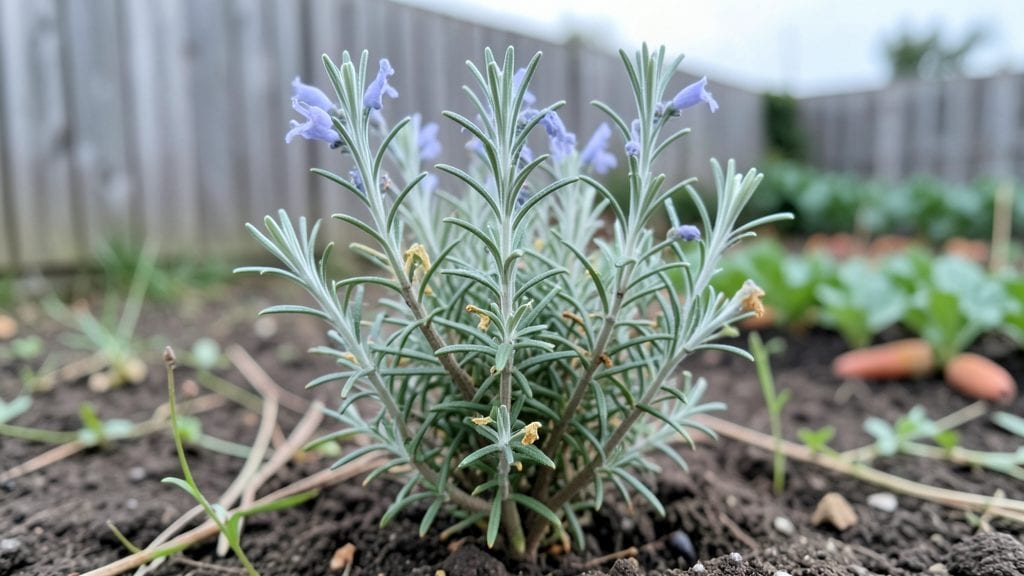
The identification of a rosemary seedling can save you from wasting time on lookalikes like thyme or oregano—those tiny needles hide big differences. 🌿 I’ve spent years separating the real deal from the imposters, and the key starts with leaf shape: rosemary’s needles are thicker, square-tipped, and arranged in spirals, while thyme’s are hair-thin and opposite.
The first mistake I made was assuming all woody herbs were rosemary until I saw the growth pattern.
Healthy rosemary seedlings also have silvery-green undersides and a faint piney scent when crushed—thyme smells more minty, oregano stronger and earthier. Check the spacing: true rosemary leaves grow 1-2 inches apart on woody stems, never clustered like mint or basil.
If the seedling smells like nothing or feels rubbery, it’s likely a misidentification—rosemary should always have that distinct herbal bite.
Once you’ve confirmed it’s rosemary, the next step is transplanting carefully. These seedlings hate root disturbance, so dig a hole twice as wide as the root ball and water deeply before planting. Within 4-6 weeks, you’ll see new growth—vibrant green and sturdy—if you’ve got the right plant.
The biggest red flag? Yellowing leaves or white spots? That’s usually disease, not a misidentification.
Here’s the thing—rosemary seedlings grow slow but steady, so don’t rush. Start them indoors 8-10 weeks before your last frost, and they’ll reward you with year-round harvests if given full sun and well-drained soil.
The first time I saw my seedlings thrive, I knew I’d never buy store-bought rosemary again. Now it’s your turn to spot the real deal.
📚 In This Guide
- What you need
- Instructions
- Tips and common mistakes
- Wrapping up and next steps
What you need
- ● Rosemary seedlings or cuttings – Ensure they’re fresh (preferably from a trusted source or your own garden).
- ● Magnifying glass or loupe – A 10x magnification works best for inspecting fine details like needle texture and growth patterns.
- ● Ruler or measuring tape – To check needle length and spacing (rosemary typically has 0.5–1 inch needles).
- ● Pruning shears or sharp scissors – For close-up inspections or trimming (sterilize with rubbing alcohol first!).
- ● Notebook or phone with camera – To document needle shape, color, and arrangement for comparison.
- ● Grow light or natural sunlight access – Bright, indirect light helps highlight true rosemary traits (avoid shadows!).
- ○ pH testing kit (optional but helpful) – Rosemary thrives in neutral to slightly alkaline soil (pH 6.0–7.5).
- ● Field guide or rosemary ID app (e.g., iNaturalist or PlantNet) – For cross-referencing traits.
- ● Small trowel – To gently dig up seedlings for root inspection (look for fibrous, woody roots).
- ● Scent test kit (lemon peel or cinnamon) – Fake rosemary often lacks the piney, citrusy aroma of the real deal.
- ● Garden journal – Track growth habits over time (rosemary grows 2–3 feet tall with woody stems).
Instructions for identifying authentic rosemary seedlings
Here's how to tell true rosemary from lookalikes with confidence.
🌱 Step 1: Examine Needle Arrangement and Structure
Authentic rosemary seedlings have needle-like leaves arranged in opposite pairs along the stem—look for two leaves emerging directly across from each other at every node. These leaves are typically ½ to 1 inch long, with a slightly curved, cylindrical shape that feels slightly leathery to the touch. Run your fingers along the stem: true rosemary leaves should feel smooth and slightly waxy, not fuzzy or hairy.
If the leaves appear whorled (three or more at each node) or flat and broad, you're likely dealing with a different herb like oregano or thyme. Rosemary's needle arrangement is its most defining trait—this is the first checkpoint where most imposters fail.
🌿 Step 2: Check Stem and Growth Habits
True rosemary seedlings develop woody stems even at the seedling stage, though they may still be tender. The stems should be square-shaped when viewed in cross-section (a key botanical trait) and slightly rigid. Gently bend a young stem—if it snaps cleanly rather than bending, it's likely a different herb like lavender.
Watch for scaly, papery bracts at the leaf nodes, which are common in rosemary. These tiny, brownish structures often go unnoticed but serve as another verification point. Also, note the growth pattern: rosemary seedlings grow in a compact, bushy habit rather than stretching upward like many other herbs.
✂️ Step 3: Inspect Leaf Texture and Aroma
Crush a few leaves between your fingers—authentic rosemary releases a distinct pine-like fragrance that's unmistakable. If the scent is more floral or minty, the plant isn't rosemary. The leaves should also have a slightly rough texture when rubbed between your fingers, with tiny glandular dots visible under close inspection (use a magnifying glass if needed).
Examine the leaf edges: true rosemary leaves have entire margins (smooth edges) with no serrations or lobes. If you see any toothed or jagged edges, you're likely looking at a different plant entirely. This sensory check is often the most reliable way to confirm rosemary.
💧 Step 4: Test Root and Soil Interaction
Gently remove the seedling from its container to examine the roots. Authentic rosemary develops a tapered, fibrous root system that spreads outward rather than growing deep and thick like lavender. The roots should be light tan to white and somewhat brittle when dry.
Place the seedling back in moist soil and observe how it responds. Rosemary seedlings typically recover quickly from minor root disturbance and show new growth within 7-10 days when given proper light and water. If the plant shows signs of stress (yellowing leaves, wilting) that persists beyond a week, it's likely not true rosemary.
☀️ Step 5: Observe Light Requirements and Response
Move the seedling to a bright, sunny location (at least 6 hours of direct sunlight daily) and monitor its reaction. True rosemary seedlings will lean toward the light source but maintain a compact growth habit. If the plant grows extremely leggy (stems stretching more than 3 inches between nodes) or develops pale, yellowish leaves, it's likely suffering from insufficient light—but this reaction can also indicate it's not genuine rosemary.
After 2-3 weeks in optimal conditions, true rosemary should develop small, woody side branches at the base. This basal branching is a hallmark of mature rosemary and appears even in young seedlings when grown properly. Compare this to other herbs that remain single-stemmed for much longer.
Tips & tricks for rosemary seedling identification
These needle-by-needle insights will help you confidently distinguish true rosemary from common imposters—no botanist degree required.
Leaf Arrangement is Non-Negotiable: In Step 1, when examining those opposite leaf pairs, remember this is your first line of defense. Use a magnifying glass if needed—genuine rosemary will show perfectly symmetrical pairs at every node without exception. I've seen countless "rosemary" seedlings with whorled leaves that turned out to be lavender or even rosemary hybrids. The symmetry is what separates the pros from the amateurs.
Stem Cross-Section Reveals All: The square stem in Step 2 is rosemary's secret weapon. Cut a small cross-section of the stem—if it shows four distinct sides (like a tiny square), you've got the real deal. This square shape is a botanical signature of rosemary that no other common herb can replicate. Don't skip this step—it's the most reliable physical trait after leaf arrangement.
Scent is Your Final Judge: When you crush those leaves in Step 3, that piney aroma should hit you like a forest breeze. If it smells more like mint or citrus, you're dealing with something else. Pro tip: Compare the scent to a known rosemary sprig—your nose knows best. And if you're unsure, crush a leaf near your nose, then inhale deeply. The aroma should be strong enough to fill your senses, not subtle or faint.
Light Response is Telling: In Step 5, when observing light requirements, watch how the plant responds to sunlight. True rosemary will lean toward the light but maintain its compact shape. If it stretches excessively (more than 3 inches between nodes), it's either not rosemary or desperately needs more light. This growth pattern is your final verification—rosemary doesn't grow like a weed, it grows with purpose.
Pro Tips for Rosemary Seedling Identification
- These needle-by-needle insights will help you confidently distinguish true rosemary from common imposters—no botanist degree required.
- Leaf Arrangement is Non-Negotiable: In Step 1, when examining those opposite leaf pairs, remember this is your first line of defense.
- Stem Cross-Section Reveals All: The square stem in Step 2 is rosemary's secret weapon.
Frequently asked questions
Got questions about identifying rosemary seedlings? You’re not alone!
Here are some of the most common ones—and their straightforward answers—to help you spot the real deal without the guesswork.
How can I tell if my rosemary seedling is real or fake?
Authentic rosemary seedlings have needle-like leaves (not broad or fuzzy) arranged in sets of 2-4 along the stem. Check for a woody, aromatic stem and a pine-like fragrance when crushed. Fake or hybrid seedlings often lack these traits or have irregular growth patterns.
How long does it take for rosemary seedlings to show true identification traits?
Rosemary seedlings typically develop distinctive needle leaves within 4-6 weeks of germination. However, some dwarf or slow-growing varieties may take up to 8-10 weeks to fully reveal their true form. Patience is key—don’t rush the process!
Can I use rosemary cuttings instead of seedlings for identification?
If you’re unsure about seedlings, rosemary cuttings are a foolproof alternative. Simply take a 4-6 inch healthy stem, strip the lower leaves, and root it in water or soil. The shape, scent, and leaf arrangement will confirm its identity within weeks.
What should I do if my rosemary seedling looks diseased or stunted?
If your seedling shows yellowing leaves, black spots, or slow growth, it could be due to overwatering, pests, or fungal issues. Isolate the plant, check for aphids or spider mites, and adjust watering (rosemary hates soggy roots!). A mild neem oil spray can help if pests are the culprit.
Does rosemary grow differently in warm vs. cold climates?
Yes! In warmer climates, rosemary grows faster and bushier, while in cooler regions, it may develop a more woody, compact structure to conserve energy. If you’re in a colder zone, choose hardy varieties like ‘Arp’ or ‘Hill Hardy’ for better survival.
Wrapping up and next steps
Identifying a rosemary seedling doesn’t have to be a guessing game—just follow the distinctive needle shape, aromatic scent, and growth habits we’ve covered! Whether you’re a gardening newbie or a seasoned green thumb, spotting the real deal is all about paying attention to those tiny but telling details. 🌱
Now that you’re armed with the know-how, why not take the next step? Grab those seedlings, dig in, and give your rosemary a thriving home. Happy planting—and may your garden be forever fragrant! 🌿✨