
Flowers
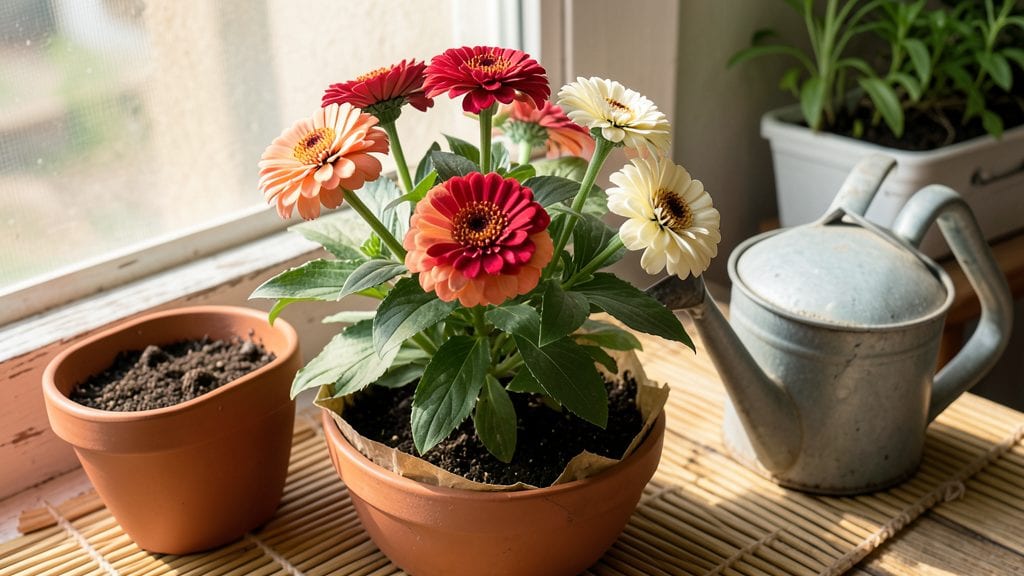
Seeded paper flowers last longer when kept hydrated by misting lightly every 2-3 days and storing in a sealed plastic bag with a damp paper towel. Avoid direct sunlight to prevent premature wilting and ensure seeds stay viable for germination.
These delicate blooms thrive when you mimic their natural environment—think of them like tiny houseplants that need consistent moisture to stay perky. 💧 The cellulose fibers in the paper act like a sponge, absorbing and slowly releasing water to keep the seeds hydrated.
Unlike fresh-cut flowers, seeded paper flowers can't draw nutrients from roots, so their longevity depends entirely on how well you control their moisture levels. Coffee filters work well for this because they're thin enough to allow even distribution, while thicker handmade papers might require more frequent misting.
For best results, I recommend using a spray bottle with room-temperature water—cold water can shock the delicate paper fibers. Place your flowers in a sealed container with a damp paper towel to create a mini greenhouse effect, trapping humidity around them.
This method isn't just about aesthetics; it preserves the seeds' viability too, so you can replant them later if you're growing them for propagation.
💡 In This Article
- How Moisture Preserves Seeded Paper Flower Longevity
- DIY Water Tricks to Extend Seeded Paper Flower Life
How moisture preserves seeded paper flower longevity
The secret to keeping seeded paper flowers vibrant lies in how cellulose fibers interact with water. Paper's microscopic structure creates tiny capillaries that hold moisture like a sponge, slowly releasing it to the seeds embedded within. This process mimics natural seedbed conditions where consistent humidity prevents desiccation.
The key factor is maintaining relative humidity between 50-70%, which is optimal for both paper integrity and seed viability. 🔥 Unlike fresh flowers that rely on vascular systems, these blooms depend entirely on this passive moisture delivery system.
Different paper types behave uniquely with water. Coffee filters, made from bleached cellulose, absorb and release moisture quickly due to their fine, uniform fibers.
They typically hold 20-30% of their weight in water, while thicker handmade papers with embedded textures can retain up to 40% but release it more slowly. This is why coffee filter flowers often need misting every 2-3 days, while handmade varieties might last 5-7 days with similar care.
The paper's density affects how well it maintains structural integrity during hydration cycles too.
What most people don't realize is how critical the moisture gradient becomes. When you mist flowers, the water first saturates the outer petals before gradually penetrating inward. This creates a hydration front that moves at about 0.5 mm per hour through the paper.
If the environment is too dry, this front stalls completely, causing the edges to crisp while the center remains damp—a common reason for uneven wilting. The sealed plastic bag technique works because it creates a stable microclimate where evaporation slows dramatically compared to open-air conditions.
Seed viability adds another layer to moisture management. Seeds need consistent hydration to maintain metabolic activity without drowning. At 90% humidity, seeds can develop fungal growth, while below 40%, they enter dormancy prematurely. The damp paper towel method provides this perfect balance by acting as a controlled-release reservoir.
Even when the flowers aren't directly misted, the towel maintains a steady vapor pressure around them, similar to how greenhouse humidity domes work for cuttings. 💫
Temperature plays a surprising role too. At room temperature (68-72°F), water evaporates from paper at a steady 0.1g per hour, but this rate doubles above 80°F. That's why storing these flowers in cooler environments extends their life significantly.
The cellulose fibers also expand slightly when wet, which helps maintain the flower's shape against gravity. This physical property is why properly hydrated seeded paper flowers stand upright for days, while dehydrated ones collapse into flat, brittle shapes.
Consider these key factors when choosing paper types:
- Absorption rate: Coffee filters reach maximum saturation in 30-60 seconds, while handmade papers take 2-3 minutes
- Durability: Acid-free papers last 30-50% longer than standard printing paper
- Seed compatibility: Thicker papers work better for larger seeds (like sunflower), while thin papers suit delicate flowers
The science behind this involves understanding how paper's fiber orientation affects water distribution. Longitudinal fibers allow vertical movement, while cross-hatched patterns create a more even spread. This is why professionally made seeded paper flowers often have intricate designs—they're not just decorative, but functional for moisture management! ✨