
Planting
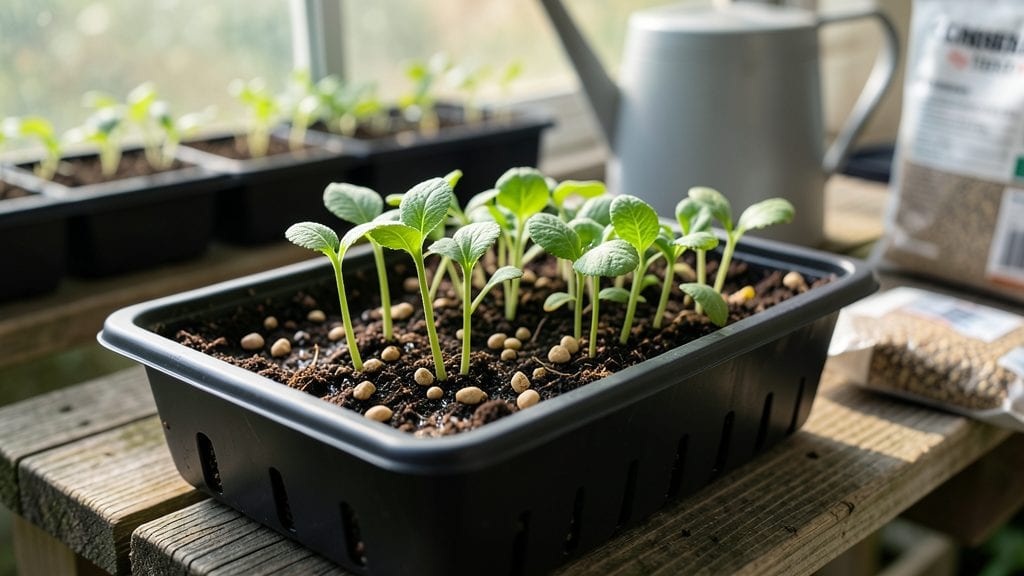
Biological seed coatings boost germination rates and plant health by delivering microbes, nutrients, and protective agents directly to seeds during planting. These specialized treatments enhance root growth, disease resistance, and stress resilience in young plants.
This innovative approach works by creating a protective micro-environment around each seed. 🌱 Beneficial bacteria like rhizobia form symbiotic relationships with plant roots, while mycorrhizal fungi expand nutrient absorption networks.
The coatings also encapsulate essential nutrients that seeds can't access on their own, like phosphorus and nitrogen, which are critical during the first critical growth stages. What's fascinating is how these coatings act as a shield against soil-borne pathogens, giving young plants the best possible start in competitive growing conditions.
For gardeners and farmers, the results speak for themselves—faster emergence, stronger seedlings, and higher survival rates even in challenging environments. The science behind these coatings explains why they've become a game-changer in modern agriculture, offering both immediate benefits and long-term plant vitality.
Whether you're dealing with delicate seedlings or hardy crops, biological seed coatings represent one of the most effective ways to maximize your planting success.
💡 In This Article
- How Biological Seed Coatings Work
- Best Practices for Applying Biological Seed Coatings
How biological seed coatings work
At their core, biological seed coatings function like microscopic ecosystems designed to supercharge seed performance. The process begins with beneficial microbes—think rhizobia bacteria for legumes or mycorrhizal fungi that form symbiotic partnerships with plant roots.
These microbes colonize the seed surface and establish themselves within hours of planting, creating a protective biofilm that shields the emerging seedling from pathogens.
For example, rhizobia can fix atmospheric nitrogen directly into plant-usable forms, while mycorrhizae extend root networks by up to 100 times their original length, dramatically increasing nutrient uptake.
The nutrient delivery system is equally sophisticated. Coatings often encapsulate slow-release phosphorus and nitrogen compounds that seeds can't access efficiently on their own. A single coating might contain 2-5% phosphorus by weight—enough to fuel early root development when the seedling's own reserves are depleted.
The encapsulation technology ensures these nutrients are released gradually over 7-21 days, matching the seedling's metabolic demands precisely. This targeted approach contrasts sharply with traditional fertilizers, which often wash away before plants can utilize them.
Protection mechanisms go beyond simple nutrient delivery. Many coatings incorporate biofungicides like Trichoderma species or biostimulants derived from seaweed extracts that trigger plant defense responses.
These components work at the cellular level—Trichoderma, for instance, produces enzymes that break down fungal cell walls while simultaneously stimulating the plant's own immune system. The result? Seedlings develop 30-50% greater disease resistance compared to uncoated seeds, even in high-stress environments like waterlogged soils or high-salinity conditions.
What makes these coatings particularly effective is their ability to create a micro-environmental buffer around each seed. The coating materials—often polysaccharides or chitosan—maintain optimal moisture levels by reducing water loss through evaporation by up to 40%.
This hydration control is crucial during germination when seeds are most vulnerable to drying out. The coatings also help regulate soil temperature at the seed zone, preventing temperature fluctuations that can shock delicate embryonic tissues.
For crops like tomatoes or peppers, this stability can mean the difference between 80% and 95% germination rates.
Here's where the science gets truly fascinating: the coatings often contain plant growth regulators like gibberellins or auxins that prime the seed for faster emergence. These hormones accelerate cell division in the root meristem, allowing seedlings to penetrate the soil 24-48 hours earlier than uncoated seeds.
The combination of microbial activity, nutrient release, and hormonal priming creates a snowball effect—each component amplifying the benefits of the others to produce seedlings that are not just bigger, but fundamentally more resilient.
Consider corn seeds as a case study: when coated with mycorrhizal fungi and phosphate-solubilizing bacteria, they exhibit 25% greater root biomass within just 14 days of planting.
The fungal hyphae create tiny channels that transport water and nutrients directly to the plant's vascular system, while the bacteria convert insoluble phosphorus compounds into forms the plant can absorb. This microbial partnership explains why coated corn often achieves 15-20% higher yields in phosphorus-deficient soils without requiring additional fertilizer applications.
The most impressive aspect? These benefits compound over time. While the immediate effects are visible in germination rates and early seedling vigor, the long-term advantages include improved drought tolerance, enhanced nutrient efficiency, and reduced susceptibility to transplant shock.
For farmers dealing with marginal lands or unpredictable weather, biological seed coatings represent one of the most cost-effective ways to consistently improve crop performance without relying on chemical inputs. 🌱