
Advice
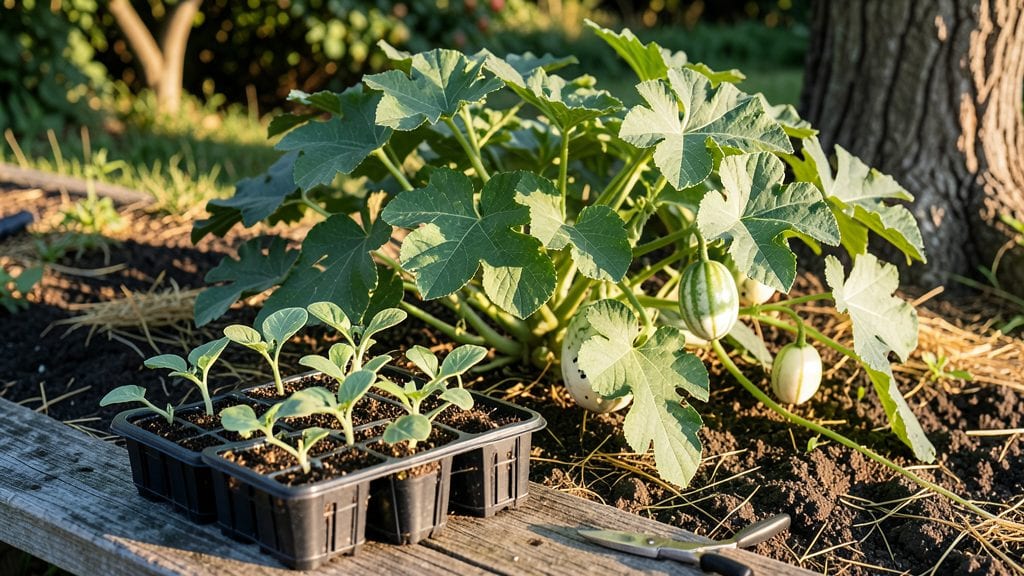
White watermelon seeds do grow when planted, producing vines and small fruit, though they rarely match the size, sweetness, or red flesh of heirloom varieties. These seeds come from hybridized white-fleshed watermelons, which may not breed true to type.
When you plant white watermelon seeds, they'll indeed sprout and develop into vines, but the fruit often falls short of expectations. 🌱 These hybrid seeds frequently produce smaller, less flavorful melons compared to heirloom varieties, since their traits don't always replicate.
The germination process itself is similar to red-seeded watermelons, but the genetic instability means you might get inconsistent results year after year. Many gardeners save seeds from their best fruit to improve consistency over generations.
For best results, plant these seeds in warm soil (75°F or warmer) and keep the soil consistently moist during germination. The vines will grow vigorously, but you'll need to provide plenty of space—at least 3-4 feet between plants—and monitor for pests common to watermelon crops.
While the fruit may not be as impressive as store-bought varieties, many find the crunchy texture and mild sweetness rewarding for home gardeners.
💡 In This Article
- How White Watermelon Seeds Develop and Germinate
- Growing White Watermelons from Seed: Tips and Expectations
How white watermelon seeds develop and germinate
White watermelon seeds follow the same basic germination process as their red-fleshed counterparts, but with key genetic differences that affect growth. The seeds contain embryonic plants that require specific conditions to break dormancy and sprout.
Unlike heirloom varieties, these hybrid seeds often exhibit inconsistent germination rates (typically 70-85% viability) due to their hybridized nature. The seed coat must first soften through moisture absorption, a process called imbibition, before the radicle (root) emerges within 5-7 days under ideal conditions.
The biological mechanism involves enzymes breaking down starches in the seed endosperm to provide energy for the emerging plant. White-fleshed varieties often have slightly larger seeds (10-15mm in length) compared to red varieties, which may affect their buoyancy in soil.
Temperature is critical—seeds won't germinate below 60°F and thrive between 80-90°F. The vines grow 6-12 inches per week once established, but the fruit development often lags behind traditional varieties due to genetic instability in the hybrid traits.
What makes these seeds unique is their non-replicating genetic code. Most commercial white watermelons are F1 hybrids (first-generation crosses), meaning their offspring won't produce identical fruit. This explains why homegrown white watermelons often have smaller size (typically 2-5 pounds vs. 10-20 pounds for heirlooms) and less consistent sweetness.
The white flesh itself contains lower lycopene levels (the antioxidant responsible for red pigment), which affects both color and flavor profile.
For successful germination, maintain soil moisture at 60-70% humidity during the first two weeks and provide full sunlight (6-8 hours daily) afterward. The vines develop 7-12 leaf nodes before flowering, with male flowers appearing first.
Unlike red varieties that develop uniform fruit, white watermelon vines may produce 2-4 small melons per plant with irregular shapes. The rind often remains harder and less tender due to different genetic expression in the fruit's exocarp layer.
An interesting detail is how these seeds respond to light exposure during germination. While most watermelon seeds are photoblastic (requiring light to germinate), white varieties show reduced photoblastic sensitivity, meaning they can sprout slightly deeper in soil (1 inch vs. ½ inch for red varieties).
This adaptation helps explain why they sometimes appear in unexpected garden locations. The white flesh mutation itself is caused by a recessive gene that suppresses lycopene production while increasing chlorogenic acid content, giving the fruit its distinct mild flavor.
Gardeners often notice the vines' faster initial growth compared to red varieties, but this vigor doesn't always translate to fruit production. The hybrid nature means each plant may express different traits—some producing white-fleshed fruit, others reverting to partial red coloring.
This genetic variability makes white watermelon seeds particularly fascinating for plant breeders studying epigenetic inheritance patterns in hybrid crops.