
Blooming
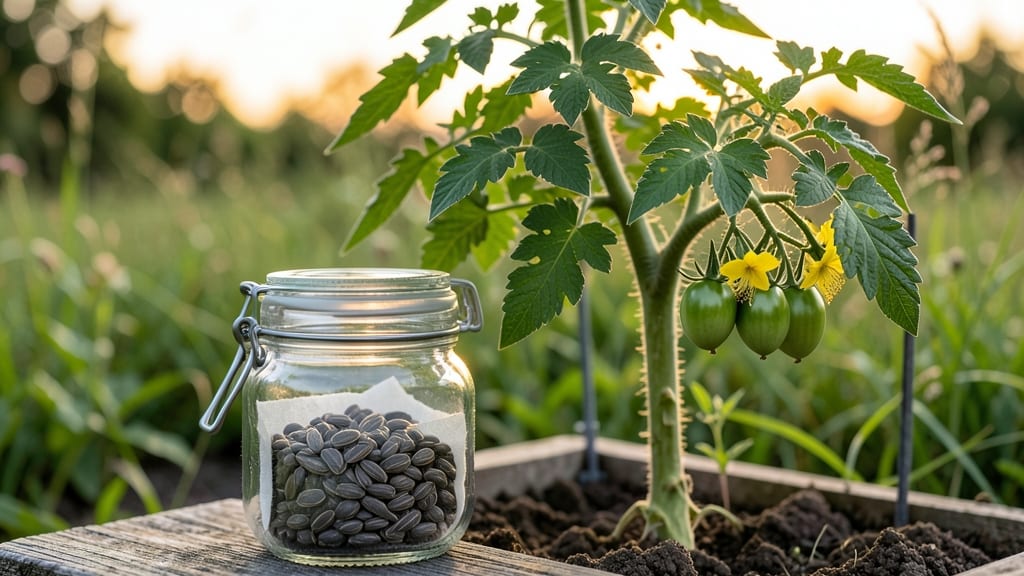
Tomato seeds stay viable for 3 to 5 years when stored correctly, though their ability to sprout weakens after two years. Keeping them completely dry, sealed tightly, and refrigerated preserves their potential, while exposure to dampness or warmth destroys viability quickly.
Understanding seed viability depends on how well you control storage conditions.
The key factors are moisture—even a little dampness triggers mold growth—and temperature, which speeds up degradation. 🔥 For example, seeds stored at 32°F or below in airtight containers can last closer to five years, while room-temperature storage cuts that time nearly in half.
Many gardeners also swear by vacuum-sealed packets, which block both oxygen and humidity, the two biggest enemies of long-term seed storage.
What's interesting is how genetic differences play a role—some heirloom varieties maintain viability longer than hybrid seeds, which often lose vigor faster. That's why I always label my seed packets with the harvest year and test a few seeds annually by planting them in damp paper towels.
If germination drops below 80%, it's time to refresh your supply.
💡 In This Article
- Factors Affecting Tomato Seed Viability Over Time
- Best Tomato Seed Storage Methods for Maximum Longevity
Factors affecting tomato seed viability over time
Seed viability declines through a process called aging, where cellular membranes degrade and enzymes break down essential compounds. For tomato seeds, the most critical factor is moisture—even 5-8% residual moisture triggers metabolic activity that exhausts stored nutrients.
At this level, seeds can remain dormant for years, but once moisture exceeds 10%, fungal growth and cellular damage accelerate, cutting viability by 50% or more within months. The science here involves lipid peroxidation, where cell membranes oxidize and become permeable, essentially "leaking" the seed's life force.
Temperature plays an equally dramatic role. Seeds stored at 77°F (room temperature) lose viability 10-15% faster than those kept at 32-41°F (refrigerated). This is because heat increases molecular motion, speeding up enzyme activity that breaks down proteins and nucleic acids.
For example, a seed with 90% germination after one year at 32°F might drop to 75% at 77°F—a 15% decline in just 12 months.
Extreme cold (0°F or below) can also damage seeds by forming ice crystals that rupture cell walls, though this is rare in proper storage.
Oxygen exposure is another silent killer. While seeds need minimal oxygen to stay dormant, prolonged exposure to air accelerates oxidative stress. This is why airtight containers (like vacuum-sealed bags) outperform paper envelopes—oxygen levels drop to 1-2% compared to 21% in open storage.
Over five years, seeds in airtight containers retain 70-80% germination, while those in paper may fall to 40-50%. The difference? Oxygen triggers free radical formation, which damages DNA and lipids over time.
Genetics also influence longevity. Heirloom tomato varieties often outlast hybrids because their seeds have thicker seed coats and higher genetic diversity. For instance, Brandywine seeds might maintain 85% viability after four years, while Better Boy hybrids could drop to 60%.
This is due to hybrid seeds' reduced genetic resilience—a trade-off for their uniform traits. Testing seeds annually with a paper towel germination test reveals these differences: place seeds between damp towels for 5-7 days—if fewer than 80% sprout, it's time to replenish your stock.
Light exposure, though often overlooked, matters too. UV rays degrade seed proteins and lipids, reducing viability by 10-20% over long-term storage. That's why opaque containers (like tinted plastic or metal tins) are superior to clear ones.
Even indirect light can cause photooxidation, where light energy breaks down organic molecules. For maximum longevity, store seeds in dark, cool, and dry conditions—ideally in a refrigerator or root cellar with 35-40% humidity.
What most gardeners don't realize is how seed coat thickness correlates with shelf life. Thicker coats act as natural barriers against moisture and oxygen. For example, cherry tomato seeds (thinner coats) may last 3 years under ideal conditions, while beefsteak varieties (thicker coats) can exceed 5 years.
This structural difference explains why some seeds seem "everlasting" while others degrade faster—it's not just storage, but biology. 💫