
Vegetables
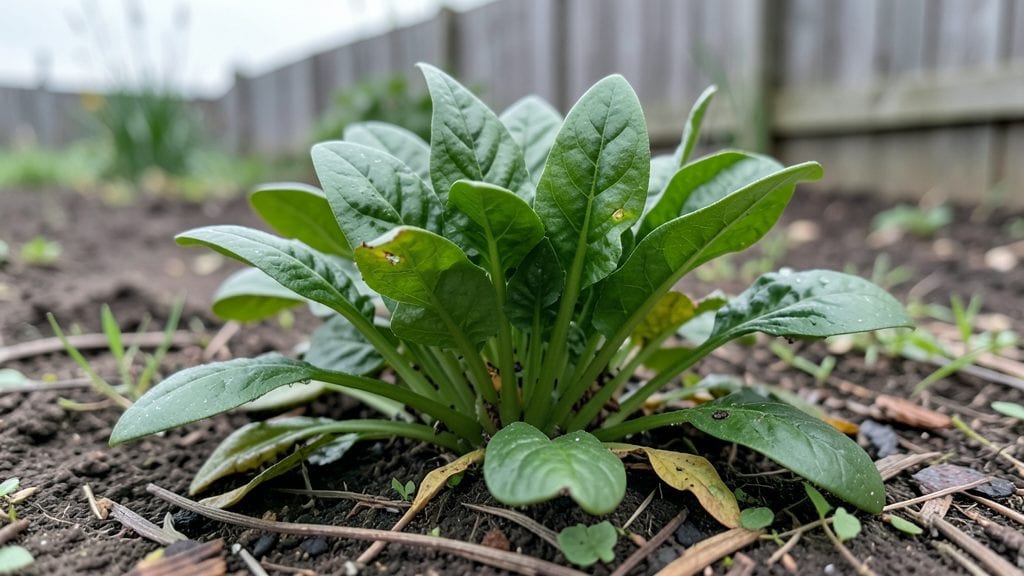
Mastering spinach seedling identification early ensures you’ll nurture plants that thrive all the way to harvest—because those first fragile leaves hold the key to success. those first few leaves.
The key is paying attention to leaf shape and color: true spinach seedlings have round, slightly crinkled leaves with a deep green center that fades to lighter edges. Yellowing or purplish leaves? That’s often a sign of stress, disease, or even a weed sneaking in.
I learned this the hard way when I accidentally pulled out my first batch of seedlings thinking they were dandelions.
Once you’ve confirmed healthy seedlings, you’ll know exactly when to transplant them—usually when they’re about 2 inches tall with 3-4 true leaves. That’s when the real growth spurt begins, and you’ll be harvesting tender greens in just 4-6 weeks.
The trick is acting fast before they bolt or get crowded out.
This works for all spinach varieties, from savoy to flat-leaf, and even helps you spot common pests like aphids hiding in the undersides of leaves. Let’s get those seedlings identified right the first time!
Common Causes Of Misidentifying Spinach Seedlings
Understanding why spinach seedlings can be tricky to identify is the first step toward ensuring a thriving garden. Here’s a breakdown of the most frequent reasons—backed by science—and how they play out in your growing space.
Spinach seedlings often share the same growing conditions as weeds like lamb’s quarters or purslane, which can sprout nearby and mimic young leaves.
These look-alikes may have similar rounded, slightly crinkled foliage, but key differences exist: - Leaf texture: Weeds often have smoother, more waxy leaves, while true spinach has a slightly rougher, more delicate appearance. - Stem structure: Spinach stems are typically hairless and slender, whereas weeds may have fuzzy or thicker stems. - Growth pattern: Weeds like amaranth grow faster and develop broader leaves, while spinach stays compact and slow-growing in early stages.
Pro Tip: 🔍 Examine the base of the plant—spinach seedlings have a rosette pattern with leaves radiating outward, while weeds often grow in a more erratic, sprawling manner.
Spinach is a cool-season crop, and its early growth can be deceptively slow—especially in warmer soil temperatures (above 75°F/24°C).
This delay can make seedlings resemble other greens at different life stages: - First true leaves (cotyledons) may look like mustard greens or kale, which also have lobed or serrated edges. - Variegated or discolored leaves can occur due to nutrient deficiencies (like magnesium or nitrogen) or transplant shock, mimicking disease or pest damage.
Actionable Fix: 🌡️ Start seeds indoors 4–6 weeks before the last frost, then harden them off gradually. Use a seedling heat mat (70–75°F/21–24°C) to encourage steady growth.
Not all spinach looks the same! Savoy types (e.g., ‘Giant Winter’) have deeply crinkled leaves, while smooth-leaf varieties (e.g., ‘Baby’s Leaf’) appear almost flat.
Even within the same type, light conditions affect color: - Purple-tinged leaves (common in ‘Bloomsdale Long Standing’) darken under low light or cool nights. - Yellowing edges can signal iron deficiency (chlorosis), especially in alkaline soils (pH > 7.0).
Quick Test: 🧪 Press a leaf between your fingers—spinach should have a slightly bitter, fresh spinach aroma; weeds often smell neutral or slightly earthy.
Even healthy spinach seedlings can look "off" due to:
- Aphids or spider mites, which cause stunted growth and yellowing (due to sap-sucking).
- Downy mildew (a fungal disease), which creates yellow patches on upper leaves and gray fuzz underneath.
- Cutworms, which chew stems at soil level, making seedlings collapse suddenly.
Prevention Tip: ✨ Use row covers for early protection and neem oil spray (1 tsp per quart of water) to deter pests before they take hold.
Extreme conditions can make seedlings look diseased when they’re just struggling:
- Overwatering leads to blackened stems (root rot) or yellowing leaves (nutrient leaching).
- Underwatering causes wilting and crispy edges, often mistaken for herbicide drift.
- Temperature swings (e.g., frost followed by heat) can cause leaf curling or bleaching.
Solution: 💡 Maintain 1–1.5 inches of moisture in soil and avoid watering at night to prevent fungal growth. Use mulch to stabilize soil temps.
Quick Fixes for Common Spinach Seedling Struggles
Now that you’ve identified the signs in your spinach seedlings, let’s tackle the fixes with practical, step-by-step solutions. Whether your seedlings are leggy, yellowing, or stunted, these fixes will get them back on track—and prevention tips will keep them thriving long-term.
Cause: Seedlings stretch toward light, becoming weak and spindly when exposed to inconsistent or weak light. Fix:
- 🔥 Move to a Sunny Spot – Place seedlings in a location with 6–8 hours of direct sunlight daily. A south-facing window or a grow light (12–16 hours/day) works best.
- 🍳 Thin Overcrowded Trays – If seedlings are packed too closely, they compete for light. Thin to 1–2 inches apart to improve air circulation and light access.
- 👨🍳 Use Reflective Surfaces – Place a white tray or aluminum foil under the tray to bounce light upward, reducing stretching.
Prevention Tips: ✨ Start with proper spacing – Sow seeds ¼ inch deep and 1–2 inches apart to avoid overcrowding early on. ✨ Use grow lights if natural light is weak – A simple LED grow light on a timer prevents legginess before it starts.
Cause: Yellow leaves often signal overwatering (root rot) or a lack of nitrogen (a key nutrient for leafy greens). Fix:
- 🌡️ Check Soil Moisture – Stick your finger 1 inch deep into the soil. If it’s soggy, let it dry out slightly. Spinach prefers consistently moist (not waterlogged) soil.
- 💪 Fertilize Gently – Use a balanced, water-soluble fertilizer (like 10-10-10) diluted to half strength every 2–3 weeks. For organic growers, try compost tea or fish emulsion.
- 🔪 Prune Damaged Leaves – If only the older leaves are yellow, trim them off to redirect energy to new growth.
Prevention Tips: 💡 Water at the base – Avoid wetting leaves to prevent fungal diseases. 🎯 Mulch lightly – A thin layer of straw or compost helps retain moisture without suffocating roots.
Cause: Slow growth can stem from compacted soil, lack of nutrients, or pests like aphids or spider mites. Fix:
- 🥘 Loosen the Soil – Gently scratch the top 1–2 inches of soil with a small fork to improve drainage and root access.
- 📊 Boost Nutrients – Mix in compost or worm castings into the topsoil. For a quick fix, use a seaweed-based fertilizer (rich in growth hormones).
- 🔪 Inspect for Pests – Check undersides of leaves for tiny bugs or webbing. Spray with neem oil (1 tsp per quart of water) if pests are present.
Prevention Tips: ✨ Test your soil – A simple pH test kit ensures your soil is between 6.0–7.0 (ideal for spinach). ✨ Rotate crops – If growing spinach in the same spot yearly, rotate with beans or peas to prevent nutrient depletion.
Cause: Purple tinges in stems or leaves mean your seedlings need more phosphorus, often due to cold soil or poor soil quality. Fix:
- 🔥 Warm Up the Soil – Spinach grows best in soil temps above 50°F (10°C). Use black plastic mulch or a cold frame to retain heat.
- 💪 Add Bone Meal – Sprinkle 1–2 tbsp of bone meal per plant and lightly water it in. Bone meal is high in phosphorus.
- 🌡️ Transplant if Needed – If soil is too cold, move seedlings to a warmer, sheltered spot or start a new batch in a heated propagator.
Prevention Tips: 💡 Plant in spring or fall – Avoid planting in extreme heat or frost, which stresses seedlings. 🎯 Use raised beds – They warm up faster than ground soil in early spring.
Final Pro Tip: 🌱 Monitor daily – Spend 5 minutes every morning checking seedlings for early signs of stress. Catching issues early (like wilting or discoloration) means faster, easier fixes!
Frequently asked questions
How do I tell the difference between spinach seedlings and weeds?
Look at the leaf texture and growth pattern. True spinach has slightly crinkled, rough-edged leaves with a delicate, hairless stem. Weeds like lamb’s quarters often have smoother, waxy leaves and grow more erratically. Check the base—spinach forms a neat rosette while weeds sprawl.
Why are my spinach seedlings turning purple?
Purple tinges usually mean cold soil or phosphorus deficiency. Spinach thrives in soil above 50°F (10°C)—use black plastic mulch to warm it. Add bone meal (1-2 tbsp per plant) for phosphorus. Purple leaves in cool nights are normal for varieties like 'Bloomsdale'.
When should I transplant my spinach seedlings?
Wait until they’re 2 inches tall with 3-4 true leaves. Harden them off first by placing outside for 1-2 hours daily over 5-7 days. Transplant on a cool, cloudy day to reduce stress. Space them 4-6 inches apart in rows 12-18 inches apart.
What do healthy spinach seedlings look like at different stages?
First true leaves (cotyledons) are round and smooth. After germination, look for deep green, slightly crinkled leaves (savoy types) or flat, smooth leaves (flat-leaf varieties). Healthy seedlings have sturdy stems and grow slow but steady—no sudden wilting or yellowing.
Can I grow spinach indoors from seedlings?
Yes! Use a south-facing window or grow lights (12-16 hours/day). Keep soil consistently moist and maintain 60-70°F (15-21°C) temps. Start with 4-6 inch pots and thin to 1 seedling per container. Harvest outer leaves first to encourage regrowth.