
Featured
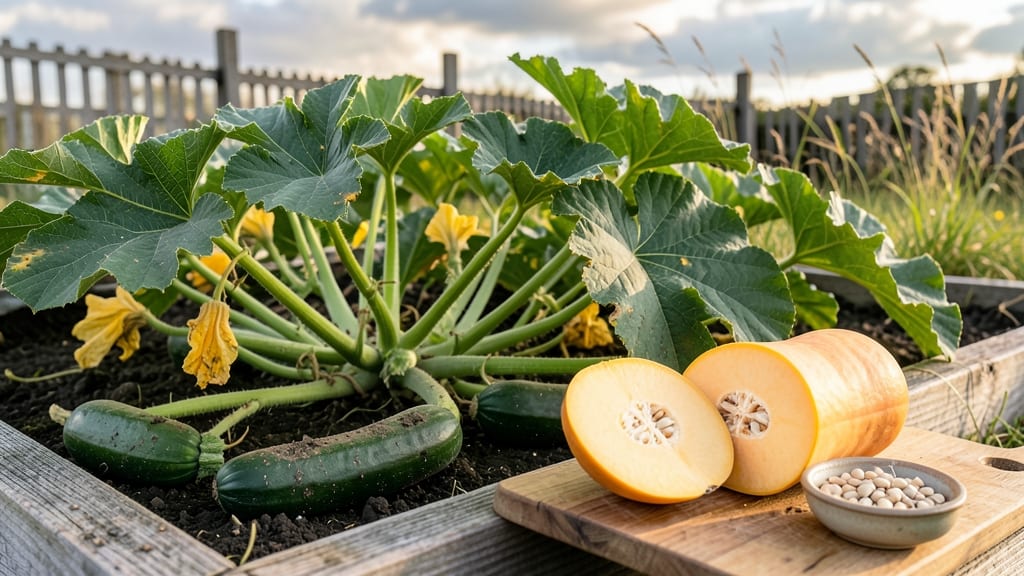
Raw squash seeds are safe for chickens to eat in moderation, offering fiber and minimal nutrition, but should be crushed for small chicks to prevent choking and fed sparingly due to low protein content.
While these seeds won’t harm your flock in small amounts, their nutritional payoff is modest compared to alternatives like sunflower or pumpkin seeds. 🌱 The key is preparation—crushing seeds prevents choking hazards, especially for young birds, and mixing them with feed helps balance their limited protein.
I’ve found that offering seeds as occasional treats (about 1 tablespoon per chicken weekly) prevents overfeeding while still satisfying their natural foraging instincts.
Most squash varieties are safe, but bitter melon or wild gourd seeds may contain trace cyanogenic compounds—always stick to common garden varieties like butternut or zucchini. For maximum safety, I recommend drying seeds thoroughly before serving, as moisture can accelerate spoilage in the coop.
💡 In This Article
- Squash Seed Toxicity and Nutritional Value for Chickens
- Safe Ways to Feed Chickens Squash Seeds and Alternatives
Squash seed toxicity and nutritional value for chickens
Here's what's actually happening when chickens peck at raw squash seeds: these seeds contain minimal toxins compared to other plant parts, thanks to their hard outer shell that protects the embryo.
The key factor is their fiber content—about 1.5-2 grams per tablespoon—which aids digestion, though it lacks significant protein (only 10-12% protein compared to 25-30% in sunflower seeds). The real concern isn't toxicity but physical hazards, as whole seeds can block tiny chicks' windpipes or digestive tracts.
The science behind their safety involves two main compounds: cucurbitacins (bitter compounds in some varieties) and trace cyanogenic glycosides (found in wild gourds).
Most commercial squash varieties like zucchini or butternut have negligible levels—so low that chickens process them without issue. 💫 What most people don't realize is that chickens' gizzards naturally grind seeds to 1mm particles, breaking down even hard shells.
However, small chicks lack this grinding power, making crushed seeds essential for their safety.
When comparing nutritional value, squash seeds fall short against alternatives like pumpkin seeds (30% protein) or flaxseeds (18% omega-3s). Their main benefit is moisture content (45-50% when fresh), which helps hydration during dry seasons.
The trade-off? Their low protein means they shouldn't replace commercial feed—think of them as a 5% supplement rather than a staple. For example, a 100g serving provides just 50 calories versus 600 calories in sunflower seeds.
Texture plays a critical role in safety—whole seeds have a 3mm diameter, while a chick's trachea is only 2mm wide. This size discrepancy explains why choking is the primary risk, not chemical toxicity.
The hard shell also means chickens must expend extra energy cracking them, which can lead to overconsumption if not monitored. 🔥 For context, a chicken's daily seed intake should never exceed 10% of their diet, with squash seeds making up an even smaller fraction.
Consider these key factors when evaluating varieties: bitter melon seeds contain 5-10x more cucurbitacins than zucchini seeds, while wild gourd seeds may have trace cyanide precursors. Always choose seeds from domesticated squash varieties and avoid anything with a bitter taste.
The fiber-to-nutrient ratio makes them more of a digestive aid than a protein source—ideal for occasional treats but not daily staples.
For practical comparison, imagine offering your chickens a 1 tablespoon of crushed zucchini seeds daily versus 1 tablespoon of sunflower seeds. The squash seeds provide 0.3g protein and 0.2g fiber, while sunflower seeds deliver 2.5g protein and 0.8g healthy fats.
The difference highlights why seeds should be selected based on specific nutritional goals—squash for fiber, sunflower for protein.
What most backyard keepers overlook is the seasonal variation in seed safety.
Freshly harvested seeds contain more moisture (50%) and spoil faster in warm coops, while dried seeds last months but lose some nutritional value. 🌟 The ideal preparation is air-drying at 70-80°F for 3-5 days to balance safety and nutrition.