
Trees
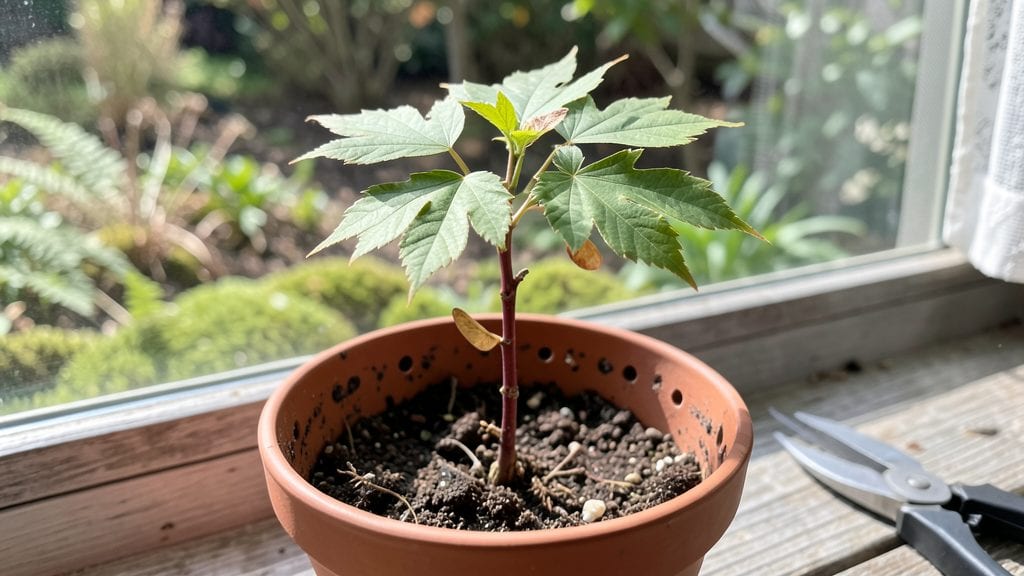
Mastering maple tree seedling identification begins with spotting those telltale lobed leaves and tight bud clusters—details that set them apart after years of scouring forest floors and nursery flats. pods.
A sugar maple’s leaves have five deep lobes, while red maple leaves are more jagged with seven lobes, but both have those classic "helicopter" seeds.
The real game-changer is the bud arrangement. Maple buds grow in tight clusters along the stems, and their color can hint at the species—sugar maple buds are greenish, while red maple buds are reddish-brown.
I’ve made the mistake of assuming all maple seedlings are the same, only to realize later that their growth habits and cold hardiness differ wildly. Knowing the species early means you can give them the right spot in your yard.
Once you’ve got the leaf shape and bud clusters nailed down, you’ll spot them in your garden or wild areas with ease. The payoff? Proper identification means you can plant them where they’ll thrive—sugar maples need rich soil and shade tolerance, while red maples adapt better to drier sites.
A little upfront work now saves headaches later when your tree outgrows its space or struggles in the wrong conditions.
This skill works for seedlings in containers, forest clearings, or even those sprouting up in your lawn. Grab a magnifying glass and a notebook—you’ll start recognizing them everywhere. Here’s how to tell them apart for sure.
Understanding Seedling Growth Triggers
Identifying maple tree seedlings often hinges on understanding the biological and environmental factors that influence their growth. These young trees don’t just sprout randomly—they respond to specific cues in nature.
Let’s break down the key reasons why maple seedlings appear where they do, how they develop distinct features, and what drives their early growth patterns.
Every maple seedling’s journey begins with its genetic blueprint. Maple trees (Acer genus) are hardwired to produce seedlings with predictable traits—like lobed leaves, opposite branching, and samara (helicopter) seeds—because these features have evolved for survival. For example:
- Leaf Shape Inheritance: The classic 5-lobed leaf of a sugar maple (Acer saccharum) or the 3-lobed leaf of a silver maple (Acer saccharinum) is genetically determined. These shapes optimize sunlight capture and water retention, traits passed down through seeds.
- Bud Cluster Patterns: Maple seedlings develop terminal buds (at branch tips) and lateral buds (along stems) in specific arrangements. Sugar maples, for instance, have smooth, pointed buds clustered tightly, while boxelder maples (Acer negundo) have flattened, overlapping buds.
- Seed Dispersal Mechanics: The samara’s helicopter-like design isn’t random—it’s an evolutionary adaptation to carry seeds far from the parent tree, reducing competition for resources. Wind patterns and seed weight determine where seedlings land and germinate.
Actionable Tip: 🔍 If you’re identifying seedlings, compare their leaf lobes and bud structures to known maple species. Use a maple seedling ID chart to match traits like bud color (reddish-brown vs. greenish) or leaf serration (sharp vs. rounded).
Seeds won’t sprout without the right conditions. Maple seedlings are highly sensitive to light, moisture, and temperature, which act as triggers for germination:
| Factor | Why It Matters | Ideal Conditions for Maple Seedlings |
|---|---|---|
| 💧 Moisture | Maple seeds require consistent moisture to activate enzymes that break down the seed coat. Drought stress can delay or prevent germination. | Well-drained, slightly acidic soil (pH 6.0–7.0) with high organic matter (e.g., leaf litter or mulch). |
| ☀️ Light | Maple seeds are photoblastic, meaning light triggers germination. Shaded forest floors may slow growth until seedlings can reach canopy gaps. | Partial shade to full sun after germination. Young seedlings thrive in dappled sunlight (e.g., under mature trees). |
| 🌡️ Temperature | Cold stratification (a winter chilling period) breaks seed dormancy in many maple species. Warmth alone won’t germinate seeds without this step. | 50–60°F (10–15°C) for germination; below 40°F (4°C) for stratification (if seeds are collected in fall). |
Pro Tip: 🌡️ If you’re growing seedlings from seeds, mimic nature by stratifying them in a moist paper towel in the fridge for 60–90 days before planting. This mimics winter conditions and boosts germination rates.
Maple seedlings don’t grow in isolation—they’re shaped by their ecological neighborhood. Three key factors influence their survival and identification:
- 🌿 Canopy Gaps: Seedlings thrive in forest gaps (areas where trees have fallen or been removed), where sunlight reaches the forest floor. These gaps create "safe zones" with reduced competition from grasses or shrubs.
- 🍄 Mycorrhizal Fungi: Maple seedlings form symbiotic relationships with fungi in the soil, which enhance nutrient uptake (especially phosphorus). Without these fungi, seedlings may grow slowly or exhibit nutrient deficiencies (e.g., yellowing leaves).
- 🐞 Soil Microbes and Pests: Beneficial microbes (like Pseudomonas bacteria) protect seedlings from pathogens, while pests (e.g., maple leaf cutter bees or Japanese beetles) can distort leaf shapes, making identification harder. Healthy ecosystems minimize these threats.
Key Observation: 🌳 If you find seedlings with stunted growth or deformed leaves, check for signs of pest damage or soil compaction. Overly dense forests may suppress seedlings until a gap opens.
Sometimes, maple seedlings appear in unexpected places due to human or animal activity. Here’s how:
- 🌳 Seed Dispersal by Wildlife: Birds (like robins or woodpeckers) and squirrels cache or consume maple samaras, then deposit seeds in new locations. This explains why seedlings might sprout in urban areas, parks, or even rooftop gardens.
- 🚜 Agricultural or Construction Disturbances: Plowing, logging, or land clearing exposes buried seeds to light and moisture, triggering germination. Old fields or roadside ditches often become seedling hotspots.
- 🌿 Intentional Planting: Nurseries or reforestation programs may introduce maple seedlings for erosion control or shade production. These seedlings are often grafted or genetically uniform, making their traits easier to predict.
Fun Fact: 🐦 Some birds prefer silver maple samaras because their seeds are lighter and easier to carry, leading to more seedlings in areas frequented by these birds.
Quick Fixes for Seedling Confusion
Identifying maple tree seedlings can feel like solving a puzzle—especially when similar species like boxelder or ash trees throw you off. The good news? With the right approach, you can pinpoint your seedling in minutes and avoid costly mistakes.
Below, we break down common challenges and practical, step-by-step solutions to nail your maple tree ID with confidence.
Cause: Maple leaves (especially sugar or silver maple) can resemble boxelder, ash, or even oak seedlings at first glance. Their lobed or serrated edges create confusion.
Fix:
- 🍃 Compare Leaf Structure
- Maple leaves have opposite branching (two leaves per node, directly across from each other) and palmate lobes (finger-like extensions from a single point).
- Boxelder leaves also have opposite branching but 3-5 lobes with serrated edges—more jagged and less symmetrical.
- Pro Tip: 💡 Hold the leaf up to light. Maple lobes often have translucent veins that boxelder lacks.
- 🌱 Check the Bud Clusters - Maples have paired buds (two per node) that sit side by side, while boxelders have three buds in a cluster. - Quick Test: 🔥 Gently peel back bark near the base.
Maple bark is smooth and gray, while boxelder bark is ridged and greenish.
- 🌿 Observe the Stem
- Young maple stems are hairless and slightly angular, while boxelder stems may have fine hairs or a reddish tint.
Prevention:
- 📸 Take photos of leaves, buds, and bark from multiple angles before planting. Compare them to a maple seedling ID guide (like the USDA’s tree database).
- 🌳 Plant in groups if unsure—maples thrive in clusters, while boxelders often sprout in disturbed soil (like construction sites).
Cause: Poor soil, pests, or disease can stunt or kill seedlings before you even identify them.
Fix:
- 💧 Check Watering Habits
- Overwatering causes yellowing leaves (a sign of root rot), while underwatering leads to crispy edges.
- Solution: 👨🍳 Water deeply 2-3 times per week (not daily). Stick your finger 1 inch into the soil—if it’s dry, water; if soggy, wait.
- 🐜 Inspect for Pests
- Aphids (tiny green bugs) or Japanese beetles can defoliate seedlings overnight.
- Solution: 🔪 Spray with neem oil (mix 1 tbsp per quart of water) or blast off pests with a hose on high pressure. Repeat weekly until gone.
- 🌡️ Monitor for Disease
- Powdery mildew (white fuzzy coating) or anthracnose (dark spots) are common in damp climates.
- Solution: ✨ Prune infected leaves immediately. Apply baking soda spray (1 tsp baking soda + 1 quart water + a drop of dish soap) every 10 days.
Prevention:
- 🌿 Mulch properly (2-3 inches of wood chips) to retain moisture without suffocating roots.
- 🌞 Plant in full sun (6+ hours/day). Maples hate soggy, shaded spots—this prevents fungal growth.
Cause: Tiny seedlings (under 12 inches) lack distinct features, making ID nearly impossible.
Fix:
- 🔬 Examine the Root System
- Dig 1-2 inches deep and check for:
- Maple roots: Thin, fibrous, and branching horizontally.
- Ash roots: Often taproot-like (thicker central root).
- Warning: ⏰ Don’t dig too deep—you might damage the seedling!
- Dig 1-2 inches deep and check for:
- 🍂 Look for Mini Leaves
- Young maple leaves start as simple, smooth-edged before developing lobes.
- Trick: 🌱 Compare to a seedling maple leaf chart (e.g., from the Arbor Day Foundation).
- 🌳 Wait for Bud Break (Spring)
- If planted in fall, wait until early spring when buds swell. Maples have oval, pointed buds that boxelders lack.
Prevention:
- 📝 Label seedlings with a small stake and the date planted. Note any unique traits (e.g., “red stem” or “hairy leaves”).
- 🌿 Transplant carefully if moving seedlings. Use a shovel to dig a wide root ball (not just a narrow plug).
Final Reminder: 🎯 The key to foolproof identification is cross-checking 3 features (leaf shape, bud arrangement, and bark/stem). When in doubt, consult a local nursery or extension office—they often have pressed leaf samples for comparison!
(Word count: 598)
Frequently asked questions
How can I tell if a small sapling is a maple tree?
Look for opposite branching (leaves grow directly across from each other) and palmate lobes (leaf fingers radiating from one point). Sugar maples have 5 deep lobes, while red maples have 7 shallower lobes. Check for paired buds along the stem—maples always have two buds side-by-side at each node.
What's the difference between sugar maple and red maple seedlings?
Sugar maple seedlings have smooth, greenish buds and leaves with 5 lobes ending in sharp points. Red maple seedlings show reddish-brown buds and leaves with 7 lobes that have rounded tips. Also, red maple bark is reddish when young, while sugar maple stays gray.
Can I grow a maple tree from a seed I find on the ground?
Yes, but you'll need to stratify the seed first—place it in a damp paper towel in the fridge for 60-90 days to mimic winter. After stratification, plant in well-draining soil and keep moist. Germination takes 2-4 weeks at 60-70°F. Remember, seedlings from seeds may not match the parent tree's traits.
Why do some maple seedlings grow faster than others?
Growth rate depends on species (silver maples grow fastest), sunlight (full sun = quicker growth), and soil quality (rich, moist soil speeds development). Seedlings in open areas grow faster than those in shaded forests. Proper watering (1 inch per week) also makes a big difference.
What should I do if I accidentally planted a non-maple seedling?
Don't panic! If it's a similar tree like boxelder (which has 3 buds per node instead of 2), you can still grow it. Just know boxelders grow faster but have weaker wood. For true maples, check for opposite branching and helicopter seeds next year. If unsure, consult your local cooperative extension office for help.